
Guides
The Role of Marketplaces in Leasing: A Practical Guide
The Role of Marketplaces in Leasing: A Practical Guide

TL;DR:
- Online marketplaces streamline the leasing process by connecting lessees, dealers, and finance providers within a digital environment.
- They enhance transparency, convenience, and comparison for consumers while improving lead quality and operational efficiency for dealers.
Online marketplaces act as the connective layer between lessees, dealers, and finance providers, handling discovery, lead generation, contract flow, and remarketing inside one digital environment. VIN-driven listings, integrated CRM handoffs, and e-signature workflows compress what used to be a multi-day, in-person process into something a buyer can start on a phone. For Albanian consumers and dealers navigating the online car market, understanding how these platforms work, and where they fall short, is the difference between a smooth lease cycle and an expensive detour.
When to use a marketplace for leasing vs. going direct:
- Use a marketplace when you want price transparency, verified-dealer access, and vehicle-history checks before committing to a conversation.
- Go direct to dealer finance when you need a custom lease structure, a specific residual value negotiation, or a manufacturer subvention deal that the platform does not surface.
- Dealers should list on a marketplace to capture top-of-funnel demand and qualify intent before moving to high-value direct engagement.
Table of Contents
- How do marketplaces fit into the car-leasing lifecycle?
- What do consumers actually gain from leasing through a marketplace?
- How do dealers and finance providers benefit?
- How do leasing volumes affect used-car supply and pricing?
- How does digital lease management actually work, step by step?
- Are marketplaces becoming full service ecosystems?
- How do you evaluate an online marketplace for leasing?
- Practical steps for leasing or listing a leased vehicle
- Carpulse features that support leasing workflows
- Key Takeaways
- The case for treating marketplaces as infrastructure, not just listings
- Carpulse: Albania’s marketplace for verified car listings
- Useful sources and further reading
How do marketplaces fit into the car-leasing lifecycle?
The role of marketplaces in leasing spans four distinct stages, and the platform’s value shifts at each one.
Origination is where marketplaces do their clearest work. A dealer enters a VIN, and the platform auto-populates make, model, trim, mileage, and fuel type. Filters let buyers sort by payment range, mileage cap, or lease term. Lead capture forms route inquiries directly to the dealer’s CRM, so no contact is lost to an inbox.
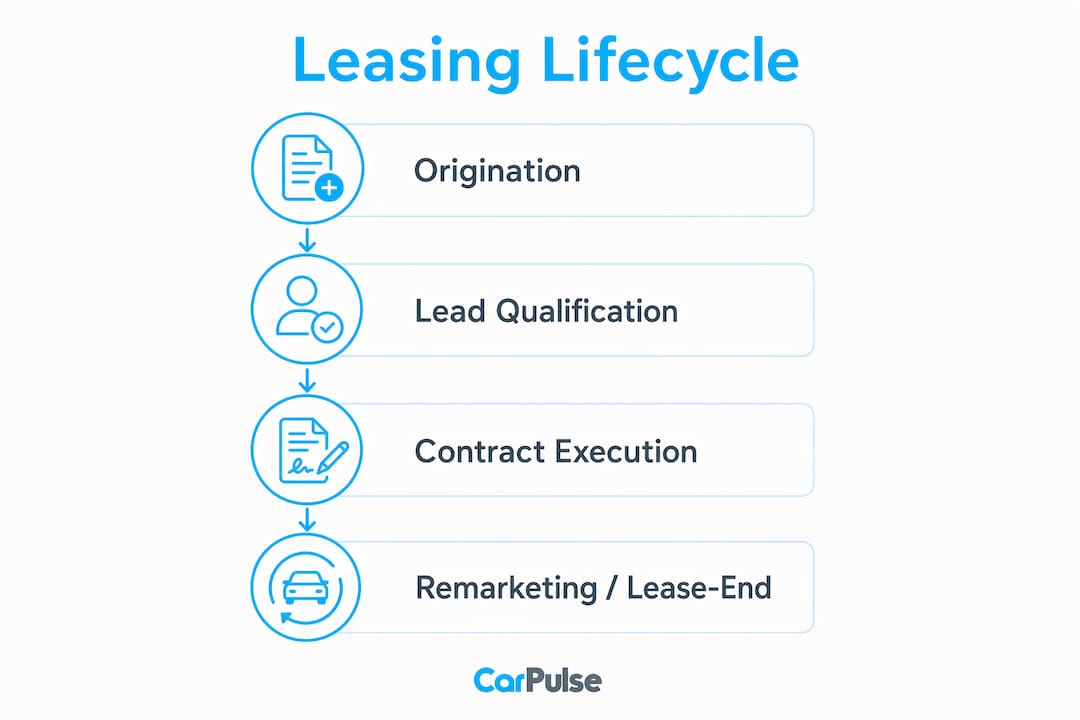
Credit and lessor referral is typically handled off-platform. The marketplace qualifies intent and passes a warm lead to the dealer’s finance arm or a partner bank. The lessor, usually a bank or captive finance company, underwrites the deal. The marketplace is the funnel, not the lender.
Contract execution is where digital tools earn their keep. Platforms that enforce required fields and e-signature workflows reduce incomplete submissions and store signed documents in encrypted cloud storage, cutting the back-and-forth that traditionally added days to a deal.
Remarketing and lease-end is the stage most buyers overlook. When a lease matures, the vehicle re-enters the market, either through the dealer’s certified pre-owned channel or directly via marketplace listing. That off-lease supply is what keeps used-car prices in check, a dynamic that matters a great deal right now (more on that in section 5).
Pro Tip: Ask any marketplace dealer whether their platform exports leads to a CRM. If the answer is no, your inquiry may sit in a generic inbox and never get a structured follow-up.
What do consumers actually gain from leasing through a marketplace?
The practical advantages are real, but they cluster around three things: transparency, convenience, and comparison speed.
Greater transparency comes from VIN-populated listings. When a dealer cannot manually edit the core vehicle data, the risk of misrepresentation drops. Pair that with third-party vehicle-history reports (Carfax or AutoCheck) linked directly in the listing, and a buyer can verify mileage history, accident records, and service gaps before making a single phone call.
Better comparison is the feature buyers undervalue most. Saved searches, payment-sensitivity filters, and side-by-side contact with multiple verified dealers compress what used to be a weekend of showroom visits into an hour of focused browsing.

Reduced paperwork via digital lease agreements means required fields prevent incomplete submissions, e-signatures replace print-scan-email cycles, and the signed document lives in cloud storage the buyer can access anytime.
Pro Tip: Before signing any lease found on a marketplace, check three numbers: the effective monthly payment (not just the advertised one), the annual mileage allowance, and the remarketing or disposition fee at lease end. Those three figures tell you the real cost of the deal.
How do dealers and finance providers benefit?
For dealers, the marketplace impact on leasing is primarily about lead quality and operational compression.
- Qualified, trackable leads: Marketplace inquiries carry engagement data, which vehicle was viewed, how many times, and whether the buyer saved the search. That context lets a sales team prioritize follow-ups instead of cold-calling a generic list.
- Shorter sales cycles: Digital lease management reduces in-person meetings and manual data entry. A deal that once required three dealership visits can move from inquiry to signed contract with one.
- Inventory planning: Access to off-lease demand signals helps dealers anticipate which vehicles will return and which segments buyers are actively searching, supporting smarter whole-life vehicle planning.
- EV remarketing: CRM-driven retention strategies around EV lease maturities are becoming a distinct revenue opportunity, as off-lease EVs require targeted remarketing to capture buyers who are range-curious but price-sensitive.
Clean first-party CRM data is the asset dealers most often neglect. Without seamless integration between the marketplace and the dealer’s CRM, the automation benefits evaporate and lease-end remarketing opportunities disappear entirely.
How do leasing volumes affect used-car supply and pricing?
This is where the macro picture hits local buyers directly. Cox Automotive projects that lease maturities from 2023–2025 will be fewer than maturities between 2020–2022. Fewer leases signed during the pandemic years means fewer gently used off-lease vehicles returning to market now.
| Trend | Effect on used-car market |
|---|---|
| Fewer lease maturities (2023–2025 vs. 2020–2022) | Reduced off-lease supply entering certified pre-owned channels |
| Lower off-lease supply | Upward pressure on used-car prices |
| EV lease returns increasing | New segment of off-lease EVs requiring targeted remarketing |
For Albanian buyers sourcing used vehicles, this supply squeeze matters. Fewer off-lease vehicles means less certified pre-owned inventory and higher asking prices on the units that do appear. Marketplaces that surface off-lease inventory quickly, and flag vehicle history clearly, give buyers a real edge in a thin market.
Cash-market prices and lease rates are also dynamically linked: when selling-market prices shift, lease rates tend to move in the opposite direction, often quickly. Watching both markets simultaneously is something a well-built marketplace makes possible.
How does digital lease management actually work, step by step?
- Listing and lead capture: The dealer enters the VIN. The platform populates make, model, year, mileage, and fuel type automatically. Photos upload, payment filters are set, and the listing goes live.
- Prequalification and finance-matching: The buyer submits an inquiry. The platform routes it to the dealer’s CRM. A soft credit check or direct referral to the lessor (bank or finance company) follows.
- Contract creation and execution: Templates with required fields prevent missing signatures or blank terms. E-signature tools send, collect, and store the signed lease in encrypted cloud storage.
- Ongoing management and lease-end remarketing: The platform tracks the lease lifecycle. At maturity, the vehicle is flagged for remarketing, either relisted or routed to a certified pre-owned channel.
Typical document checklist:
- Government-issued ID (buyer and seller)
- Proof of income or prequalification letter (where required)
- Vehicle registration and title
- Inspection report and service history
- Signed lease agreement with all required fields completed
Turnaround from inquiry to signed contract on a well-configured marketplace typically runs 1–3 business days. Fees vary by platform: listing fees for dealers, disposition fees at lease-end for consumers, and optional premium placement charges.
Are marketplaces becoming full service ecosystems?
Yes, and the shift is deliberate. Deloitte’s analysis of the living-as-a-service model shows how bundling warranty, maintenance, connectivity, and flexible terms into a single platform creates new revenue streams and deeper tenant retention. The same logic applies to automotive marketplaces.
- Warranty and inspection bundles materially improve conversion because they reduce buyer anxiety at the point of decision.
- Transport and delivery coordination removes a friction point for buyers who cannot visit a dealership.
- AI-driven price estimates help sellers set competitive asking prices and give buyers a benchmark before negotiating.
- Insurance referrals are typically peripheral upsells; they add convenience but rarely close a deal on their own.
Pro Tip: For dealers, the bundled services that convert are the ones that reduce buyer risk at the moment of commitment: inspection reports, warranty coverage, and clear return policies. Insurance add-ons and accessories are nice to have, but they rarely move the needle on a lease decision.
How do you evaluate an online marketplace for leasing?
Not every platform deserves your listing fee or your personal data. Here is what to check before committing.
Trust signals to verify:
- Verified-dealer badges backed by identity checks, not just self-declaration
- VIN decoding that auto-populates vehicle details (prevents manual misrepresentation)
- Third-party vehicle-history report integration (Carfax, AutoCheck, or equivalent)
- Transparent fee disclosures before you list or sign
- Platform audit logs and document retention for compliance
Data and workflow checks:
- CRM integration that exports leads in a usable format
- E-signature with required-field enforcement (not just a free-form PDF upload)
- First-party lead ownership: you should own the contact data, not the platform
Red flags:
- Opaque or hidden fees that appear only at checkout
- No ability to export leads or download signed documents
- Dealer identity verified only by email address
- No vehicle-history report integration
- No document retention or audit trail
Pro Tip: Run a test inquiry on any marketplace you are evaluating as a dealer. Time how long it takes to receive the lead, check whether the contact data is complete, and verify whether the platform’s CRM export works before you pay for a listing.
Practical steps for leasing or listing a leased vehicle
Buyer flow:
- Set filters: make, model, year, mileage cap, and monthly payment range.
- Shortlist verified dealers only; check the dealer badge and vehicle-history report.
- Contact the dealer through the platform to preserve a communication record.
- Validate three lease terms before proceeding: monthly payment, annual mileage allowance, and end-of-lease disposition fee.
- Complete the digital contract; confirm all required fields are filled and download your signed copy.
Dealer/seller flow:
- Enter the VIN; confirm the auto-populated details are accurate.
- Upload inspection report, service history, and professional photos.
- Set payment terms and choose any bundled services (warranty, inspection).
- Connect the listing to your CRM for automatic lead routing.
- Monitor engagement signals: virtual tour views and saved searches are the strongest indicators of buyer intent. Prioritize follow-ups with those leads first.
Pro Tip: Dealers who follow up within one hour of a marketplace inquiry close at significantly higher rates than those who respond the next business day. Set an automatic CRM alert for new leads so no inquiry goes cold.
Carpulse features that support leasing workflows
Carpulse, Albania’s online car marketplace, implements the core features that make marketplace-led leasing practical for both buyers and dealers.
- VIN-based auto-populate: Dealers enter a VIN and the platform fills make, model, year, mileage, and fuel type, removing manual errors from the listing.
- Verified-dealer badges: Dealerships go through an identity verification process before their listings carry the verified badge, giving buyers a baseline of trust.
- Vehicle history integration: Buyers can access history checks directly from a listing, covering mileage records and reported incidents.
- AI price estimate: Sellers get a market-referenced price suggestion before publishing, helping them set competitive asking prices from the start.
- Lead and CRM handoff: Dealer accounts receive structured lead data that can be exported for CRM integration, preserving the contact record for lease-end remarketing.
Carpulse’s VIN-based listing and verified-dealer network give Albanian buyers and dealers the transparency and workflow tools that marketplace-led leasing requires, without the complexity of enterprise platforms built for larger markets.
Pro Tip: When listing a lease-eligible vehicle on Carpulse, use the AI price estimate as your starting anchor, then adjust based on mileage and any bundled services you include. Listings priced within the AI-suggested range attract more inquiries faster.
Key Takeaways
Marketplaces compress the leasing lifecycle from discovery to remarketing, but their value depends entirely on the trust signals and workflow tools the platform actually delivers.
| Point | Details |
|---|---|
| Marketplaces connect the full lease chain | Platforms link lessees, dealers, and finance providers from origination through lease-end remarketing. |
| Off-lease supply is shrinking | Cox Automotive projects 2.5 million fewer lease maturities in 2023–2025 vs. 2020–2022, pushing used-car prices higher. |
| Digital contracts cut cycle time | Required-field enforcement and e-signatures reduce incomplete submissions and speed contract finalization to 1–3 business days. |
| Verify before you commit | Check for verified-dealer badges, VIN decoding, vehicle-history reports, and CRM lead export before listing or leasing. |
| Carpulse for Albanian buyers and dealers | Carpulse offers VIN auto-populate, verified-dealer badges, AI price estimates, and structured lead handoffs for Albania’s online car market. |
The case for treating marketplaces as infrastructure, not just listings
The conventional wisdom treats an online marketplace as a place to post a car and wait. That framing misses what these platforms actually do when they are built well. The real value is process compression: collapsing inquiry, verification, contract, and remarketing into a single auditable flow. For Albanian dealers, that compression is not a luxury. With used-car supply tightening and EV lease returns creating a new remarketing challenge, the dealers who have clean CRM data and a structured digital funnel will outperform those still managing leads through email threads.
What most guides understate is the lease-end moment. Getting a buyer into a vehicle is the easy part. Capturing that buyer again when the lease matures, before they walk into a competitor’s showroom, requires the kind of lifecycle tracking that only a well-integrated marketplace makes possible. The checklist in this guide is the starting point. The follow-through is what separates a listing from a leasing strategy.
Carpulse: Albania’s marketplace for verified car listings
If the workflow described in this guide is what you are looking for, Carpulse delivers it without the complexity of enterprise platforms built for markets ten times Albania’s size. Dealers list vehicles using VIN auto-fill, receive structured leads with full contact data, and access an AI price estimate before publishing. Buyers browse verified-dealer listings with vehicle history checks and saved-search alerts, then contact sellers directly through the platform.
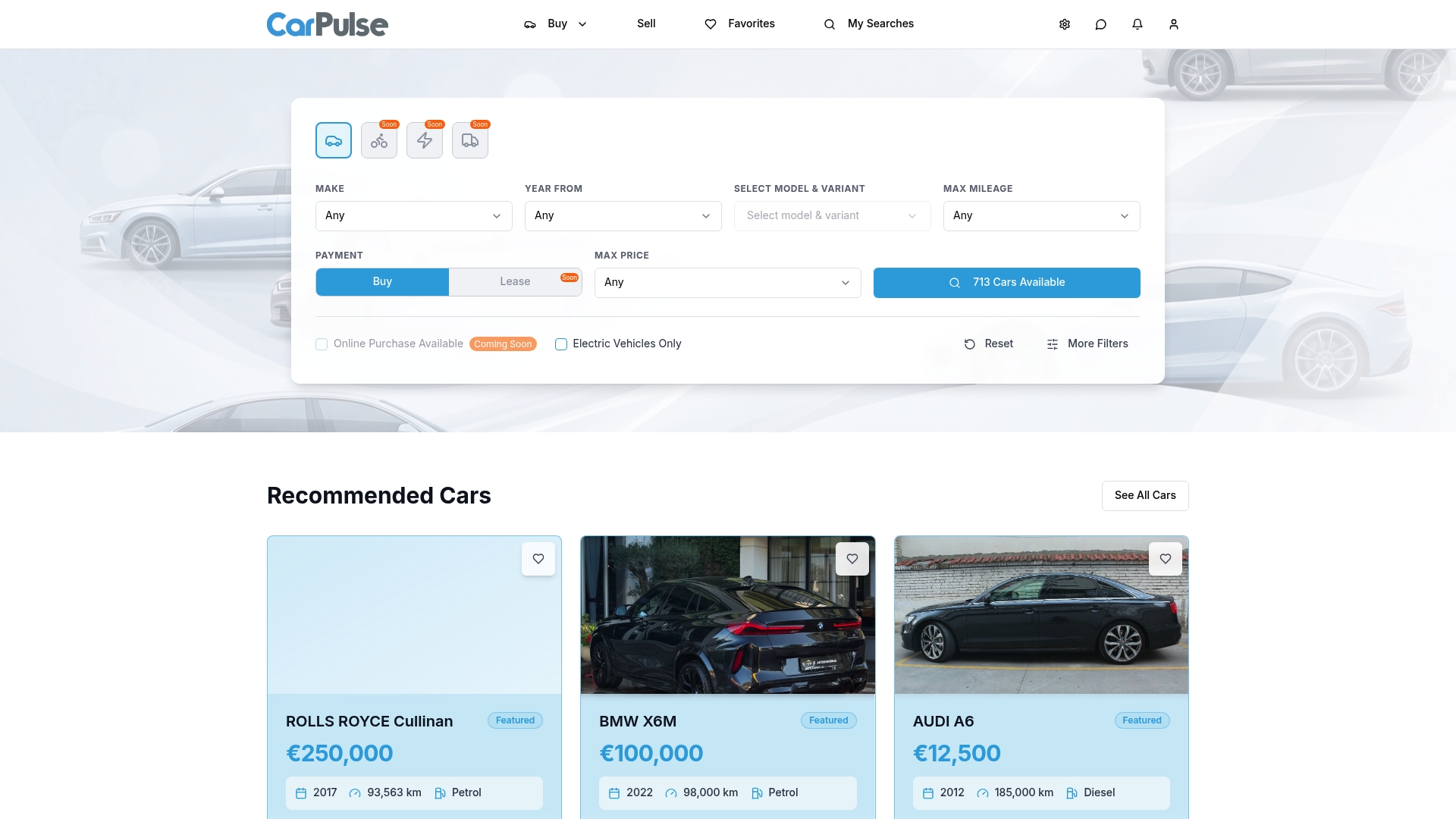
Whether you are a private seller pricing a used car or a dealership managing lease-eligible inventory, Carpulse gives you the tools to move faster and with more confidence. Visit carpulse.al to browse current listings or post your vehicle today.
Useful sources and further reading
- Cox Automotive: Leasing Decline Has Short-Term and Long-Term Implications — supports the off-lease supply and used-car pricing section.
- Landager: Benefits of Digital Lease Agreements — supports the digital lease management and consumer benefits sections.
- S&P Global Automotive Insights: EV Lease Returns Impact — supports the EV remarketing and CRM integration sections.
- ScienceDirect: Dynamic Interaction Between Leasing and Selling Markets for Automobiles — supports the macro linkage between cash-market prices and lease rates.
- Deloitte Insights: Housing Market Reshapes CRE Rentals — supports the service-ecosystem and bundled-services section.
- Financial Management Analysis DOI: Product Market Threats and Leases — background on leasing as a corporate risk-management instrument.