
Guides
4 Questions Buyers and Sellers Use to Choose Private,...
4 Questions Buyers and Sellers Use to Choose Private, Dealer or Marketplace

Selling to a private buyer usually nets a higher price; buying or selling through a dealer usually gets you there faster and with more protection. The right pick depends on how much risk you can absorb, how clean your paperwork is, and how badly you need speed over money. A platform like CarPulse exists precisely because that trade-off rarely has a clean winner.
TL;DR:
- Private car sales typically offer higher prices but involve longer timeframes and higher buyer risk due to lack of warranties or recourse.
- Dealer transactions generally close faster with added protections, include registration and warranty coverage, but come with higher prices and less negotiation room.
- Using a marketplace like CarPulse combines the benefits of both channels by providing VIN-based listings, vehicle history, AI pricing, and verified dealer access.
- Buyers should thoroughly verify VIN consistency, examine the car physically, and avoid wire transfers or cash before confirming vehicle identity and history.
- Sellers of rare, well-documented vehicles benefit from private sales, while those with urgent needs or high-mileage cars often prefer dealer trade-ins for speed and convenience.
Table of Contents
- Private Apo Diler: Comparing Price, Time, and Risk
- How Do You Choose Between a Private Seller and a Dealer?
- What Paperwork Do You Need for Each Channel?
- How a Marketplace Like CarPulse Closes the Gap
- What Should You Check Before a Test Drive?
- How Should You Negotiate With a Private Seller vs. a Dealer?
- Can You Get Financing Through a Dealer or a Private Seller?
- Which Channel Fits Which Car and Which Seller?
- How Do You Verify a Car’s History and Authenticity?
- Simple Rules I Use for Buying or Selling
- Ready to List or Search? Here’s How CarPulse Fits In
- Sources
Private Apo Diler: Comparing Price, Time, and Risk
The core decision behind “private apo diler” comes down to three variables that pull against each other: price, time, and risk. You almost never get all three in your favor at once, whether you’re buying or selling.
Price tends to favor private deals. A private seller has no showroom overhead, no sales staff commission, and no reconditioning markup baked into the number. That leaves genuine room to negotiate, and both sides usually walk away closer to the “real” market value of the car. Dealers, on the other hand, price in their operating costs, the inspection they ran before listing, and whatever warranty or paperwork service comes bundled with the sale. That premium isn’t padding for its own sake. It’s the cost of someone else absorbing risk you’d otherwise carry yourself.
Time usually swings the other way. Dealers handle registration, inspection, and title paperwork as part of the transaction, which can turn a multi-week private sale into a same-day or next-day deal. Private sales stretch out because you’re coordinating two individual schedules, waiting on bank transfers to clear, and sometimes fielding a dozen lowball offers before a serious one shows up.
Risk is where the gap is widest. Buy from a private seller and the deal is typically final, no warranty, no return window, no recourse if something fails a week later. Dealers commonly offer some form of written warranty or return policy, plus financing options a private seller simply can’t provide.
Here’s the trade-off in practice:
- Private sale, well-prepared seller: best price, moderate time cost, buyer absorbs the risk.
- Dealer sale, either side: faster close, added protections, smaller margin for negotiation.
- Private sale, rushed or undocumented: fastest cash-out, but the highest fraud and dispute risk on both sides.
One number worth remembering: dealers often run promotions tied to sales targets, which can open a short negotiation window that doesn’t exist with a private seller working on their own timeline. If you’re buying near the end of a sales period, that timing can matter more than the sticker price.
Net value, after accounting for your own time and risk tolerance, rarely points the same direction for every buyer or seller. A rare, well-documented car in high demand often nets more through a private sale. A common commuter car with a tight deadline usually nets more through a dealer, once you count the hours you’d otherwise spend chasing tire kickers.
How Do You Choose Between a Private Seller and a Dealer?
Run through four questions before you commit to a channel, in this order.
- What’s your actual goal? Maximizing sale price points toward private. Minimizing hassle and risk points toward a dealer.
- What’s the car’s condition and documentation like? A car with a clean, complete service history sells itself privately. A car with gaps in its history is safer to move through a dealer, who can absorb and price in that uncertainty.
- What’s your real timeline? If you need the deal closed inside a week, private negotiations rarely move fast enough.
- What’s your walk-away price? Set this number before you start talking to anyone, not after the first offer lands.
Once you know where you land, run this checklist depending on who’s on the other side of the table:
Talking to a private seller: Ask for the VIN and run it before you meet in person. Ask why they’re selling. Ask for maintenance records, not just a verbal summary. Confirm the title is in their name, not a relative’s or an ex-partner’s.
Talking to a dealer: Ask what the warranty actually covers and for how long. Ask whether the price includes registration and any dealer fees. Ask if the vehicle history report is available before you commit, not after.
Red flags that should stop a deal immediately: a VIN that doesn’t match the paperwork, a title held by someone other than the seller, pressure to complete the deal in cash same-day with no time to verify anything, or a dealer who won’t put warranty terms in writing.
Pro Tip: Never wire money or hand over cash before you’ve physically compared the VIN on the dashboard, the door jamb, and the title. A VIN check takes two minutes and catches most fraud before it starts.
What Paperwork Do You Need for Each Channel?
Whether you’re buying or selling privately or through a dealer, both sides should show up with the same core documents: valid ID, the vehicle’s title or registration, current service records, and proof of any outstanding loan payoff if the car isn’t fully owned.
From there, the process splits:
- Dealer transactions typically bundle registration transfer, inspection sign-off, and any applicable transfer fees into the sale, since the dealer’s staff handles that paperwork as part of the service they’re charging for.
- Private transactions put that work on the buyer and seller directly. You’ll need to handle the title transfer yourselves and confirm locally what fees or taxes apply to the transfer.
- Payment verification matters more in private deals, where there’s no institution backing the transaction. Use a verified bank transfer or an escrow arrangement for anything beyond pocket cash, rather than a same-day cash handoff you can’t trace.
- Forged documents are rare but real. Cross-check the seller’s ID against the name on the title, and if anything about the paperwork feels rushed or inconsistent, walk away rather than talk yourself past it.
How a Marketplace Like CarPulse Closes the Gap
Listing through a marketplace built around VIN-based data gets you closer to the best of both channels instead of forcing a binary choice. Enter the VIN once and the listing auto-populates make, model, year, and trim, cutting out the guesswork and errors that plague hand-typed private listings.
A verified dealer network sitting alongside private listings means your car (or your search) reaches both audiences at once instead of forcing a choice between a classified ad and a showroom lot. That structure directly addresses the friction described earlier: private buyers get access to dealer-verified inventory, and dealers get exposure to serious private sellers, all inside one search.
What that combination typically gives you:
- VIN auto-fill that removes manual entry errors from your listing.
- A verified dealer badge that signals which listings carry that extra layer of trust.
- AI-assisted price guidance so you’re not guessing at a number pulled from thin air.
- Vehicle history visibility that lets buyers check before they call.
If you’re weighing when to use a marketplace versus going fully private or fully through a dealer lot: lean toward a marketplace listing when you want maximum buyer reach without giving up control of the negotiation, and reserve a pure dealer trade-in for when speed matters more than price.
What Should You Check Before a Test Drive?
Inspection priorities shift depending on who’s selling the car, and treating a private test drive like a dealer test drive (or vice versa) is where buyers get burned.
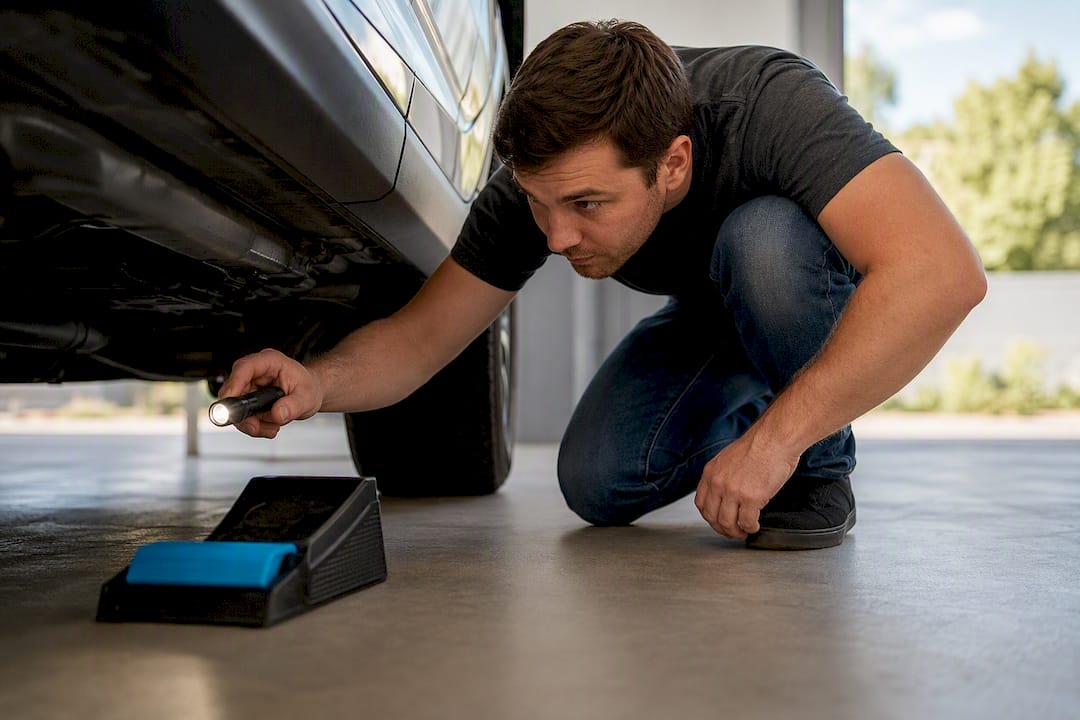
At a private sale, you’re the only line of defense. Bring a flashlight and check under the car for fluid stains before you even start the engine. Ask to see the car cold, not after the seller has run it for twenty minutes to hide a rough start. Test every electrical feature by hand, since private sellers rarely disclose minor issues like a broken window switch unless asked directly. Take it on a mix of surface streets and highway speed, listening for anything that changes under load.
At a dealer lot, the car has usually already passed some internal inspection, but that doesn’t mean skip your own. Ask specifically what was reconditioned before it hit the lot; a vague answer is worth pressing on. Dealers are more likely to let you take a longer, unaccompanied test drive, so use that time to check infotainment syncing, parking sensors, and anything else you’d only notice after fifteen quiet minutes behind the wheel.
In both cases, a structured test-drive checklist catches problems a casual ten-minute loop around the block won’t. Bring a mechanic for a pre-purchase inspection if the seller allows it. A private seller who refuses outright is a signal worth taking seriously.
How Should You Negotiate With a Private Seller vs. a Dealer?
Negotiating a private seller and negotiating a dealer are two different skills, and using the wrong one costs you money.
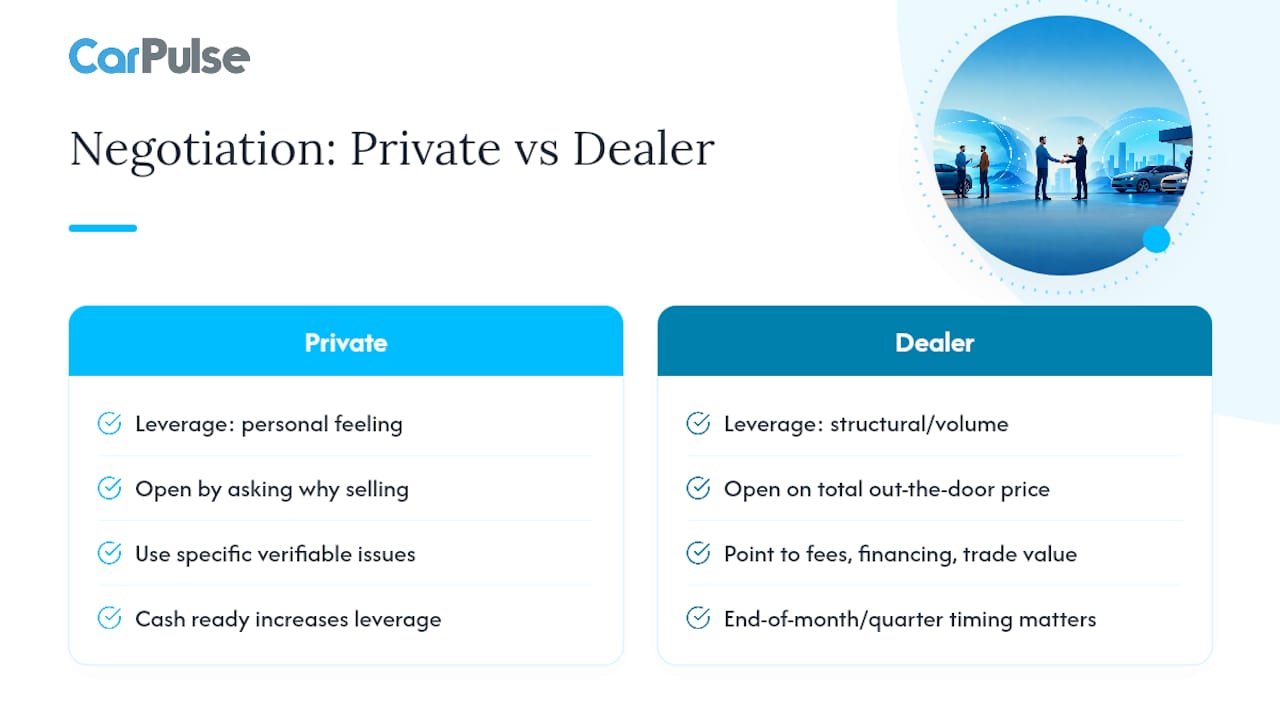
With a private seller, the leverage is personal. You’re negotiating with someone who set a price based on feeling, not a pricing algorithm, so open by asking why they’re selling. A seller relocating in three weeks has far less room to hold firm than one who’s “just seeing what’s out there.” Point to specific, verifiable issues, a worn clutch, curb rash, an expired inspection sticker, rather than a vague “the market’s soft” argument, which private sellers tend to dismiss. Cash in hand, ready to move today, is often worth more to a private seller than an extra few hundred dollars from a buyer who needs financing approval first.
With a dealer, the leverage is structural. Dealers work in volume and often have more flexibility near the end of the month or quarter when they’re chasing a sales target. Negotiate the total out-the-door price, not just the sticker number, since dealers can shift fees, financing terms, or trade-in value even when the listed price looks fixed. Walking away is a legitimate tactic here; a dealer with monthly quotas will sometimes call back with a better number within a day or two.
Neither approach transfers well to the other channel. Pushing a private seller on “end of quarter targets” gets you a blank stare. Trying to guilt a dealer with a personal story rarely moves their number the way it might with an individual seller.
Can You Get Financing Through a Dealer or a Private Seller?
Financing is one of the sharpest lines between the two channels. Dealers routinely offer in-house or partner financing arranged on the spot, letting you drive away the same day with a loan already in place. That convenience carries a cost. Dealer-arranged financing sometimes carries a higher interest rate than a loan you’d secure independently, so it’s worth comparing the dealer’s offer against your own bank or credit union before signing.
Private sellers offer no financing at all. If you’re buying privately and need a loan, you’ll arrange it yourself beforehand, typically through a bank or credit union, and show up with either a certified check or a confirmed transfer ready to go. That means private deals require more upfront legwork on the buyer’s side, but it also means you’re not locked into whatever rate a dealer’s finance office quotes you. It’s one more reason dealers tend to suit first-time buyers who haven’t secured financing on their own and want a single-stop transaction.
Which Channel Fits Which Car and Which Seller?
The right channel depends heavily on what you’re driving and why you’re selling, not just on price preference in the abstract.
A rare, well-maintained, or enthusiast-favorite car almost always does better privately. Buyers hunting for that specific model are willing to pay closer to top market value, and they’re usually knowledgeable enough to skip the reassurance a dealer warranty provides.
A common commuter car with high mileage tends to move faster and with less hassle through a dealer trade-in, even at a lower price, because the pool of private buyers for an unremarkable sedan is thinner and slower to convert.
A seller on a tight deadline, relocating, settling an estate, or needing cash fast, generally comes out ahead with a dealer or a trade-in, since the time saved often outweighs the price gap.
A first-time buyer without a trusted mechanic in their corner benefits from a dealer’s inspection and warranty. A buyer comfortable inspecting a car themselves and willing to do the legwork on history and paperwork can find real savings buying private.
How Do You Verify a Car’s History and Authenticity?
Verification looks different depending on which side of the transaction you’re standing on, but the goal is the same: confirm the car is exactly what the listing claims before money changes hands.
In a private sale, the burden falls almost entirely on the buyer. Get the VIN before you meet and run it through a history check to confirm title status, reported accidents, and odometer consistency. Compare the VIN stamped on the dashboard, the door jamb, and the title itself; a mismatch is an immediate stop sign. Ask for maintenance receipts with dates and mileage that line up logically with the odometer.
In a dealer sale, a vehicle history report is often already available, but “available” doesn’t mean automatically accurate. Ask when it was pulled, since a report generated months before the car hit the lot might miss recent events. A reliable pre-purchase evaluation still matters even when a dealer vouches for the car, because a written history report doesn’t catch every mechanical issue.
If you’re prepping a car to sell either way, a clean, well-documented service history and even a basic wash before photos genuinely change how buyers perceive the listing, something detailing guides like this pre-wash breakdown cover in more depth.
Simple Rules I Use for Buying or Selling
I keep this decision simpler than most guides make it sound. If I’m selling something rare, desirable, or well-documented, I go private every time. The buyer pool is smaller but far more motivated, and the price reflects that.
If I’m selling something common, aging, or I’m short on time, I take the dealer offer even knowing it’s lower. The hours I save chasing private buyers who never show up are worth real money.
As a buyer, I lean dealer when I want a warranty and financing sorted in one visit, especially for a car I can’t personally inspect with confidence. I lean private when I’ve done my homework, the VIN checks out, and the savings are worth the extra legwork. Either way, the checklist earlier in this piece is the same one I run through myself before I hand over a dollar.
— Henri
Ready to List or Search? Here’s How CarPulse Fits In
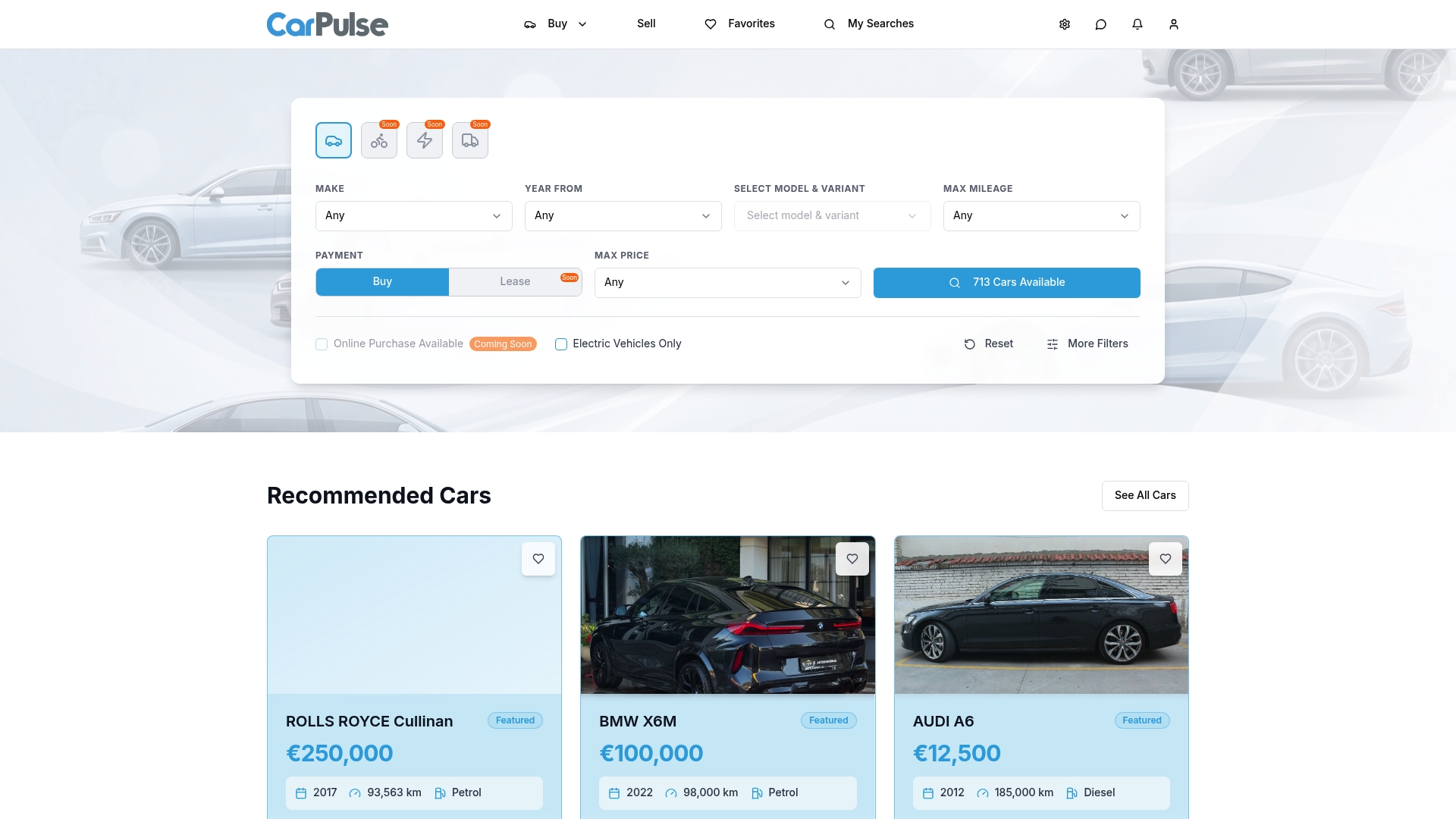
CarPulse connects private buyers and verified dealers through a single listing, allowing your vehicle to reach multiple audiences at once. Entering the VIN auto-populates vehicle details, reducing manual errors. The platform offers AI-assisted price guidance and vehicle history visibility to aid both buyers and sellers.
That combination matters most if you’re still undecided between selling privately for a better price or trading in for speed. Listing on the CarPulse marketplace lets you test private demand while still staying visible to the verified dealer network, without committing to one path upfront. If you’re ready to move, list your car for sale and see what kind of offers come in from both sides at once.
Sources
- Knowing the Distinction, Between a Private Owner and a Used Car Dealer
- Used Car Dealer vs. Private Owner: What’s the Difference?
- How to evaluate cars for sale before making a purchase