Guides
Modern Car Leasing Explained: Your 2026 Guide

Modern Car Leasing Explained: Your 2026 Guide

TL;DR:
- Modern car leasing allows driving a new vehicle for a fixed term without ownership. It offers lower monthly payments but does not build equity, making it ideal for short-term drivers. Buying remains more cost-effective over time, especially for high-mileage, long-term drivers.
Modern car leasing is a financial agreement that lets you drive a new vehicle for a set term without owning it. You pay monthly for the portion of the car’s value you use, not the full purchase price. Lease contracts typically run 24–39 months with annual mileage limits between 10,000 and 15,000 miles. Brands like Toyota, BMW, Honda, and Ford all offer leasing programs through their dealership networks. Understanding what is modern car leasing before you sign saves you from expensive surprises at contract end.
What is modern car leasing and how are payments calculated?
A lease payment covers three things: the capitalized cost, the residual value, and the money factor. The capitalized cost is the negotiated price of the vehicle. The residual value is what the car is expected to be worth when the lease ends. The money factor is the lease equivalent of an interest rate, expressed as a small decimal like 0.00125.

Here is how the math works in practice. You subtract the residual value from the capitalized cost to get the depreciation you owe. Then you add the money factor charge on top. That combined figure, divided by the number of months, produces your base monthly payment. Lease payments run 30–40% lower than financing the same vehicle because you only pay for depreciation during the lease term, not the full vehicle price.
Watch out for dealer markups on the money factor. Markups can cost you $1,500–$2,500 over a 36-month lease on a $35,000 vehicle. That is money you lose without realizing it because the markup is buried in a decimal figure most consumers never question.
Contracts also come with upfront fees at signing, including an acquisition fee, registration, and the first month’s payment. These costs raise your true out-of-pocket expense beyond the advertised monthly rate. Always calculate your total drive-off cost before comparing deals.
Key lease terms to know before you sign:
- Capitalized cost: The negotiated vehicle price. Lower is better.
- Residual value: The projected end-of-lease value. Higher residual means lower payments.
- Money factor: The lease interest rate. Multiply by 2,400 to convert to an approximate APR.
- Mileage limit: Typically 10,000–15,000 miles per year. Overages cost $0.15–$0.30 per mile.
- Wear-and-tear policy: Contracts require maintenance, insurance, and taxes throughout the term.
Pro Tip: Ask the dealer for the base money factor before negotiating. Dealers are not required to disclose it, but you can verify it against published rates from sources like Edmunds. Negotiating the cap cost down by $1,000 saves you more than $27 per month on a 36-month lease.
Car leasing vs buying: which one actually costs less?
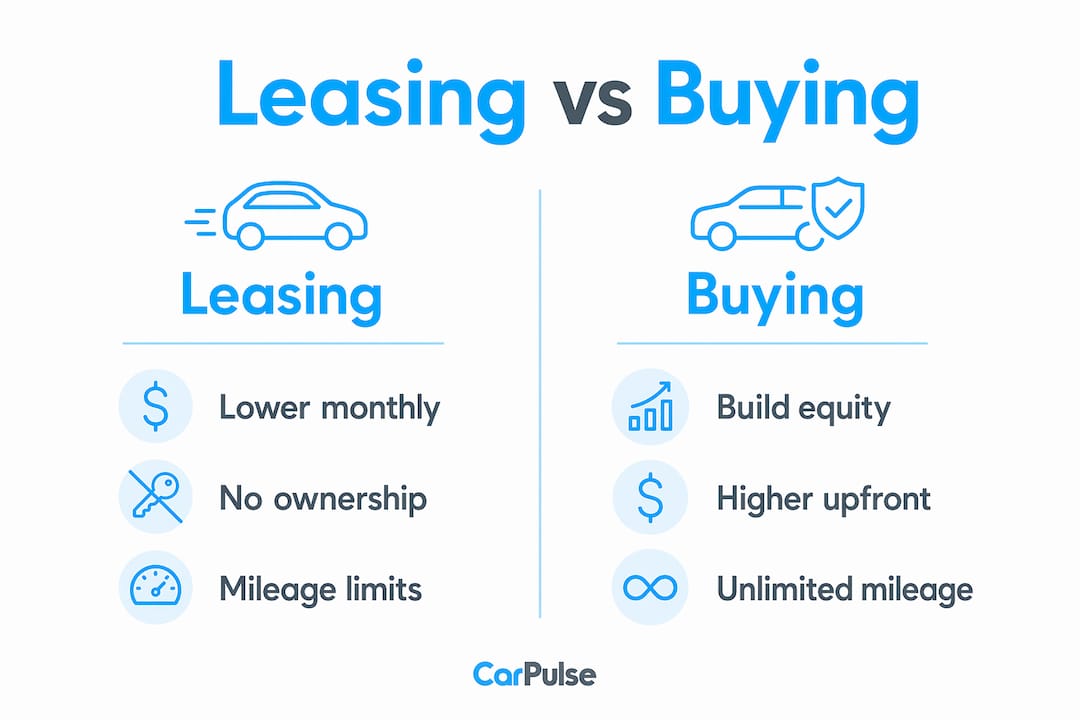
The honest answer is that buying usually costs less over the long run. Leasing a $35,000 Toyota RAV4 XLE over three years costs $21,583, while buying the same vehicle costs $17,532 after accounting for equity. That gap exists because leasing builds no ownership stake. You pay for rapid depreciation and hand the car back with nothing to show for it.
That said, monthly payment comparisons favor leasing significantly. The lower payment is real. The question is what you get for it.
| Category | Leasing | Buying |
|---|---|---|
| Monthly payment | Lower (30–40% less) | Higher |
| Equity built | None | Yes, grows over time |
| Mileage freedom | Limited (10,000–15,000/yr) | Unlimited |
| Repair risk | Low (under warranty) | Higher after warranty ends |
| 3-year total cost (example) | $21,583 | $17,532 (after equity) |
| Flexibility at term end | Return, buy, or re-lease | Sell or keep |
Leasing wins on specific advantages:
- Lower monthly payments free up cash for other expenses.
- Warranty coverage throughout the lease term means fewer surprise repair bills.
- New car every 2–3 years gives you access to the latest safety tech, fuel efficiency, and infotainment systems.
- You avoid the hassle of selling a used car.
Buying wins when you drive heavily, plan to keep the vehicle past five years, or want to build an asset. Many consumers mistake low monthly payments for overall savings, but leases do not build equity. You are essentially renting the car’s depreciation curve. That is a fair trade for some drivers and a poor one for others.
What happens at lease end and what extra costs should you expect?
When your lease term ends, you have three choices. You can return the car and walk away. You can buy the vehicle at the predetermined residual value. Or you can start a new lease on a different model. Most drivers who enjoy leasing roll directly into a new vehicle at this point.
The return option sounds simple, but it carries real financial risk if you have not managed the contract carefully. Excess mileage fees accumulate fast. Exceeding your limit by 5,000 miles over a three-year lease costs $750–$1,500 at $0.15–$0.30 per mile. That erases months of payment savings in a single check.
Wear-and-tear charges are the other major trap. Leasing companies define normal wear differently than most drivers expect. A small door ding, a cracked windshield, or worn tires can all generate charges at return. Schedule a pre-return inspection through the leasing company, usually available 60–90 days before the end date. This gives you time to fix issues yourself at lower cost than the dealer’s rate.
Early termination is the most expensive mistake you can make. Lease agreements lock you into the full term with significant penalties for breaking the contract early. Unlike a car loan, you cannot simply sell the vehicle to cover the balance. If your circumstances might change, a shorter lease term or a purchase may be the safer choice.
A quick checklist before returning your leased vehicle:
- Schedule the official pre-return inspection at least 60 days out.
- Check your odometer against your contracted mileage limit.
- Repair any damage that exceeds normal wear standards.
- Gather all original equipment, including floor mats and charging cables.
- Review your lease contract terms for any brand-specific return requirements.
Is leasing right for your lifestyle and financial goals?
The best way to answer this is to look at your actual driving habits before you look at any payment quote. Consumer Reports recommends leasing for drivers who want predictable costs and a new car every 2–3 years, while buying suits those who drive over 12,000 miles per year or plan to keep the vehicle long term. That is a clean framework, but your personal situation adds nuance.
Work through these four questions before deciding:
- How many miles do you drive annually? If you consistently exceed 15,000 miles per year, leasing will cost you more in overage fees than the payment savings are worth.
- How long do you keep vehicles? Drivers who hold cars for six or more years almost always come out ahead buying. Drivers who trade every two to three years may find leasing more convenient.
- Do you use the vehicle for business? Business users with tax deductions may benefit more from leasing because lease payments can be deducted as a business expense. Personal drivers do not get this advantage.
- Do you prioritize monthly cash flow or long-term net worth? Leasing optimizes for lower monthly payments. Buying optimizes for asset accumulation. Neither is wrong. They serve different financial priorities.
Pro Tip: Use a lease vs buy calculator to compare total ownership costs side by side, not just monthly payments. A $150 monthly payment difference looks compelling until you factor in zero equity, mileage penalties, and the cost of perpetual lease cycles.
You can also explore vehicle financing options in Albania to understand how leasing compares to local loan products before committing to either path.
Key Takeaways
Modern car leasing costs less per month than buying but builds no equity, making total cost of ownership the only reliable measure of which option is smarter for your situation.
| Point | Details |
|---|---|
| Lease payments cover depreciation | You pay for the car’s value loss during your term, not the full purchase price. |
| Money factor markups add up | Dealer markups on the money factor can cost $1,500–$2,500 over a 36-month lease. |
| Buying beats leasing long term | Over three years, buying a $35,000 vehicle saves roughly $4,000 after equity. |
| Mileage limits carry real penalties | Exceeding limits by 5,000 miles can cost $750–$1,500 in overage fees alone. |
| Match the choice to your habits | Leasing fits low-mileage, frequent upgraders; buying fits high-mileage, long-term drivers. |
Why I think most people approach leasing backwards
Most drivers walk into a dealership focused on the monthly payment. That is the wrong starting point. The monthly payment is the least useful number in a lease negotiation because it hides the money factor markup, the capitalized cost, and the residual value all at once.
I have seen people celebrate a $299 per month payment on a vehicle where the dealer inflated the money factor by 0.00060. That single markup added over $1,800 to the total lease cost. The payment looked great. The deal was not.
The smarter approach is to treat a lease like any other financial product. Negotiate the cap cost first, exactly as you would negotiate a purchase price. Then verify the money factor against published rates. Only after those two numbers are locked in should you calculate the monthly payment. Sequence matters.
Leasing genuinely makes sense for a specific type of driver: someone who drives under 12,000 miles per year, values warranty coverage, and wants a new vehicle every two to three years without the hassle of resale. For that person, leasing is not a compromise. It is the right tool. For everyone else, the perpetual payment cycle and zero equity make buying the stronger long-term choice.
The off-lease vehicle market is also worth considering. When lease returns flood the used car market, buyers can often purchase a two to three year old vehicle with low miles and full service history at a significant discount. That is a third path most consumers overlook entirely.
— Henri
Find your next vehicle on Carpulse
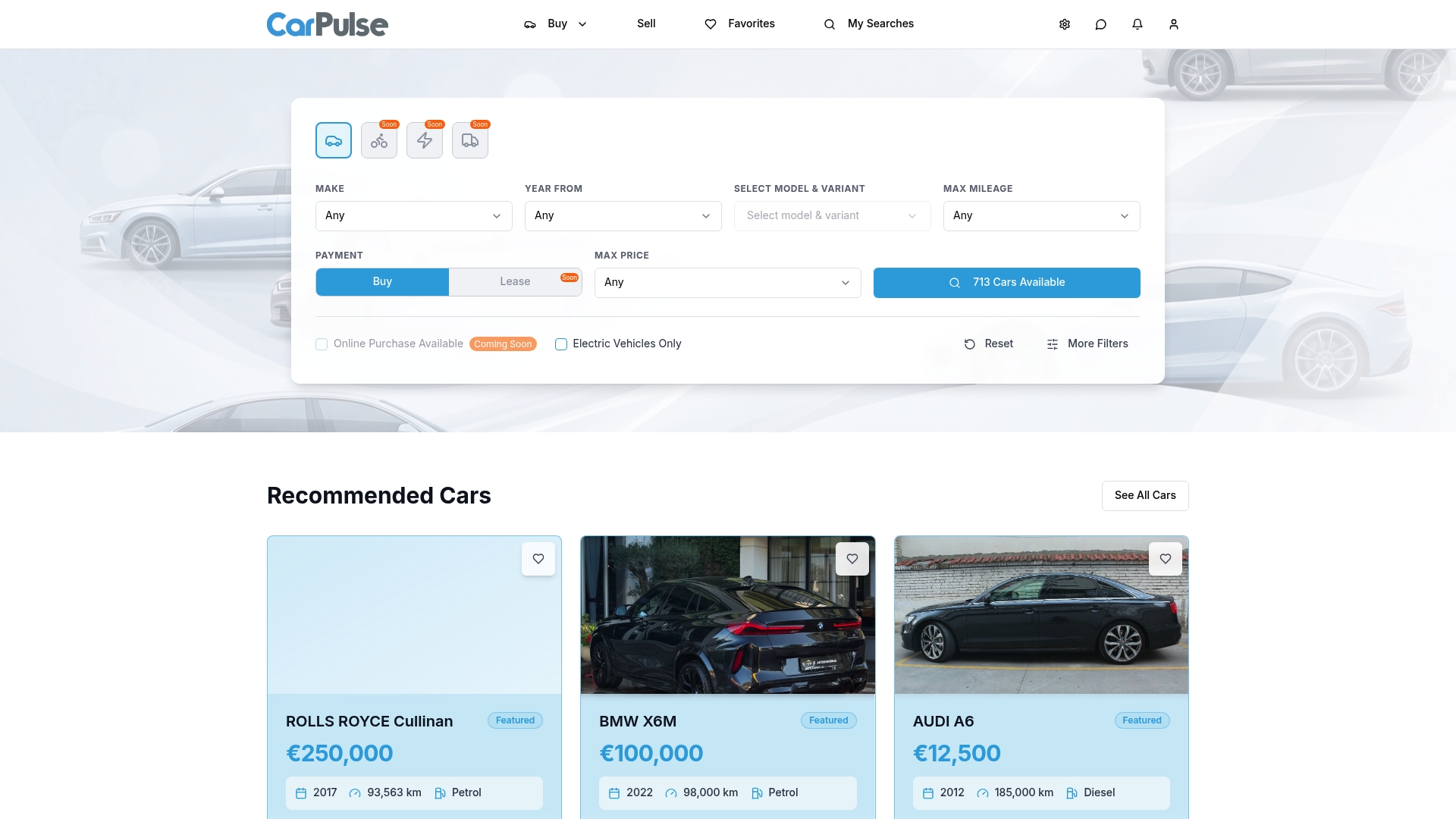
Carpulse is Albania’s largest online car marketplace, connecting individual buyers with verified dealerships and private sellers across the country. Whether you are weighing a lease against a purchase or simply want to compare what is available in your price range, Carpulse gives you the tools to filter by make, model, year, mileage, fuel type, and price in one place. The platform’s VIN-based listing system means every vehicle detail is accurate and verified before you see it. Browse new arrivals, save your searches, and contact sellers directly through the Carpulse marketplace on desktop or through the iOS and Android app.
FAQ
What is the difference between leasing and financing a car?
Leasing means you pay to use a vehicle for a fixed term and return it at the end. Financing means you borrow money to purchase the vehicle and own it outright once the loan is paid off.
How does the money factor affect my lease payment?
The money factor is the lease equivalent of an interest rate. Multiply it by 2,400 to estimate the APR, and always ask the dealer for the base rate to check for markups.
What happens if I go over my mileage limit on a lease?
Excess mileage fees typically run $0.15–$0.30 per mile. Exceeding your limit by 5,000 miles over a three-year lease can cost $750–$1,500 at contract end.
Can I end a car lease early?
Early termination is possible but expensive. Most lease agreements charge significant penalties, and you cannot simply sell the car to cover the remaining balance the way you can with a loan.
Is leasing a car worth it in 2026?
Leasing is worth it if you drive under 12,000–15,000 miles per year, want a new vehicle every two to three years, and prioritize lower monthly payments over building equity. For high-mileage drivers or long-term owners, buying delivers better total value.