Guides
How to Inspect a Vehicle Before You Buy
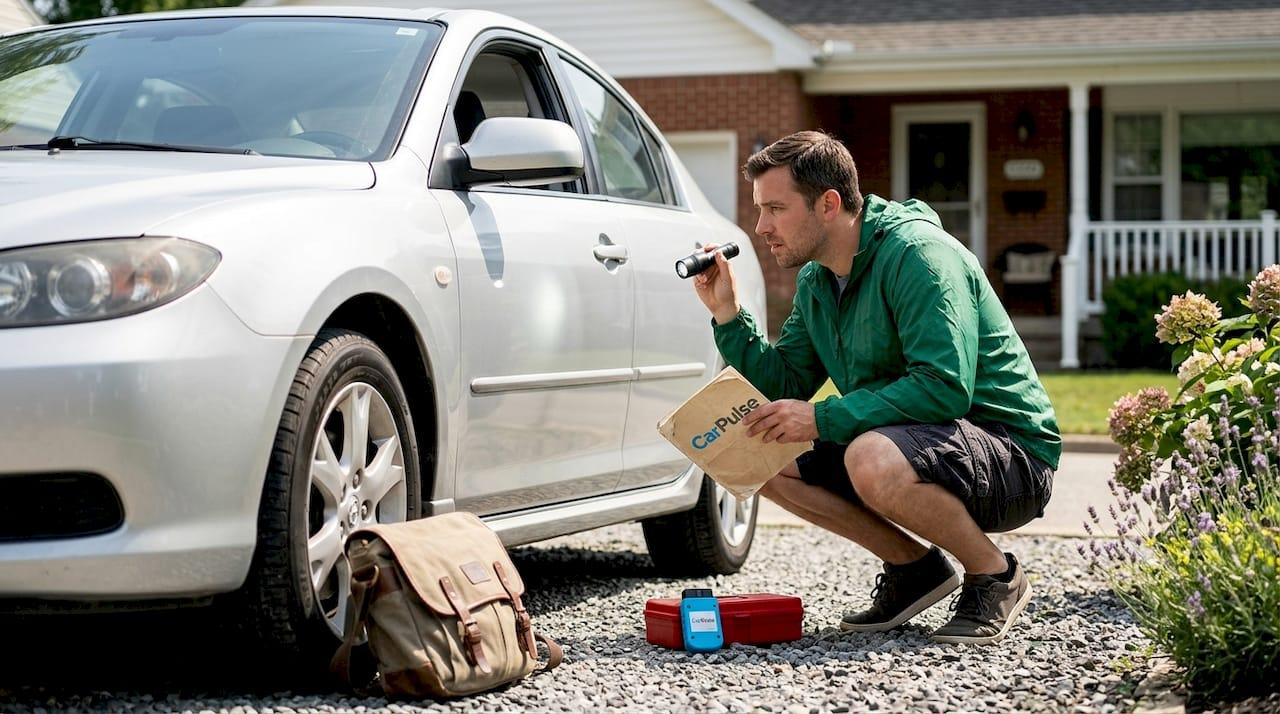
How to Inspect a Vehicle Before You Buy
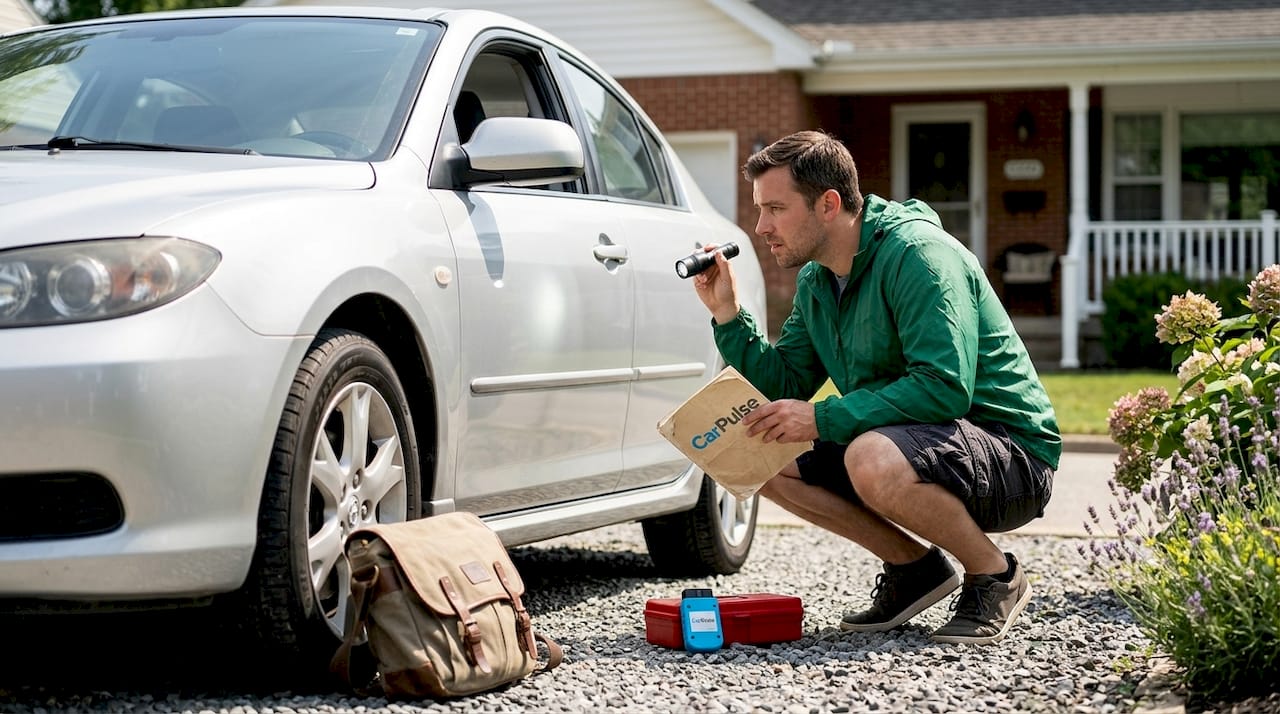
TL;DR:
- Performing a systematic vehicle inspection is essential to avoid costly hidden damages and mechanical issues.
- Bringing proper tools, inspecting in daylight on level ground, and getting a professional PPI greatly enhance your confidence.
Buying a car without knowing how to inspect a vehicle properly is one of the most expensive mistakes you can make. A fresh paint job and a friendly seller can mask thousands of dollars in hidden damage, mechanical problems, or flood history. The good news is that a structured, systematic inspection puts the power back in your hands. This guide walks you through every stage of the process, from the tools you need to bring, to what a mechanic’s report actually tells you, so you can buy with confidence instead of regret.
Table of Contents
- Key takeaways
- How to inspect a vehicle: before you even touch the car
- Exterior and interior inspection checklist
- Under the hood and under the vehicle
- The test drive: what to listen and feel for
- When to bring in a professional mechanic
- My honest take on inspecting cars before buying
- Find your next car on Carpulse
- FAQ
Key takeaways
| Point | Details |
|---|---|
| Prepare before you arrive | Bring a flashlight, camera, and gloves to document the car’s condition objectively. |
| Inspect in the right conditions | Daylight and dry weather on level ground give you the clearest view of defects. |
| Work through a structured checklist | Cover exterior, interior, engine bay, and undercarriage before starting the test drive. |
| Always test drive for at least 20 minutes | Drive on city streets and highways to surface braking, steering, and transmission issues. |
| Get a professional pre-purchase inspection | A mechanic’s written report costs around $100 to $150 and strengthens your negotiating position. |
How to inspect a vehicle: before you even touch the car
The preparation stage is where most buyers cut corners. They show up without tools, inspect in a dark garage, and trust their gut. That approach costs money.
The right tools to bring
A proper car inspection guide starts with a basic kit. Pack these before you leave:
- A small flashlight for dark engine bays, wheel wells, and under the car
- A camera or smartphone to photograph every panel, fluid, and concern
- Gloves and a rag so you can check fluids without making a mess
- A notebook to record findings, mileage, and seller statements
- A tire tread depth gauge (available for under $5) to measure wear precisely
These tools cost almost nothing, but they document inspection findings in a way your memory never will. When you are comparing three different cars a week later, the photos make the decision obvious.
Timing and conditions matter more than you think
Inspect during daylight on a dry day and on a level surface. Wet paint hides scratches. Shadows hide rust. A sloped driveway makes it impossible to tell if a car is sitting unevenly because of a suspension problem.
Ask the seller to park on flat ground and to not start the car before you arrive. A cold engine is honest. It either starts cleanly or it does not. A warm engine that was run for 20 minutes before your visit is a seller covering up a hard cold start problem.
Pro Tip: Wait at least an hour after engine use before looking underneath. A resting engine reveals real leak patterns that disappear when everything is warm and expanded.
Before you open a single door, verify the VIN on the dashboard, door jamb, and title all match. Ask for the vehicle history report. This takes two minutes and eliminates cars with title washing or odometer fraud before you spend an hour on a full inspection.
Exterior and interior inspection checklist
A systematic inspection starts from the outside and works inward. Walk around the entire car slowly before touching anything. You are looking for the story the car tells before the seller says a word.
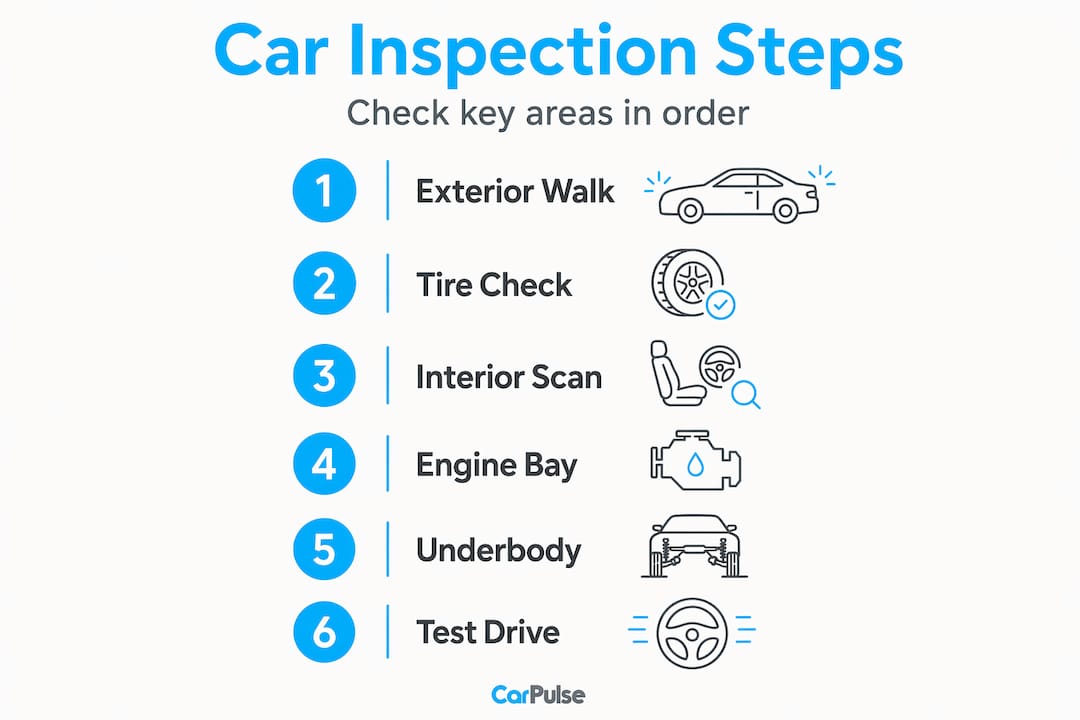
What to check on the exterior
Rust, misaligned body panels, and paint mismatches are your biggest red flags. A repainted door will look slightly different in direct sunlight. Panel gaps that are uneven on one side suggest frame damage or a sloppy repair. These are not minor cosmetic issues. They indicate the car has been in an accident.
Work through this exterior list:
- Body panels: Check every panel for dents, bubbling paint (early rust), and color variations
- Door gaps: Gaps should be consistent on both sides of the car
- Windshield and glass: Look for chips, cracks, and any delamination around the edges
- Lights: Turn on headlights, taillights, turn signals, and brake lights. All must work
- Wipers and mirrors: Test wiper movement and check that all mirrors adjust and hold position
- Door seals: Press the rubber seals around each door. Cracked or stiff seals let in water
Now check the tires. Inspect tires for wear patterns, consistent brand across all four positions, and sidewall condition. Uneven wear on one side of a tire almost always means an alignment or suspension problem. Four mismatched tire brands on a low-mileage car is a red flag about how the car was actually driven and maintained.
Pro Tip: Crouch down at each corner of the car and sight along the body lines. Waves or ripples in the metal that are invisible standing up become obvious at this angle. Body filler causes this effect, and it means a past repair was done on the cheap.
What to check inside the cabin
Step inside and give the interior a full minute before touching the controls. What do you smell? A musty odor or mildew smell signals water intrusion. A heavy air freshener is sometimes a seller’s way of masking that same problem.
Check these items inside:
- Seat condition: Look for tears, stains, and wear inconsistent with the odometer reading
- Seatbelts: Pull each belt fully out and check it retracts smoothly
- Dashboard warning lights: Start the car and watch which lights illuminate, then which ones go out
- Windows and locks: Test every power window and door lock from both the driver and passenger controls
- Climate controls and infotainment: Run the heater, AC, and every input on the screen
- Floor and trunk: Lift the carpet in the trunk and rear footwells and press it. Wet padding means a leak somewhere
Take photos of everything that catches your attention. Comparison later is where those photos earn their value.
Under the hood and under the vehicle
This is the part most buyers skip because it feels technical. You do not need to be a mechanic to spot the warning signs. You just need to know what healthy looks like.
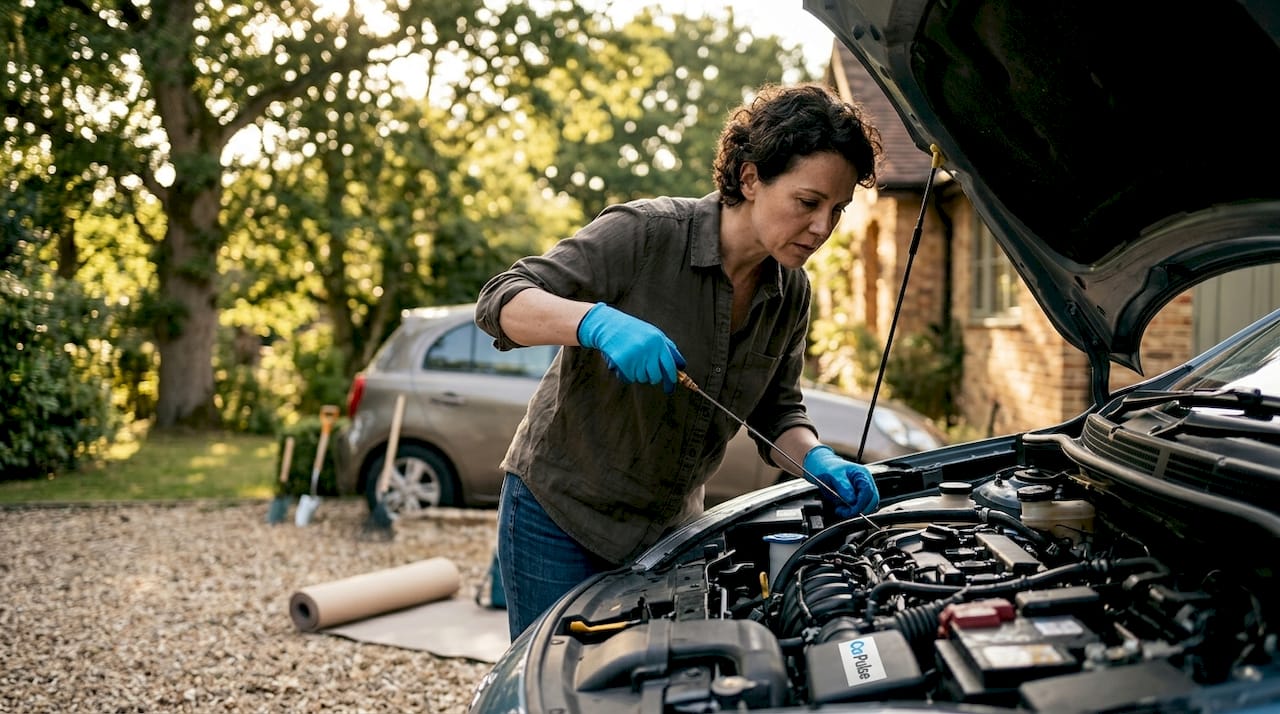
Engine bay inspection: what to look for
Open the hood with the engine cold. Work through these checks in order:
- Oil: Pull the dipstick, wipe it, reinsert, and pull again. Oil should be amber to dark brown. A milky or foamy appearance means coolant contamination, which points to a blown head gasket.
- Coolant reservoir: The fluid should be green, orange, or pink, depending on type. Never open this cap on a hot engine.
- Transmission fluid: On vehicles with a dipstick, fluid should be red or pink and not smell burnt. Dark brown fluid with a burnt smell means the transmission has been neglected.
- Belts and hoses: Hoses should be supple and firm, not cracked or soft. Belts should have no fraying or glazing.
- Battery: Look for corrosion around the terminals (white or blue powder) and check that the battery hold-down is secure.
Here is a quick reference for what you find and what it likely means:
| What you see | What it likely means |
|---|---|
| Milky or foamy oil | Coolant mixing with oil, possible head gasket failure |
| Burnt-smelling transmission fluid | Overheated transmission, potential rebuild needed |
| Cracked or soft hoses | Deferred maintenance, risk of overheating |
| Heavy battery corrosion | Electrical issues or battery near end of life |
| Fresh undercoating or paint in engine bay | Possible accident repair or flood damage cover-up |
Under the vehicle check
Shine your flashlight under the car along the entire length. You are looking for fluid spots on the ground (fresh drops versus old stains matter), rust on the frame or subframe, and any parts that look bent, damaged, or recently replaced without reason. A car that has been in a serious collision will sometimes show bent frame rails that no body shop can fully straighten.
The test drive: what to listen and feel for
The test drive is where mechanical problems announce themselves. Start with the engine running while the car is still parked. Listen for rough idle, rattles, or clicking sounds. Test the heater, AC, radio, every window, and every lock before moving an inch.
Once you drive, cover these points:
- Brakes: Find a safe empty stretch and brake firmly from 35 mph. The car should stop straight without pulling. Any pulsing or grinding through the pedal means the rotors or pads need attention.
- Steering: Drive at highway speed and briefly loosen your grip. The car should track straight. Pulling to one side means alignment or tire problems at minimum, and possibly suspension damage.
- Transmission: Automatic transmissions should shift without hesitation, banging, or slipping. Manual transmissions should engage cleanly with no grinding.
- Suspension: Hit a speed bump slowly. You should hear one thud per wheel. Multiple thuds or a metallic clank means worn shocks, struts, or control arm bushings.
- Unusual sounds: Any whining, clunking, or squealing that appears only at speed is worth noting precisely when it happens, so a mechanic can diagnose it efficiently.
Drive for at least 20 minutes on a mix of local roads and faster roads. Short test drives miss intermittent problems that only appear once the drivetrain reaches operating temperature.
When to bring in a professional mechanic
Your personal inspection covers the visible, drivable, and accessible parts of the car. A mechanic’s pre-purchase inspection (PPI) goes further. A qualified shop will put the car on a lift, check brake thickness with calipers, measure tire tread precisely, scan for stored diagnostic codes, and inspect the exhaust system and CV joints properly.
A PPI typically costs around $100 to $150 and delivers a written report. That written report is the key. It transforms your subjective observations into documented repair cost estimates you can use to negotiate a lower price or walk away with confidence. Most sellers accept a PPI request. A seller who refuses is telling you something important.
Find a shop that is independent of the dealership selling the car. Many chain service centers offer PPIs, or you can find a well-reviewed independent mechanic. Avoid letting the selling dealer’s affiliated shop do the inspection. Their loyalty is not to you.
Pro Tip: A multi-point vehicle inspection from a reputable shop covers 20 to 30 components your eyes simply cannot reach. It costs less than one tank of gas for most trucks, and it has saved buyers thousands in avoided repair bills.
If multiple minor issues show up during your own inspection and the PPI adds more, do not talk yourself into the car because you like the color. A better option exists.
My honest take on inspecting cars before buying
I have watched buyers skip the inspection process because they felt awkward, rushed, or just too excited about the car. Every single time, they paid for it later. Not occasionally. Every time.
The most common mistake I see is treating the inspection like a formality rather than a filter. You are not there to find reasons to love the car. You are there to find every reason to question it, so you can make a decision based on facts instead of excitement.
The counterintuitive truth is that a thorough inspection often makes you more confident about the right car, not less confident about every car. When you go through the full checklist and nothing alarming shows up, you know what you are buying. That peace of mind is worth every minute spent under the hood.
If you are buying a used car in Albania, the same principles apply universally. Combine your own walk-around and test drive with a professional PPI, and you are operating at a completely different level than the average buyer. The inspection process is not complicated. It just requires patience and the willingness to slow down when everyone else rushes.
— Henri
Find your next car on Carpulse
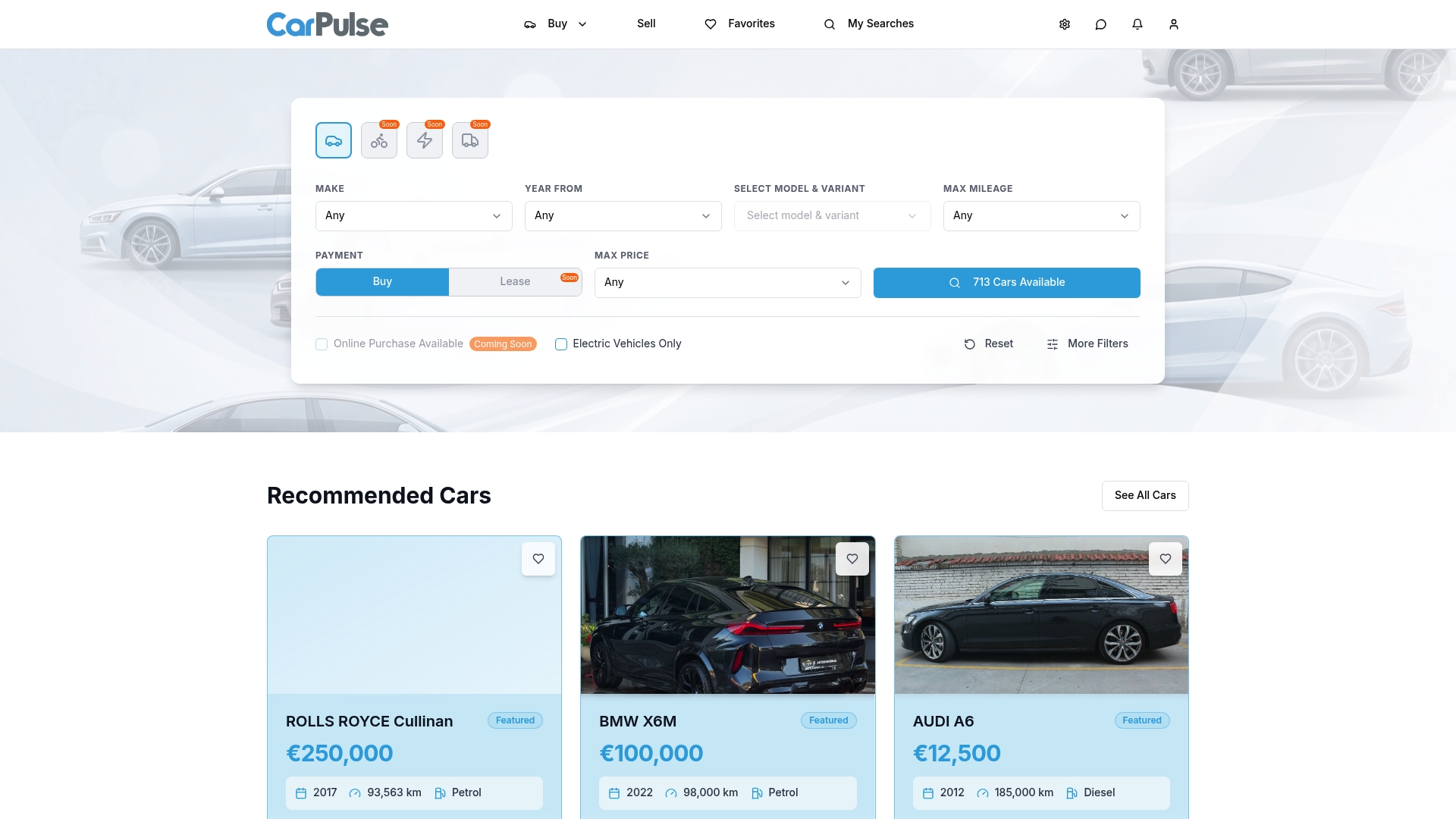
Carpulse is Albania’s largest vehicle marketplace, where verified dealerships and private sellers list cars with accurate, VIN-based details so you know exactly what you are evaluating before you even schedule a visit. Every listing includes make, model, year, mileage, fuel type, and seller contact, giving you the information you need to shortlist the right cars and arrive at inspections fully prepared. Browse trusted car listings on Carpulse and use the blog’s car inspection guides to walk into every viewing with a clear plan. Whether you are buying your first car or upgrading, Carpulse gives you the tools to find a vehicle you can trust, at a price that reflects its actual condition.
FAQ
What tools do I need to inspect a used car?
Bring a flashlight, camera, gloves, a rag, and a notebook. A tire tread depth gauge is also useful and costs very little.
How long should a test drive be?
Drive for at least 20 minutes on a mix of city streets and faster roads. Short drives miss problems that only appear once the engine reaches full operating temperature.
What does a pre-purchase inspection cost?
A mechanic’s pre-purchase inspection typically costs between $100 and $150 and includes a written report with documented findings and estimated repair costs.
What are the biggest red flags during a vehicle inspection?
Mismatched paint, uneven body panel gaps, milky oil, burnt transmission fluid, and a seller who refuses a professional inspection are the clearest warning signs of hidden problems.
Should I trust a dealer’s own inspection report?
No. Always use an independent mechanic for a pre-purchase inspection. A dealer-affiliated shop has a conflict of interest, and their report may not reflect the car’s full condition.
Recommended
- Si të provoni një makinë të përdorur: udhëzues i plotë… | CarPulse Albania
- Provë me Makinë të Përdorur: Udhëzues i Plotë për Shqipërinë | CarPulse Albania
- Makina ne Shitje Shqipëri - Udhëzuesi i Plotë për Blerje | CarPulse Albania
- Blej Makina në Shqipëri: Udhëzuesi i Plotë | CarPulse.al | CarPulse Albania