
Guides
Explaining Hybrid Car Systems: A 2026 Buyer's Guide
Explaining Hybrid Car Systems: A 2026 Buyer’s Guide

TL;DR:
- Hybrid car systems combine gasoline engines with electric motors to improve fuel efficiency and lower emissions without requiring external charging. Their effectiveness depends on driving habits, with city driving benefiting most from regenerative braking and electric motor use. Buying the right hybrid type suited to daily routines can lead to significant savings and a better driving experience.
Hybrid car systems are propulsion technologies that pair a gasoline engine with an electric motor and battery to improve fuel efficiency and cut tailpipe emissions. Most hybrids recharge automatically during normal driving through regenerative braking and engine power, so you never need to plug them in. That single fact separates most hybrids from electric vehicles and makes them a practical choice for drivers who want lower fuel costs without changing how they charge. Explaining hybrid car systems clearly matters because the technology comes in several distinct configurations, each with different strengths depending on how and where you drive.
How do different types of hybrid car systems work?
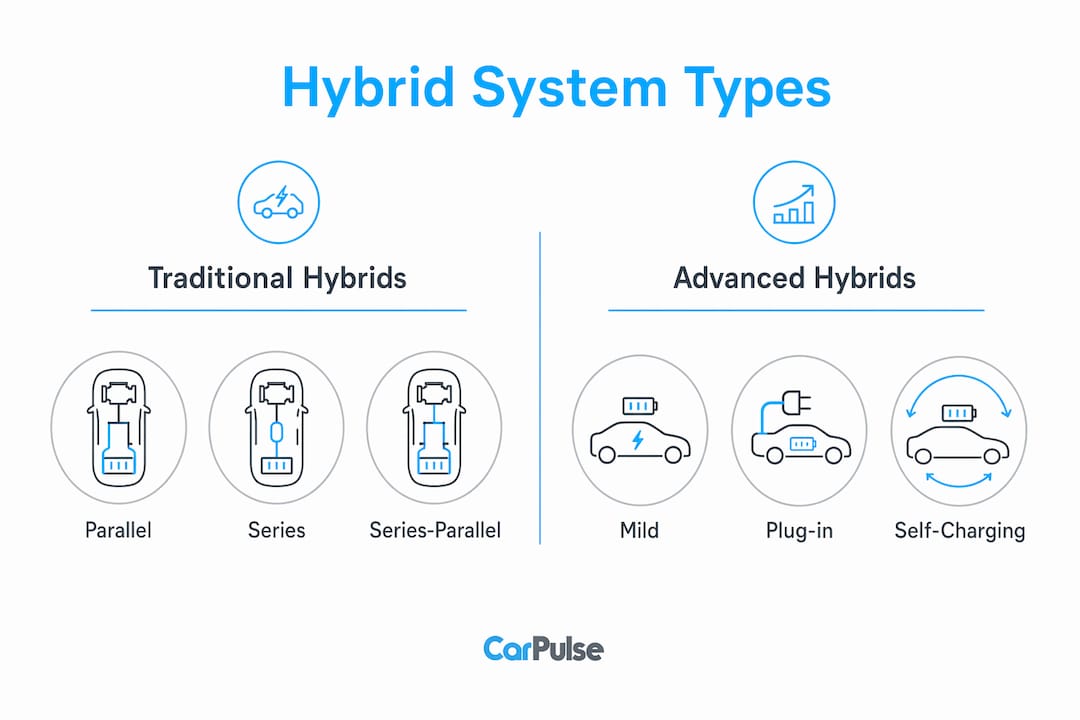
Hybrid vehicle technology is not one single design. It covers at least five distinct configurations, and choosing the wrong one for your driving pattern is the most common mistake buyers make.
Parallel hybrids are the most common setup. Both the engine and motor can drive the wheels independently or together, depending on demand. At low speeds, the electric motor handles most of the work. At highway speeds, the gasoline engine takes over. This split keeps fuel consumption low in city traffic without sacrificing highway range.
Series hybrids work differently. The gasoline engine never connects directly to the wheels. Instead, it runs a generator that produces electricity, and the electric motor does all the driving. This setup works well in stop-and-go traffic but is less efficient at sustained highway speeds.
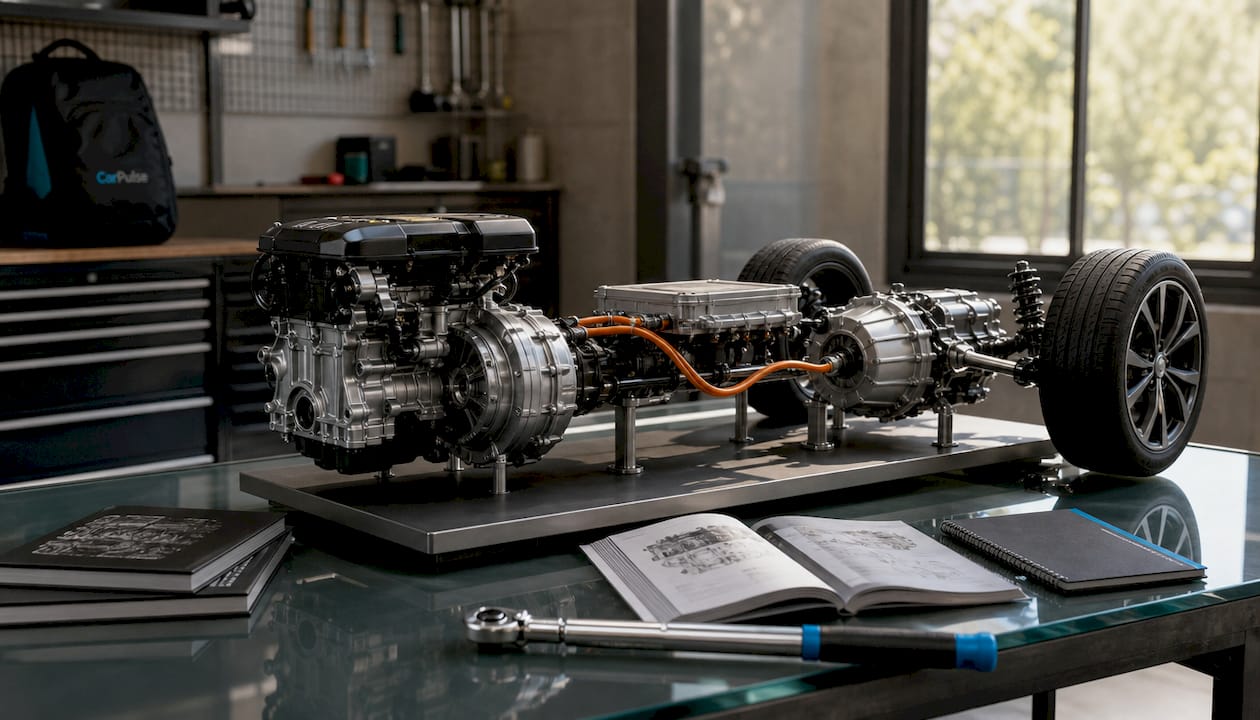
Series-parallel hybrids, sometimes called power-split systems, combine both approaches. An onboard computer decides in real time which power source is most efficient. Hybrid energy management systems use onboard computers to balance power between the engine and battery based on driving conditions. This makes series-parallel designs the most fuel-efficient configuration across mixed driving.
Mild hybrids use a small electric motor to assist the engine but cannot propel the car on electricity alone. They cost less than full hybrids and still deliver modest fuel savings, mainly through regenerative braking and engine-off coasting.
Plug-in hybrids (PHEVs) carry a larger battery that you charge from an external power source. PHEV charging time typically runs 2–5 hours depending on charger speed and battery size. Once charged, PHEVs can cover short distances on electricity alone before the gasoline engine kicks in.
| Configuration | Engine role | Electric-only driving | External charging |
|---|---|---|---|
| Parallel hybrid | Drives wheels directly | No | No |
| Series hybrid | Powers generator only | Yes | No |
| Series-parallel | Flexible, computer-managed | Limited | No |
| Mild hybrid | Assisted by motor | No | No |
| Plug-in hybrid (PHEV) | Backup power source | Yes (short range) | Yes |
Pro Tip: If you drive mostly in the city and have access to a home charger, a plug-in hybrid gives you the best of both worlds. If you drive long distances without reliable charging access, a full parallel or series-parallel hybrid is the smarter pick.
What is regenerative braking and how does it work?
Regenerative braking is the process that makes most hybrids self-sufficient. When you lift your foot off the accelerator or press the brake pedal, the electric motor reverses its role and acts as a generator.
Here is how the process works step by step:
- Deceleration begins. You release the accelerator or apply the brakes.
- Motor becomes a generator. The electric motor switches into generator mode, creating resistance that slows the car.
- Kinetic energy converts to electricity. Kinetic energy normally lost as heat during braking gets converted into electrical energy instead.
- Battery recharges. That electricity flows back into the hybrid battery, topping it up for the next acceleration.
- Mechanical brakes assist. Physical brake pads engage only when the regenerative system cannot slow the car fast enough, such as in hard stops.
The practical result is twofold. First, you recover energy that a conventional car simply wastes as heat. Second, regenerative braking extends brake pad life by reducing mechanical wear on pads and rotors. Brake jobs on hybrids are noticeably less frequent than on gasoline-only vehicles. That difference adds up in real maintenance savings over a typical ownership period.
Regenerative braking delivers the biggest gains in urban stop-and-go traffic. Every red light, every slowdown for a turn, every crawl through congestion becomes a small charging event. On a steady highway cruise, there are far fewer braking opportunities, so the system contributes less. This is why city drivers consistently see stronger fuel economy numbers from hybrids than highway commuters do.
Pro Tip: To maximize regenerative braking, ease off the accelerator early when approaching a stop instead of braking hard at the last second. Gradual deceleration gives the motor more time to recover energy.
What are the main advantages of hybrid cars?
The advantages of hybrid cars over traditional gasoline vehicles fall into four clear categories: fuel economy, emissions, driving feel, and maintenance costs.
Fuel economy is the headline benefit. Hybrids use smaller displacement engines paired with electric motor torque to maintain performance while burning less fuel. The electric motor handles low-speed acceleration, where gasoline engines are least efficient. The result is meaningful savings at the pump, especially for urban drivers.
Lower emissions follow directly from burning less fuel. Hybrids produce fewer tailpipe emissions per mile than equivalent gasoline vehicles. For buyers in cities with air quality concerns or emissions-based registration fees, this matters beyond just fuel cost.
Smoother driving experience is something buyers often underestimate before they test drive a hybrid. Electric motors deliver instant torque, so acceleration from a stop feels immediate and quiet. There is no gear-hunting hesitation at low speeds that you sometimes feel in smaller gasoline engines.
Reduced maintenance costs come from two sources. Regenerative braking preserves brake components, as covered above. Additionally, modern hybrid systems include automatic start-stop features that shut the engine off during idling, reducing engine wear and fuel waste in traffic. Fewer engine hours means longer intervals between certain service items.
The key advantages at a glance:
- Better fuel economy in city driving conditions
- Lower tailpipe emissions per mile traveled
- Quieter, smoother acceleration at low speeds
- Longer brake pad and rotor lifespan
- No external charging required for self-charging hybrids
- Reduced engine wear through automatic start-stop technology
- Flexibility across city and highway driving without range anxiety
Self-charging hybrids remove the dependency on charging infrastructure entirely, which is a real advantage in regions where public chargers are still limited. You fill up at any gas station and the car handles the rest.
How do driving habits affect hybrid efficiency?
The honest answer is that your driving pattern determines whether a hybrid pays off quickly or slowly. Fuel efficiency gains vary significantly based on whether you drive mostly in city traffic or on open highways.
City driving maximizes every advantage of hybrid vehicle technology. Frequent stops feed the regenerative braking system. The engine shuts off at red lights. The electric motor handles low-speed movement. All of these events compound into real fuel savings over a week of urban commuting.
Highway driving tells a different story. At a steady 65 mph, the gasoline engine runs continuously and the electric motor contributes little. Regenerative braking events are rare. The hybrid premium on the purchase price takes longer to recover through fuel savings in this scenario.
For plug-in hybrid buyers, charging behavior is the deciding variable. PHEVs must be charged regularly to maximize electric driving range and fuel savings. A PHEV owner who never plugs in essentially drives a heavier, more expensive regular hybrid. The electric range benefit disappears completely without consistent charging.
| Driving profile | Hybrid type that fits best | Payback speed |
|---|---|---|
| Urban commuter, short trips | Full hybrid or PHEV | Fast |
| Mixed city and highway | Series-parallel hybrid | Moderate |
| Mostly highway, long distances | Mild hybrid or gasoline | Slow |
| Short urban trips with home charger | Plug-in hybrid (PHEV) | Fastest |
Evaluating the hybrid premium payback requires comparing your annual fuel costs against the price difference between a hybrid and its gasoline equivalent. Buyers who drive high annual mileage in urban conditions recover the premium fastest. Low-mileage highway drivers may never fully recoup it through fuel savings alone.
Pro Tip: Before buying, track your driving for two weeks. Note how many miles are city versus highway. If more than 60% of your driving is urban, a full hybrid will likely pay for its premium within a reasonable ownership period.
Key Takeaways
Hybrid car systems deliver the strongest fuel and cost benefits for urban drivers who use regenerative braking frequently and match their hybrid type to their actual driving pattern.
| Point | Details |
|---|---|
| Hybrid types vary significantly | Parallel, series, series-parallel, mild, and plug-in hybrids each suit different driving needs. |
| Regenerative braking is central | It recharges the battery during deceleration and extends brake component lifespan. |
| City driving maximizes savings | Stop-and-go traffic activates regenerative braking and electric motor use most frequently. |
| PHEVs require regular charging | Without consistent plug-in charging, a PHEV loses its electric range advantage entirely. |
| Self-charging hybrids need no plug | Most hybrids recharge automatically, making them practical where charging infrastructure is limited. |
Why I think most buyers overthink the hybrid decision
People spend weeks comparing specifications and reading technical breakdowns of hybrid systems, then freeze when it is time to decide. I get it. The terminology is dense and the configurations are genuinely different from each other. But after watching how this technology has matured, my honest view is that the decision is simpler than it looks.
The real question is not “which hybrid system is technically superior?” It is “does my daily driving pattern match what this technology does well?” A city driver who commutes 20 miles a day in traffic will feel the benefits of a full hybrid within the first month of ownership. A driver who covers 400 miles a week on the interstate will not. No amount of spec-sheet reading changes that math.
What has changed in 2026 is that the barrier to entry is lower. Hybrid models now appear across more vehicle categories and price points than they did five years ago. You can find eco-friendly hybrid options in compact cars, SUVs, and even light trucks. The technology is no longer a premium-only feature.
My practical advice: treat a hybrid as a pragmatic tool, not a statement. If your driving pattern fits, the fuel savings are real and the driving experience is genuinely better at low speeds. If your pattern does not fit, a mild hybrid or a well-specified gasoline vehicle may serve you better. Assess your habits honestly before you commit. The electric vs. hybrid comparison is worth reading if you are still deciding between the two technologies.
— Henri
Hybrid cars available on Carpulse
Carpulse is Albania’s largest car marketplace, and hybrid models are listed alongside every other fuel type on the platform. You can filter by fuel type to see only hybrid listings, then narrow by make, model, year, mileage, and price to find the right fit for your budget and driving pattern.
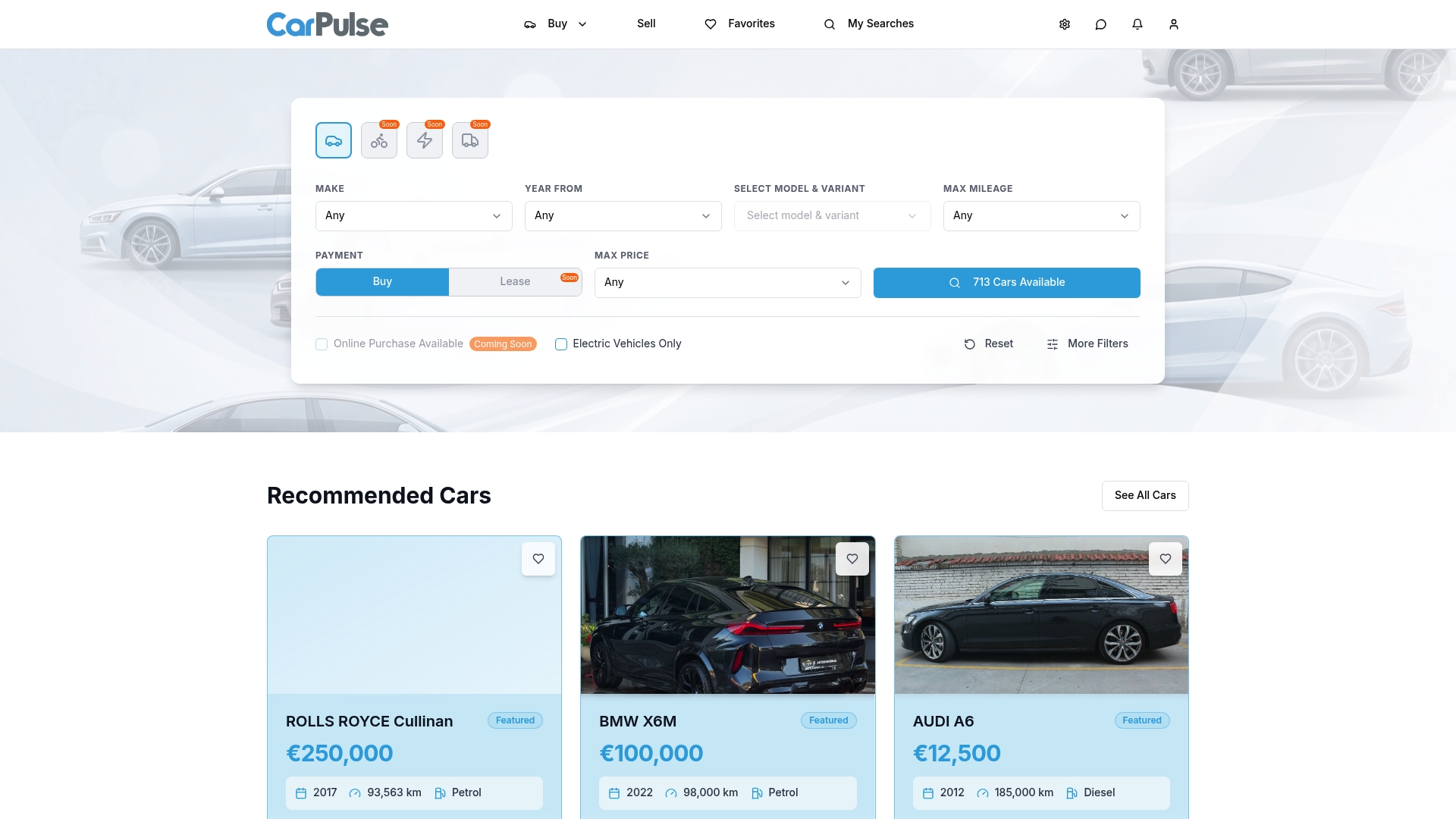
Every listing on Carpulse includes detailed vehicle information, and verified dealerships post alongside private sellers so you can compare your options in one place. Whether you are looking for a self-charging full hybrid for urban commuting or a plug-in hybrid with extended electric range, browse hybrid listings on Carpulse to see what is currently available in Albania.
FAQ
What is a hybrid car system?
A hybrid car system combines a gasoline internal combustion engine with an electric motor and battery to improve fuel efficiency and reduce emissions. Most hybrids recharge their batteries automatically through regenerative braking and engine power, requiring no external charging.
How does regenerative braking work in a hybrid?
Regenerative braking converts kinetic energy into electricity during deceleration, sending it back to the battery instead of losing it as heat. This process also reduces wear on physical brake pads and rotors, lowering maintenance costs over time.
What is the difference between a hybrid and a plug-in hybrid?
A standard hybrid recharges its battery automatically during driving and never needs to be plugged in. A plug-in hybrid carries a larger battery that requires external charging to unlock its full electric-only driving range.
Do hybrids save money in highway driving?
Highway driving reduces hybrid fuel savings because the gasoline engine runs continuously and regenerative braking events are rare. City drivers with frequent stops see the strongest fuel economy gains from hybrid systems.
How long does it take to charge a plug-in hybrid?
Plug-in hybrid charging typically takes 2–5 hours depending on the charger speed and the size of the battery. Drivers who charge regularly maximize the electric driving range and fuel savings a PHEV offers.