
Guides
Electric vs Hybrid Cars Explained: 2026 Buyer's Guide
Electric vs Hybrid Cars Explained: 2026 Buyer’s Guide

TL;DR:
- Electric vehicles run solely on large batteries and require no gasoline engine. Hybrids combine a gasoline engine with an electric motor, recharging through driving or plugging in. Full EVs are cheaper long-term, while hybrids suit drivers with limited charging access.
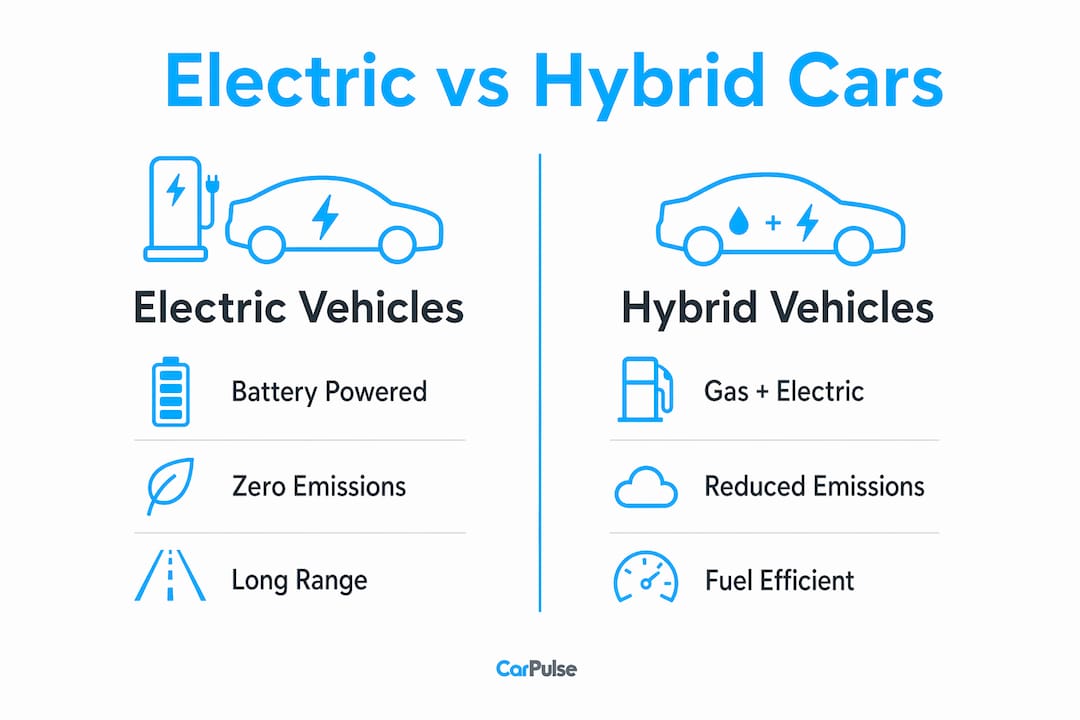
Electric vehicles (EVs) are defined as cars that run entirely on electricity stored in large battery packs, with no gasoline engine involved. Hybrid vehicles, by contrast, combine a gasoline engine with one or more electric motors, using different methods to recharge a smaller battery. Understanding the differences between electric and hybrid cars is the first step toward making a purchase you won’t regret. The EPA sets the standard for range and efficiency ratings across both categories, and federal tax incentives now apply to both plug-in hybrids and full EVs. This guide covers how each technology works, what it costs to own, and which one fits your life.
How do hybrid cars work, and what types exist?
Hybrid vehicles use a gasoline engine and an electric motor working together to improve fuel economy. The key difference between hybrid types is how the battery gets recharged and how much electric-only driving each type supports.
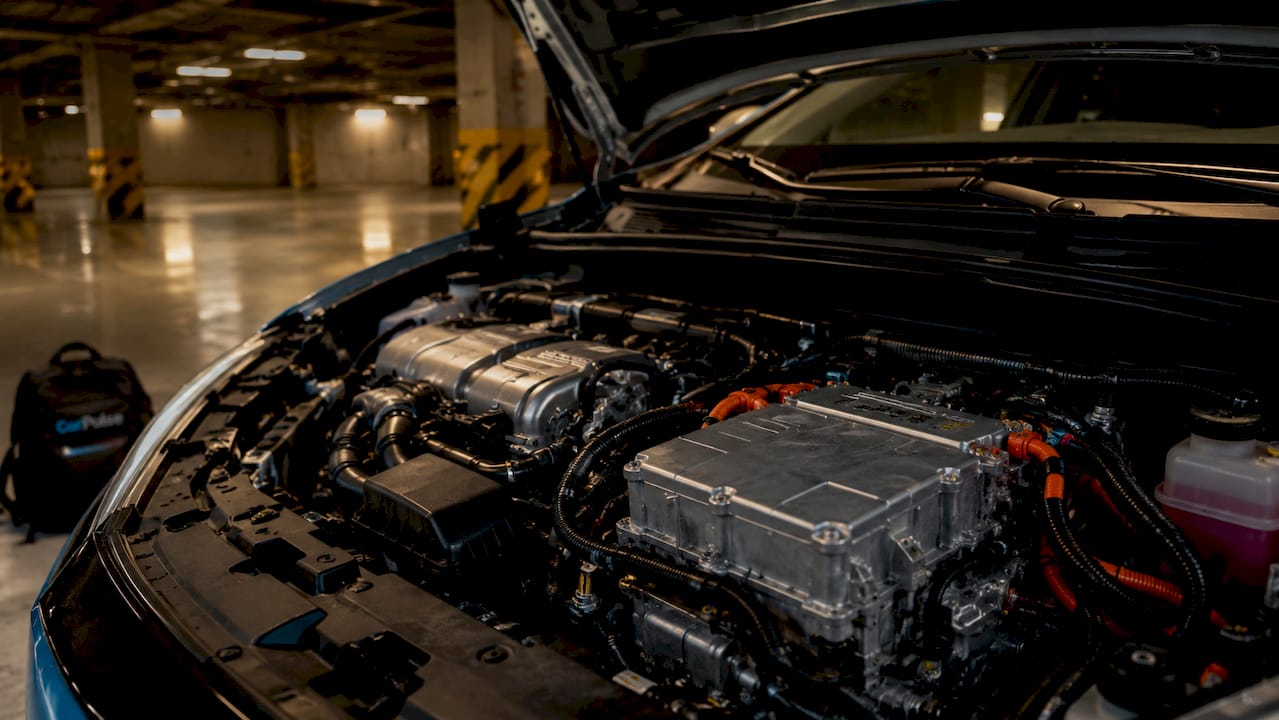
Standard hybrids (HEVs) are the most familiar type. They recharge through regenerative braking and engine energy, so you never plug them in. The 2026 Toyota Prius earns an EPA-rated 57 mpg combined, and the RAV4 Hybrid reaches 40 mpg combined. These numbers make HEVs the top choice for drivers who want better fuel economy without changing their refueling habits.
Plug-in hybrids (PHEVs) carry a larger battery that you charge from an outlet. They offer 25–50 miles of electric-only range before the gasoline engine takes over. The 2026 Toyota RAV4 Prime delivers 42 miles of electric range. After that, it drives exactly like a standard hybrid.
Mild hybrids use a small electric motor only to assist the gasoline engine. They cannot drive on electricity alone. Full hybrids can power the car on electricity at low speeds for short distances, but the range is limited to a few miles at most.
- HEV: No plug required. Best for high-mileage highway drivers.
- PHEV: Plug-in required. Best for drivers with short daily commutes and home charging.
- Mild hybrid: No plug, minimal electric assist. Mostly a fuel economy improvement.
- Full hybrid: No plug, limited electric-only capability at low speeds.
Pro Tip: If your daily commute is under 40 miles and you have access to a home outlet, a PHEV lets you complete most trips on electricity while keeping the gasoline engine as a backup for longer drives.
Automotive editors note that standard hybrids appeal to drivers who want fuel efficiency gains without any lifestyle changes or external charging requirements. That insight holds in 2026. If plugging in feels like a burden, an HEV removes that friction entirely.
What defines electric cars and how do charging and range work?
Battery electric vehicles (BEVs) run solely on electricity. There is no gasoline engine, no oil to change, and no tailpipe. A large battery pack powers one or more electric motors, and the car recharges by plugging into an external power source.
Charging options break down into three levels:
- Level 1: A standard 120V household outlet. Adds roughly 3–5 miles of range per hour. Practical only for mild hybrids or overnight top-ups on short-range vehicles.
- Level 2: A 240V home or workplace charger. Adds 15–30 miles per hour. This is the standard setup for most BEV owners.
- DC fast charging: High-voltage public stations that charge 10–80% in about 25 minutes. Best for road trips and quick stops.
Range is the number buyers focus on most. The 2026 Tesla Model 3 Long Range achieves 358 miles on a single charge per EPA ratings. Most mainstream BEVs land between 200 and 300 miles. Real-world range drops in cold weather, at highway speeds, and with heavy use of climate control.
| Charging Type | Voltage | Approx. Range Added per Hour | Best Use Case |
|---|---|---|---|
| Level 1 | 120V | 3–5 miles | Overnight, low-mileage drivers |
| Level 2 | 240V | 15–30 miles | Daily home or workplace charging |
| DC Fast Charge | 400–800V | 150–200+ miles | Road trips, quick public stops |
Most BEV owners rely on home-based or workplace Level 2 charging for daily needs. Overreliance on public DC fast chargers can degrade battery longevity over time and increase fueling costs. That detail matters when you are calculating long-term savings.
Pro Tip: Install a Level 2 charger at home before you take delivery of a BEV. The upfront cost is typically $500–$1,000 installed, and it eliminates the need to visit public charging stations for routine daily charging.
The future of electric vehicles in 2026 points toward faster charging speeds and longer ranges becoming standard across more affordable models. Buying now means you benefit from technology that has already matured significantly compared to just three years ago.
Electric vs hybrid car cost comparison: which saves more money?
The total cost of owning a BEV is lower than owning a hybrid or gasoline car over a five-year period. BEVs save $5,000–$7,500 over five years compared to gasoline cars. Plug-in hybrids save $2,500–$4,000 over the same period. Standard hybrids fall somewhere in between, depending on fuel prices and mileage.
The savings come from more than just fuel. BEVs avoid oil changes entirely. Brake pads last over 100,000 miles because regenerative braking handles most of the deceleration. Fewer moving parts means fewer mechanical failures. These are real dollars that most buyers underestimate when comparing sticker prices.
“The long-term hidden savings of EVs lie in avoided oil changes, less brake wear, and fewer complex mechanical failures. Total cost of ownership advantages go well beyond fuel savings alone.”
PHEVs carry a specific maintenance risk that buyers often overlook. Owning a plug-in hybrid means maintaining two distinct powertrains, a full internal combustion engine and a high-voltage electric system. That complexity raises long-term repair costs above what a BEV owner typically faces. Diagnostics alone take longer when a technician must evaluate two separate systems.
Federal tax incentives apply to both PHEVs and BEVs, narrowing the upfront cost gap. The credit amount varies by vehicle and buyer income, but it directly reduces the purchase price. Check current IRS eligibility rules before you finalize a budget, since the credit phases out for some manufacturers.
For buyers focused on the fuel-efficient cars category, the math is clear. A BEV costs more upfront in most cases, but the operating cost advantage compounds every year you own it.
Should I buy an electric car or a hybrid based on my lifestyle?
The right vehicle depends on your daily driving distance, your access to charging, and how often you take long trips. These three factors matter more than any spec sheet.
- Choose a BEV if you drive under 200 miles per day, have access to home or workplace charging, and want the lowest possible operating costs. BEVs deliver the simplest ownership experience because there is no gasoline engine to maintain.
- Choose a PHEV if you have range anxiety, cannot install a home charger, or regularly drive long distances that exceed current BEV range. The gasoline engine removes the risk of being stranded.
- Choose an HEV if you want better fuel economy than a gasoline car but do not want to change your refueling habits at all. No plugs, no range calculations, no infrastructure concerns.
- Consider charging infrastructure in your area before committing to a BEV. Urban buyers typically have more public charging options than rural buyers. Albania’s EV market grew 12% in 2026, which reflects expanding infrastructure, but coverage varies by region.
- Factor in environmental goals. Electric vehicles produce zero tailpipe emissions, and total lifecycle emissions are lower than gasoline vehicles, especially when charged with renewable electricity. PHEVs emit some tailpipe pollutants when running on gasoline.
Experts confirm that knowing your driving and charging patterns is more important than chasing the latest technology. A BEV that sits uncharged in a garage because you have no home outlet saves you nothing.
Pro Tip: Track your daily mileage for two weeks before you shop. If you consistently drive under 40 miles per day, a PHEV covers most of those trips on electricity alone. If you regularly exceed 150 miles, a long-range BEV or an HEV makes more practical sense.
For buyers curious about hybrid car basics before committing to either category, reviewing the fundamentals of how each powertrain operates helps set realistic expectations.
Key Takeaways
BEVs deliver the lowest total ownership cost and simplest maintenance, but PHEVs remain the practical choice for buyers without reliable home charging or frequent long-distance travel needs.
| Point | Details |
|---|---|
| BEVs cost less to own long-term | Savings of $5,000–$7,500 over five years versus gasoline cars, plus avoided oil changes and brake wear. |
| PHEVs add maintenance complexity | Two powertrains mean higher long-term repair costs compared to simpler BEV systems. |
| Charging access drives the decision | Home or workplace Level 2 charging makes BEV ownership practical; without it, a PHEV or HEV fits better. |
| HEVs require no lifestyle change | Standard hybrids recharge through driving and reach up to 57 mpg combined without any external charging. |
| Tax incentives reduce upfront costs | Federal credits apply to both PHEVs and BEVs, narrowing the sticker price gap at purchase. |
What I’ve learned from watching buyers choose between EVs and hybrids
Most buyers walk in focused on range anxiety and walk out realizing the real question was always about charging access. I’ve watched this pattern repeat consistently. Someone spends weeks comparing BEV range numbers, then discovers they live in an apartment with no dedicated parking. That one detail changes everything.
The honest truth about PHEVs is that they are more complex than they appear. Two powertrains sound like a safety net, and they are. But that safety net comes with a maintenance bill that surprises owners around year three or four. EV repair trends in 2026 show that electric vehicle maintenance is evolving fast, and BEV service is becoming simpler as technician training improves. PHEV service is not following the same curve.
What I find genuinely satisfying about BEVs is the driving experience. There are no gear shifts, no engine noise at a stoplight, and no trip to the gas station on a cold morning. Buyers who switch from gasoline cars to BEVs almost never go back. That preference is not marketing. It reflects a simpler, quieter ownership experience that compounds over time.
My advice is to be honest about your charging situation before you fall in love with a specific model. If you can charge at home, a BEV will almost certainly serve you better within three years. If you cannot, a PHEV gives you the electric experience without the infrastructure dependency.
— Henri
Finding electric and hybrid cars in Albania
Albania’s car market is shifting toward electrification, and buyers now have real options across both categories.
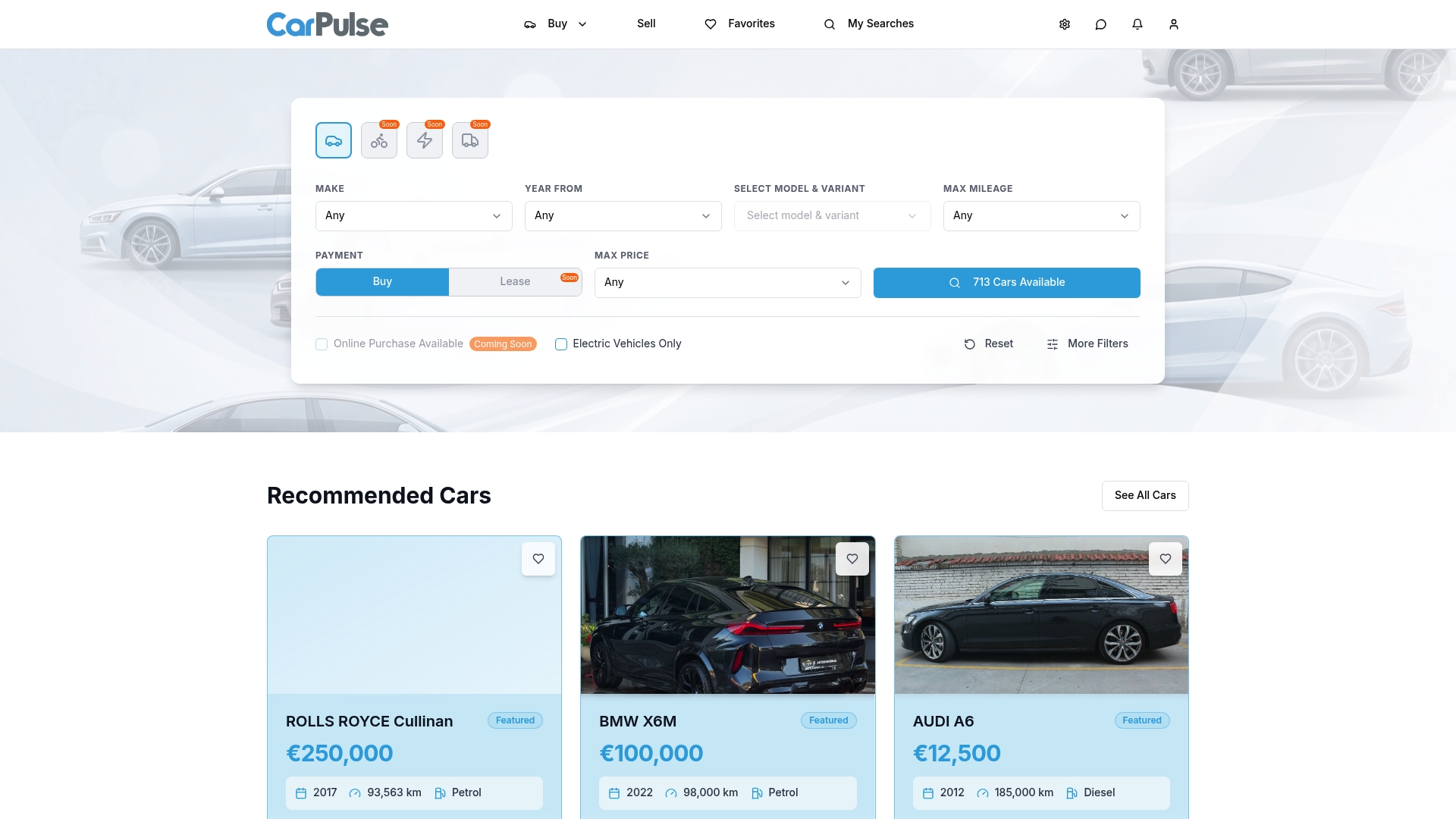
Carpulse is Albania’s largest online car marketplace, with listings filtered by fuel type, so you can search specifically for electric or hybrid vehicles in seconds. The platform covers both new and used inventory from verified dealerships and private sellers. VIN-based listings mean vehicle details are accurate from the start, which matters when you are evaluating battery condition or powertrain history on a used EV. Whether you are comparing a PHEV for your first electric purchase or looking for a long-range BEV, browse the full inventory on Carpulse to see what is available in your price range today. The used car buying guide on Carpulse also covers what to check before purchasing a used electric or hybrid vehicle in Albania.
FAQ
What is the main difference between electric and hybrid cars?
Electric cars run entirely on battery power with no gasoline engine. Hybrid cars combine a gasoline engine with an electric motor, using the engine either to assist driving or to recharge the battery.
How do plug-in hybrids differ from standard hybrids?
Plug-in hybrids have larger batteries that charge from an external outlet and offer 25–50 miles of electric-only range. Standard hybrids recharge only through regenerative braking and the engine, with no plug required.
Are electric cars cheaper to maintain than hybrids?
BEVs cost less to maintain because they have no oil changes and brake pads last over 100,000 miles due to regenerative braking. PHEVs carry two powertrains, which increases long-term repair complexity and cost.
What charging setup do I need for a BEV at home?
A Level 2 charger running on 240V is the standard home setup. It adds 15–30 miles of range per hour and handles overnight charging for most daily driving needs without relying on public stations.
Do electric and hybrid cars qualify for tax incentives?
Both PHEVs and BEVs qualify for federal tax credits that reduce the upfront purchase price. Eligibility depends on vehicle model, manufacturer sales volume, and buyer income, so verify current IRS rules before purchasing.
Recommended
- Blerja e Makinave Online në Shqipëri: Rritja e EV-ve 2026 | CarPulse Albania
- Blerja Online e Makinave në Shqipëri: Rritje EV 12% në 2026 | CarPulse Albania
- Blerja e makinave online në Shqipëri: Rritje 12% e EV në… | CarPulse Albania
- Blerja online e makinave në Shqipëri: 12% rritje e EV në… | CarPulse Albania