Guides
Common Car Buying Mistakes That Cost You Money

Common Car Buying Mistakes That Cost You Money

TL;DR:
- Focusing solely on monthly payments can lead buyers to accept longer loans with higher total costs, often with dealer markups.
- Thorough research, vehicle inspection, and separating negotiation steps help prevent costly mistakes, especially in Albania’s used car market.
- Careful reading of contracts, declining unnecessary add-ons, and having a clear spending limit ensure that buyers walk into deals confidently and wisely.
Buying a car is one of the biggest financial decisions most people make, and common car buying mistakes can turn that excitement into regret faster than you think. It doesn’t matter if you’re purchasing your first vehicle or your fifth. The same traps catch buyers at every experience level. In Albania’s market, where used imports dominate and financing terms vary widely, the stakes are even higher. This guide breaks down exactly what to avoid, why these mistakes happen, and how to walk into any deal with your eyes open.
Table of Contents
- Key Takeaways
- 1. Focusing only on monthly payments instead of total cost
- 2. Skipping thorough research and inspection for used cars
- 3. Revealing negotiation details too early
- 4. Accepting dealer add-ons and fees without question
- 5. Signing the contract without reading it carefully
- My honest take on why buyers keep making these mistakes
- Find your next car without the guesswork on Carpulse
- FAQ
Key Takeaways
| Point | Details |
|---|---|
| Negotiate total price first | Always agree on the full out-the-door price before discussing monthly payments or trade-ins. |
| Inspect before you buy | A pre-purchase inspection costing around $150 can save you thousands in hidden repair costs. |
| Keep negotiations separate | Treat car price, trade-in value, and financing as three independent conversations. |
| Read every contract line | Never sign under pressure. Review each fee and add-on before putting pen to paper. |
| Research before you visit | Know the vehicle’s history, market value, and your financing options before talking to any seller. |
1. Focusing only on monthly payments instead of total cost
This is one of the most widespread car purchase errors buyers make, and dealers know it. When you walk in asking “what’s the monthly payment?”, you hand the salesperson a tool to obscure the real price. They can stretch a loan from 48 months to 72 months, keep the monthly figure low, and charge you thousands more in total interest. You feel like you’re getting a deal. You are not.
Focusing solely on monthly payments leads to longer loans and higher total costs, a trap many buyers don’t recognize until they’re already underwater. On top of that, dealers often mark up the interest rate they offer compared to what the bank actually approved. Those markups can add $2,000 to $4,000 over a 60-month loan. That’s a significant amount of money leaving your pocket for no reason.
The smarter approach is to calculate the total amount you’ll pay over the life of the loan, not just the monthly slice. Negotiate the car’s price first, lock that in writing, and then discuss financing separately.
Pro Tip: Keep your total transportation costs below 10% of your gross income. That includes the loan payment, insurance, fuel, and maintenance. If the numbers don’t fit, the car doesn’t fit.
For Albanian buyers using credit or leasing, understanding financing pitfalls specific to the local market can prevent costly surprises before you ever sign anything.
2. Skipping thorough research and inspection for used cars
Used cars dominate the Albanian market, which makes this one of the most expensive car buying pitfalls you can fall into. Skipping a proper inspection is not just risky. It’s often financially devastating.
Here’s what you should always check before committing to any used vehicle:
- Vehicle history report: Use a VIN-based check to uncover accidents, odometer rollbacks, and ownership history.
- Panel alignment: Misaligned panels and paint overspray are clear signs of prior collision damage that a seller won’t volunteer.
- Stationary test: Before you even move the car, sit inside and test every control including heating, air conditioning, windows, and lights. Smell for mold or burning.
- Professional inspection: A mechanic you trust should examine the car independently, not the seller’s preferred shop.
A pre-purchase inspection costs about $150 but can prevent a $3,500 transmission failure you’d otherwise discover two months after purchase. That math is easy.
| What to check | Why it matters |
|---|---|
| VIN verification | Confirms the car’s identity and flags stolen or cloned vehicles |
| Panel gaps and paint consistency | Reveals undisclosed accident repairs |
| Under-hood fluid condition | Dark, burnt, or milky fluids signal deferred maintenance or engine damage |
| Odor inside the cabin | Mold smell indicates flood damage; burning smells suggest electrical or engine issues |
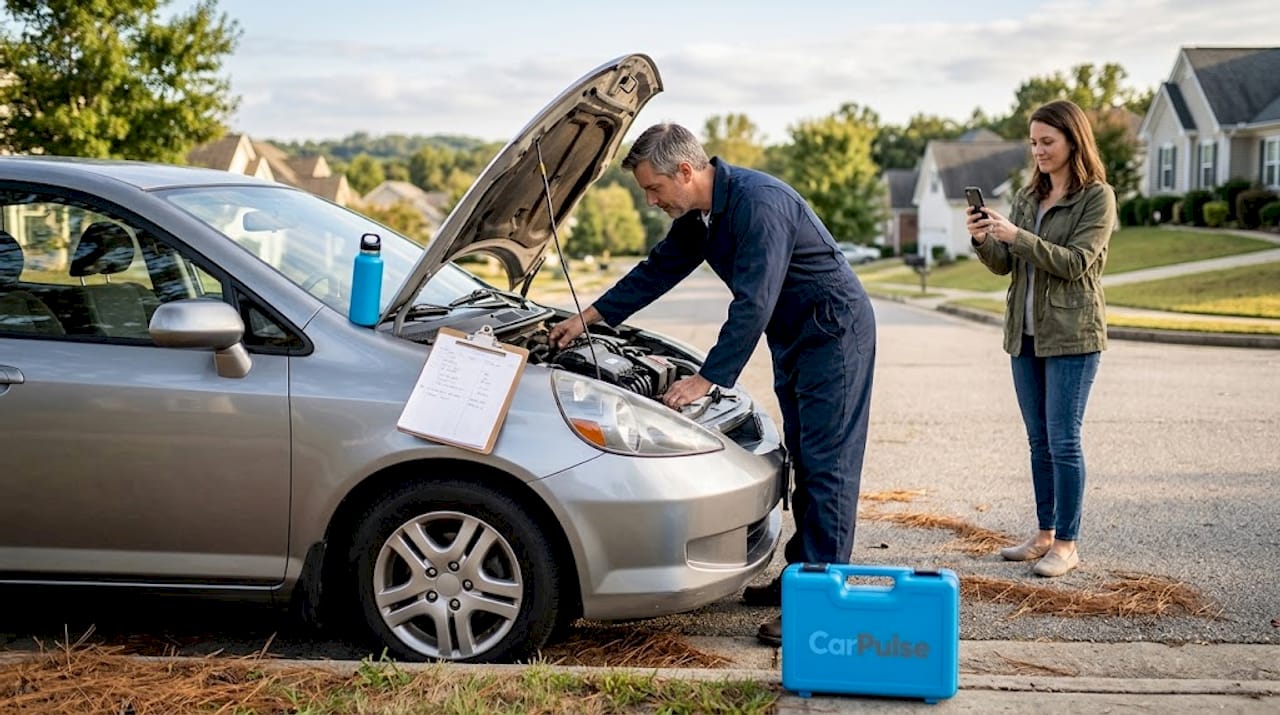
Pro Tip: Use Carpulse’s VIN-based listings when browsing used vehicles online. The platform automatically pulls vehicle details from the VIN, which gives you a starting point for verification before you ever contact the seller.
A thorough test drive checklist specific to Albania’s road conditions can help you catch issues that wouldn’t show up in a standard highway drive.
3. Revealing negotiation details too early
One of the most underrated mistakes first-time buyers make is being too honest too soon. When you tell a salesperson your monthly budget or mention your trade-in before agreeing on a price, you give them everything they need to build a deal that looks good on paper but costs you more.
Sharing monthly payment goals or trade-in details too early gives dealers leverage to manipulate all three numbers simultaneously. This is called blending, where the salesperson adjusts price, trade-in credit, and financing rate together so that changing one masks what’s happening with the others.
The strategy that actually works:
- Step one: Agree on the car’s purchase price as a standalone number.
- Step two: Only then introduce your trade-in and negotiate that separately.
- Step three: Discuss financing options last, after price and trade-in are locked in.
Separating these negotiations exposes hidden overcharges and gives you a clear picture of what you’re actually paying for each component. It also removes the dealer’s ability to give with one hand while taking with the other.
If a salesperson pushes you to combine everything into one “great deal,” that’s pressure you should resist. Take your time. Walk out if needed. The car will still be there tomorrow.
4. Accepting dealer add-ons and fees without question
This is where typical car buying blunders get expensive fast. After agreeing on a price, many buyers let their guard down in the finance office. That’s exactly where dealers recapture margin through add-ons you don’t need at prices you should never pay.
Common add-ons to scrutinize:
- Paint protection film: Dealers charge $500 to $895 for a product that costs $50 to apply yourself.
- Nitrogen-filled tires: Regular air is 78% nitrogen already. This upgrade at $199 is essentially worthless.
- VIN etching: Dealers charge $200 or more for a theft deterrent you can do for $25 with a kit.
- Extended warranties: Not always bad, but understand what you’re buying. Many warranty myths lead buyers to overpay for coverage that duplicates the manufacturer’s warranty.
Payment packing is the tactic where these extras get rolled into your monthly payment so quietly that you don’t notice them. At $12 extra per month over 60 months, that’s $720 for nitrogen tires. The ask sounds trivial. The total is not.
Pro Tip: Request an itemized list of every fee and add-on in writing before you sit down with the finance manager. Cross out anything you didn’t agree to. You have every right to decline extras.
Also watch for inflated documentation fees. While a processing fee is legitimate, out-the-door price negotiation should include all taxes and fees so you’re comparing true totals, not just sticker prices.
5. Signing the contract without reading it carefully
You’ve negotiated hard and you’re ready to be done. That relief is exactly what dealers count on when they slide a thick contract across the desk. One of the most common auto buying errors is signing without reading every single line.
What to look for before you sign:
- Monthly payment vs. what you agreed: Verify the payment reflects the price, rate, and term you negotiated. Any difference is a red flag.
- Add-ons you didn’t request: These appear as line items with vague names like “dealer prep” or “appearance package.”
- Interest rate: Confirm it matches what was quoted in writing, not just verbally.
- Loan term length: A longer term than you discussed can look identical on the signature line but cost you thousands more.
If something doesn’t match what you were told, stop. Ask for a corrected contract. If the finance manager becomes impatient or tells you it’s a standard form, that’s a pressure tactic. Walk away if you’re not satisfied.
A vehicle inspection checklist before purchase keeps you focused on the car’s condition, but the contract is where the financial terms live. Both deserve equal attention.
My honest take on why buyers keep making these mistakes
I’ve watched people walk into car negotiations thoroughly prepared, with printouts and spreadsheet budgets, and still walk out having paid more than they should. The reason isn’t ignorance. It’s emotion.
In my experience, the moment someone sits in a car they love, the math stops mattering as much. Dealers are trained to get you emotionally committed first. They let you take a long test drive, let you sit with it, let you imagine parking it in front of your house. By the time you’re talking numbers, you’re defending a decision you’ve already made in your head.
What I’ve found actually works is this: do your research so thoroughly that you have a specific number in mind before you leave home. Not a range. A number. When you walk in with a clear ceiling, emotional pressure has less room to push you over it.
I’ve also seen Albanian buyers underestimate the local market’s unique risks, especially with used imports. A car that passed inspection in Germany may have spent six months sitting on a lot in conditions that created problems no one disclosed. Patience is your most underrated tool here. The right car at the right price exists. Rushing is how you end up with the wrong one.
— Henri
Find your next car without the guesswork on Carpulse
Making smart decisions starts with having the right information and the right platform. Carpulse is Albania’s largest car marketplace, built to help you avoid the exact pitfalls covered in this article.
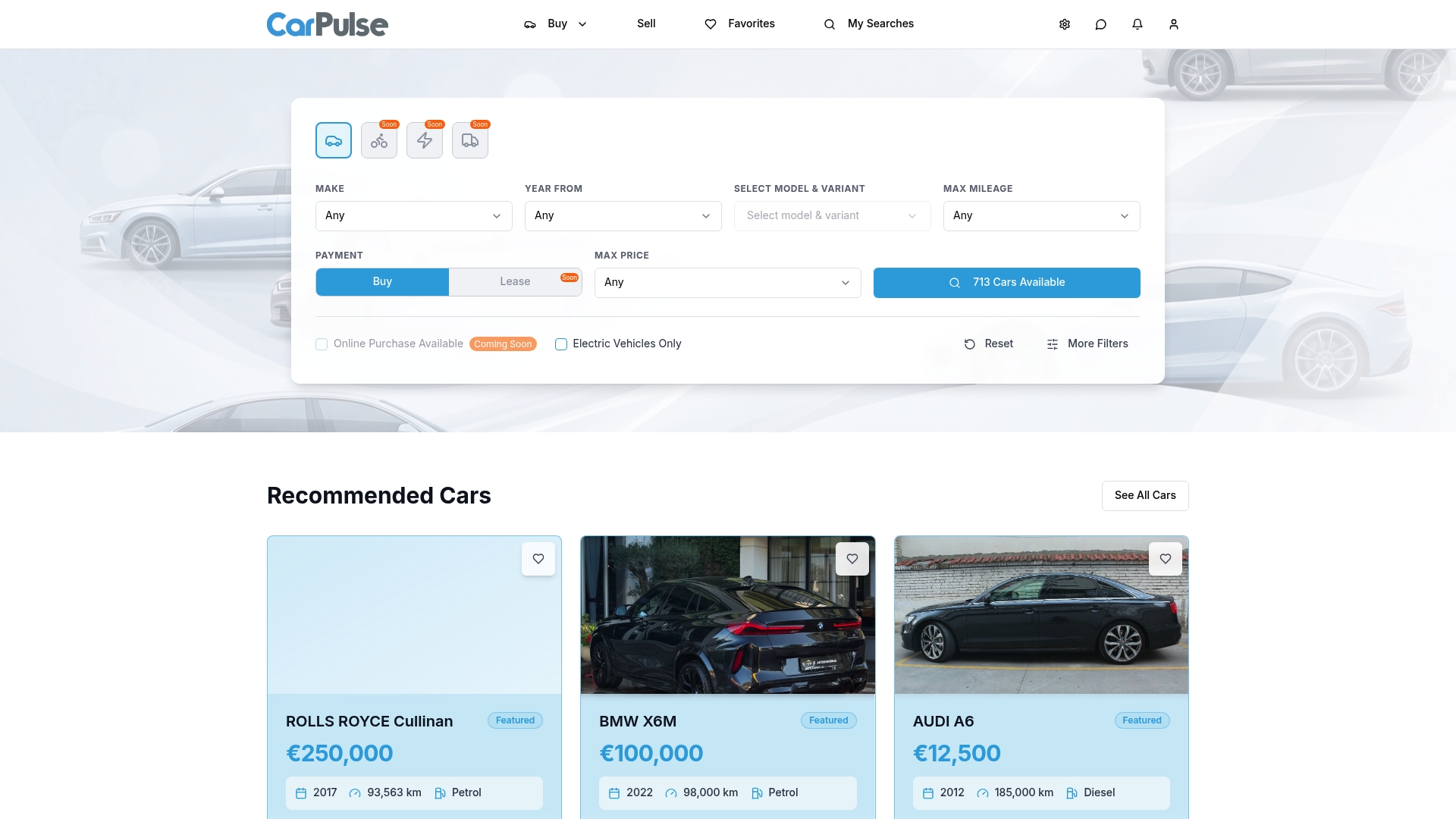
When you browse verified listings on Carpulse, you get access to VIN-based vehicle details that auto-populate from the vehicle identification number, removing a major source of fraud risk. Verified dealerships on the platform are held to transparency standards that private listings elsewhere simply don’t offer. You can filter by make, model, year, mileage, price, and fuel type, so you compare real options on your terms. Whether you’re buying your first car or trading up, Carpulse gives you the tools to walk into any deal prepared. Download the app for iOS or Android and start browsing today.
FAQ
What are the most common car buying mistakes?
The most common mistakes include focusing on monthly payments instead of total price, skipping pre-purchase inspections on used cars, revealing your budget to the dealer too early, and signing contracts without reading every line.
How do I avoid mistakes in car financing?
Negotiate the car’s price before discussing financing, get loan pre-approval from a bank or credit union before visiting a dealer, and confirm the interest rate in writing. Dealer interest rate markups can add thousands to your total cost.
Should I get an inspection before buying a used car?
Yes. A pre-purchase inspection typically costs around $150 and can catch serious mechanical problems like transmission or engine issues that would cost far more to repair. It’s one of the best investments in the used car buying process.
What dealer add-ons can I refuse?
You can decline most add-ons including paint protection, nitrogen tires, VIN etching, and many extended warranty packages. Always ask for an itemized list of all fees and cross out anything you didn’t agree to during price negotiations.
How do I know if I’m getting a fair deal?
Research the market value of the specific car using multiple sources before you visit any seller. Negotiate the out-the-door price, which includes all taxes and fees, and compare that total against listings you’ve already seen on platforms like Carpulse.