Guides
Car Marketplace Innovation: What Pros Need to Know

Car Marketplace Innovation: What Pros Need to Know

TL;DR:
- Car marketplace innovation involves integrating AI, cloud infrastructure, and data systems to transform vehicle buying and selling online. Early adopters leverage agentic AI, natural language search, and personalized outreach to gain competitive advantages, while consolidation introduces both benefits and risks for buyers and sellers. Building resilient, decoupled microservices and prioritizing data quality are essential for future-proof automotive digital retail platforms.
Car marketplace innovation is defined as the adoption of advanced digital technologies, AI systems, and layered cloud architectures that fundamentally transform how vehicles are bought, sold, and discovered online. This is not incremental improvement. Platforms like Stellantis SPOT.i, Impel AI, and Renault’s agentic AI deployments are rewriting the rules of automotive retail at a structural level. For industry professionals, understanding what drives these shifts is the difference between leading the market and reacting to it. The core technologies are already live, the buyer behavior data is clear, and the competitive window is narrowing fast.
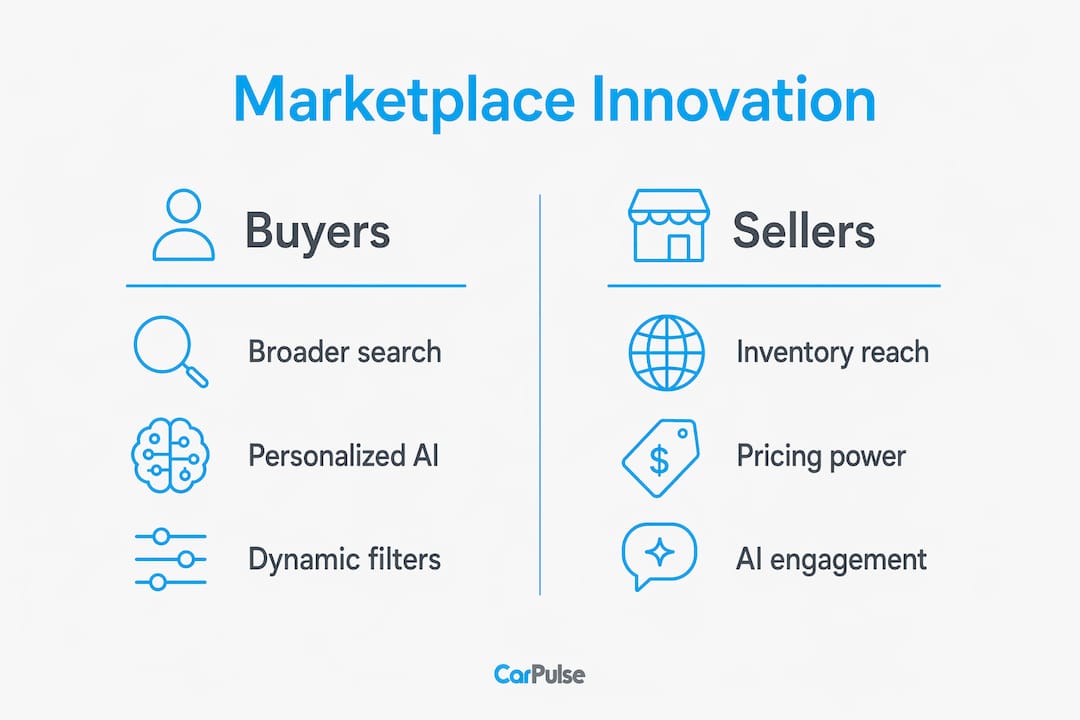
What is car marketplace innovation, and why does it matter now?
Car marketplace innovation is the integration of AI, cloud infrastructure, and data architecture into every layer of the vehicle buying and selling process. The industry term for this broader shift is automotive digital retail transformation, and it covers everything from how listings are generated to how buyers search, compare, and transact.
The significance is structural, not cosmetic. Traditional car marketplaces were static directories: search by make, filter by price, call the dealer. Modern platforms treat the buyer journey as a dynamic, data-driven process where every interaction is personalized, every search is context-aware, and every transaction is secured through layered systems. Stellantis’s natural language AI search tool SPOT.i completed over 3 million vehicle searches since September 2025. That volume signals a clear shift: buyers no longer want to filter through dropdowns. They want to describe what they need and get an intelligent answer.
The platforms that recognize this shift early are building durable competitive advantages. Those that treat it as optional are already losing ground.
What are the key technologies driving innovation in car marketplaces today?
The technology stack behind a modern car marketplace is not a single system. It is a layered, distributed architecture that integrates cloud scalability, data accuracy, AI processing speed, and transaction security into one coherent platform. Each layer must function independently and communicate reliably with the others.

Agentic AI: beyond the chatbot
Agentic AI is the most significant leap in marketplace technology right now. Unlike traditional chatbots that answer scripted questions, agentic AI autonomously manages complex buyer tasks. Renault Group’s deployment shows what this looks like in practice: the system cross-references live stock, configures vehicles to buyer specifications, and manages follow-up sequences without human intervention. This is the difference between a search tool and a digital concierge that actually closes the loop.
Natural language search and dynamic filtering
Buyers are searching the way they talk. Platforms that support conversational queries (“show me a family SUV under $35,000 with low mileage and good safety ratings”) convert at higher rates than those requiring structured filter inputs. SPOT.i’s 3 million search milestone is the clearest proof point available.
AI-powered personalized video engagement
Impel’s next-generation Sales AI introduces personalized avatar video generation at scale. A dealer records a single three-minute baseline video. The AI then generates dynamic, hyper-realistic personalized videos for individual leads. Retailers using this approach reported a 150% increase in customer engagement. That lift reflects what happens when outreach feels personal rather than automated.
Here is a summary of the core technology layers shaping modern platforms:
- Agentic AI orchestration: autonomous task management across inventory, configuration, and follow-up
- Natural language search: conversational query processing replacing static filter menus
- Cloud-native microservices: decoupled search, payments, and identity management for scalability
- AI-generated video outreach: personalized lead engagement at dealer scale
- Crypto-agility: adaptive encryption protocols securing transactions against evolving threats
Pro Tip: When evaluating a marketplace platform’s technology stack, ask vendors specifically whether their search, payments, and identity systems are decoupled microservices or bundled into a monolithic frontend. Decoupled systems scale faster and fail more gracefully.
How does marketplace consolidation impact car buyers and sellers?
Marketplace consolidation is accelerating globally. Large platforms are acquiring smaller regional players to aggregate inventory, expand reach, and reduce competition. The outcome for buyers and sellers is not straightforward. Consolidation improves inventory aggregation but introduces real risks around dealer fees and pricing transparency.
Benefits of consolidation
Buyers gain access to broader inventory in a single search. Instead of checking five platforms, they find 50,000 listings in one place. Search quality improves when more data flows through a single AI system. Dealers benefit from higher traffic volumes and more qualified leads arriving through consolidated platforms.
Risks buyers and dealers should watch
The risks are equally real. When a platform controls the majority of market inventory, it gains pricing power over dealers. Higher listing fees get passed to consumers through inflated vehicle prices. Pay-to-win visibility models emerge, where dealers who spend more appear at the top regardless of listing quality or buyer fit.
| Factor | Buyer Impact | Dealer Impact |
|---|---|---|
| Inventory aggregation | More choices in one search | Higher lead volume |
| Dealer fee increases | Higher vehicle prices | Margin compression |
| Visibility algorithms | Potentially biased results | Pressure to pay for placement |
| Reduced platform competition | Fewer alternatives | Less negotiating leverage |
The healthiest consolidation outcomes happen when platforms maintain transparent ranking algorithms and publish fee structures openly. Buyers should compare total vehicle cost across platforms, not just listed price. Dealers should negotiate listing contracts that tie fees to verified lead quality, not raw impressions.
How are car marketplaces adapting to EV demand shifts?
The EV market slowed measurably in early 2026. Affordability pressure and range anxiety pushed buyers toward used vehicles with proven track records. Nearly new used vehicle sales grew 24% year over year in Q1 2026. That growth reflects buyers choosing modern technology at lower price points rather than committing to new EV purchases.
Marketplaces are responding by rethinking what information they surface during search. Listing a used EV without battery health data, warranty status, and total cost of ownership estimates is no longer acceptable to informed buyers. The EV market slowdown is pushing platforms to improve guidance rather than simply increase listing volume.
The practical adaptations happening now include:
- Battery health indicators: displayed directly in search results, not buried in listing details
- Total cost of ownership calculators: integrating fuel savings, insurance estimates, and incentive eligibility
- Real-time incentive data: federal and state EV credits updated dynamically as policy changes
- Dealer inventory signals: platforms alerting dealers when EV listings underperform so they can adjust pricing or messaging
Pro Tip: If your platform does not surface battery warranty information at the search results level for EV listings, you are losing buyers before they ever click through. Add it to the results card, not just the detail page.
Modern buyers also search by monthly payment budget rather than vehicle attributes. Platforms must surface payment estimates directly in search results. A buyer searching for “EVs under $400 per month” needs financing data integrated into the search path, not a separate calculator buried in a sidebar. This is where financial data integration becomes a core platform feature, not an add-on.
For a deeper look at how EV growth in Albania is reshaping local digital marketplace behavior, the patterns mirror global trends at a regional scale.
What are best practices for automotive marketplace innovation?
The platforms winning in 2026 share one architectural principle: they are built as resilient systems of systems, not monolithic web frontends. Winning automotive sales platforms decouple critical functions such as search, payments, and identity management into scalable, cloud-native microservices. This architecture allows individual components to be upgraded, replaced, or scaled without taking the entire platform offline.
Here are the five practices that separate leading platforms from lagging ones:
-
Adopt a system-of-systems architecture. Treat search, inventory, payments, and user identity as independent services that communicate through APIs. This prevents single points of failure and allows faster feature deployment.
-
Integrate financial data into the search path. Surface monthly payment estimates, insurance ranges, and ownership cost data at the results level. Buyers who see affordability data early convert at higher rates.
-
Deploy AI-generated personalized outreach. Impel’s avatar video model proves that personalized video at scale is operationally viable. Dealers who adopt this approach gain a measurable engagement advantage over those sending generic email sequences.
-
Build for agentic AI orchestration. Design platform workflows so that AI can autonomously manage multi-step buyer tasks. This means clean data pipelines, real-time inventory feeds, and API-accessible configuration tools.
-
Prioritize trust and compliance infrastructure. Crypto-agility, meaning the ability to swap encryption protocols as standards evolve, is a non-negotiable feature for platforms handling financial transactions and personal data.
| Practice | Primary Benefit | Key Technology |
|---|---|---|
| System-of-systems architecture | Resilience and scalability | Cloud-native microservices |
| Financial data in search | Higher buyer conversion | Payment estimation APIs |
| AI personalized video | 150% engagement lift | Impel avatar generation |
| Agentic AI orchestration | Autonomous buyer journeys | Renault-style AI concierge |
| Crypto-agility | Transaction security | Adaptive encryption protocols |
An automotive personal shopper model, as explored in 2026 AI buying guides, shows how these technologies converge into a single buyer experience. The buyer describes their needs, the AI configures options, surfaces financing, and schedules a test drive, all without a human touching the workflow until the final confirmation.
Key takeaways
Car marketplace innovation succeeds when platforms combine agentic AI, financial data integration, and cloud-native architecture into a unified buyer experience rather than layering features onto outdated infrastructure.
| Point | Details |
|---|---|
| Agentic AI is the new standard | Platforms like Renault’s deploy AI that autonomously manages inventory, configuration, and follow-up. |
| Financial data belongs in search | Buyers search by monthly budget; platforms must surface payment estimates at the results level. |
| Consolidation cuts both ways | Aggregated inventory benefits buyers, but unchecked dealer fees raise final vehicle prices. |
| EV listings need richer data | Battery health, warranty status, and ownership cost must appear in search results, not just detail pages. |
| Architecture determines agility | Decoupled microservices allow faster upgrades and prevent platform-wide failures during scaling. |
What I’ve learned watching marketplace tech evolve
I have tracked automotive marketplace technology long enough to know that the gap between what platforms claim to offer and what they actually deliver is widest in AI. Every platform now says it uses AI. Very few have deployed anything beyond a glorified keyword filter with a chatbot wrapper.
The real differentiator is data quality, not model sophistication. I have seen platforms invest heavily in large language models while running on inventory feeds that update every 24 hours. A buyer asking an AI for available vehicles in real time gets stale answers. The AI looks broken. The problem is the data pipeline, not the model.
The other mistake I see repeatedly is treating personalization as a marketing feature rather than a platform architecture decision. Impel’s avatar video approach works because it is built into the lead management workflow, not bolted on as a campaign tool. That distinction matters enormously at scale.
My honest assessment: the platforms that will define automotive retail in the next five years are the ones investing in data infrastructure now, not the ones chasing the most visible AI feature. Speed, accuracy, and trust are the competitive moat. Everything else is presentation.
— Henri
See car marketplace innovation in action on Carpulse
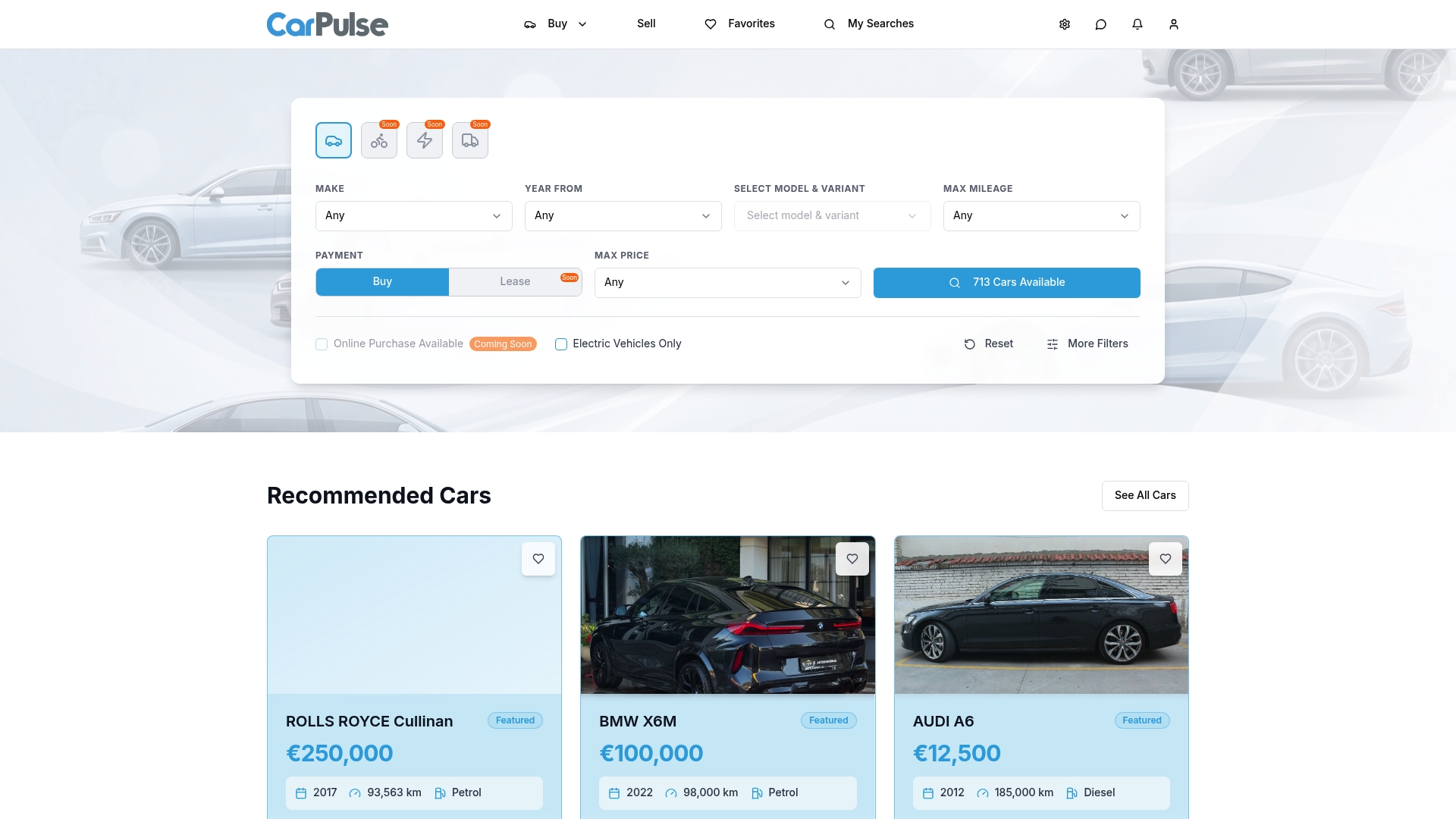
Carpulse is Albania’s most advanced online car marketplace, and it reflects the same principles driving global marketplace innovation. VIN-based listing automatically populates vehicle details, eliminating manual data entry errors that undermine buyer trust. Verified dealerships and private sellers share a single platform, giving buyers a broader vehicle selection with consistent listing quality. Filtering by make, model, year, mileage, price, and fuel type puts the right inventory in front of the right buyer fast. The Carpulse mobile app on iOS and Android extends the full marketplace experience beyond the desktop. If you are buying or selling a vehicle in Albania, Carpulse is where the market is.
FAQ
What is car marketplace innovation in simple terms?
Car marketplace innovation is the use of AI, cloud technology, and data systems to make buying and selling vehicles online faster, more personalized, and more transparent. It covers everything from natural language search to automated lead follow-up.
How does agentic AI differ from a standard chatbot?
Agentic AI autonomously manages complex, multi-step tasks like cross-referencing live inventory and configuring vehicles to buyer specs. A standard chatbot answers scripted questions without taking independent action.
Why are EV listings changing on digital marketplaces?
The 2026 EV market slowdown pushed platforms to add battery health data, total cost of ownership estimates, and real-time incentive information to listings. Buyers need this data to make confident purchase decisions on used EVs.
Does marketplace consolidation benefit car buyers?
Consolidation improves inventory access by aggregating more listings in one place. The risk is that reduced platform competition allows higher dealer fees, which can raise final vehicle prices for buyers.
What does a next-generation automotive marketplace stack include?
It includes cloud-native microservices for search, payments, and identity management, plus AI orchestration layers, real-time inventory feeds, and adaptive security protocols. The key principle is that each function operates independently and communicates through APIs.