Guides
Car Leasing Mistakes to Avoid: Your 2026 Guide

Car Leasing Mistakes to Avoid: Your 2026 Guide

TL;DR:
- Avoid focusing only on the monthly payment; negotiate the total capitalized cost and interest rate first.
- Make sure to understand mileage limits and negotiate higher allowances upfront to prevent costly overage penalties.
Car leasing mistakes to avoid are primarily about understanding the full financial commitment, not just the monthly payment. Dealers at franchises across the country use tactics like capitalized cost stuffing, money factor markups, and vague wear-and-tear definitions to extract more money from lessees. Experts at Cartelligent and Redline have documented these patterns in detail. Carpulse has compiled the most costly errors first-time and repeat lessees make, along with the negotiation moves that actually protect your wallet.
1. Focusing only on the monthly payment

The monthly payment is the most misleading number in any lease deal. Negotiating total capitalized cost saves more money over the lease term than simply lowering the monthly figure. A dealer can make a $600 monthly payment look like $480 by extending the term or inflating the residual value, while the total cost you pay stays the same or increases.
The monthly payment is a composite of three variables: the capitalized cost (the negotiated price of the car), the residual value (what the car is worth at lease end), and the money factor (the interest rate expressed as a decimal). Changing any one of these shifts the payment without changing the others. That flexibility is exactly what dealers exploit.
- Negotiate the selling price of the vehicle first, before discussing lease terms
- Ask for the residual value percentage in writing before signing
- Convert the money factor to an APR by multiplying it by 2,400 to compare it against standard loan rates
- Dealers mark up the money factor, and that markup can cost you over $1,000 across a 36-month lease
Pro Tip: Request a fully itemized lease worksheet before you sit down to sign. This document shows the capitalized cost, residual, money factor, and all fees on one page. If a dealer refuses to provide it, walk away.
2. Ignoring mileage limits before you sign
Mileage caps are one of the most expensive common car leasing pitfalls because the penalty hits at the end, when you least expect it. Standard mileage penalties range from $0.15 to $0.30 per mile over the annual limit. That means driving 5,000 miles over a three-year lease could cost you $750 to $1,500 at turn-in.
Most leases are written at 10,000 or 12,000 miles per year. If your actual driving is closer to 15,000 miles annually, you will face a significant penalty unless you negotiate higher mileage upfront.
| Annual Miles Driven | Standard Cap | Miles Over (3 years) | Penalty at $0.25/mile |
|---|---|---|---|
| 12,000 | 12,000 | 0 | $0 |
| 14,000 | 12,000 | 6,000 | $1,500 |
| 16,000 | 12,000 | 12,000 | $3,000 |
| 18,000 | 12,000 | 18,000 | $4,500 |
Track your last 12 months of driving before you sign anything. Pull your odometer reading from a year ago and compare it to today. That number is your baseline.
Pro Tip: Negotiating a higher mileage allowance upfront, say 15,000 miles per year, typically costs $10–$20 more per month. That is far cheaper than paying overage penalties at lease end.
3. Skipping GAP insurance or overpaying for it
GAP insurance is the coverage that pays the difference between what you owe on a lease and what your standard auto insurance pays out if the car is totaled or stolen. Without it, you could owe thousands of dollars on a car you no longer have. GAP coverage is cheaper through personal auto policies than through the dealer’s finance department, where markups are common.
Dealers routinely bundle GAP into the monthly payment without explaining the cost. The dealer version can run $500 to $900 for the lease term. The same coverage added to a personal policy through insurers like GEICO, Progressive, or State Farm typically costs $20 to $40 per year.
- Confirm whether your current auto insurer offers GAP or loan/lease payoff coverage
- If buying through a dealer, ask for the GAP cost as a standalone line item
- Compare that figure against quotes from personal auto insurers before agreeing
- Never waive GAP entirely on a leased vehicle, since depreciation in the first year is steep
Pro Tip: Call your auto insurer before you visit the dealership. Get a GAP quote in writing. That number gives you leverage if the dealer tries to bundle coverage at a higher price.
4. Ignoring dealer add-ons that inflate the capitalized cost
Dealers add high-margin items like VIN etching ($399), nitrogen tire inflation ($199), and paint and fabric protection ($1,299) to the capitalized cost without always disclosing them clearly. These charges raise the base price you are leasing against, which increases every monthly payment for the full term.
On a 36-month lease, a $1,897 bundle of add-ons you did not ask for adds roughly $53 to your monthly payment. Over three years, that is $1,908 in extra payments on top of the original charge. The math compounds quickly.
The fix is straightforward. Request a buyer’s order or lease worksheet before you sign and review every line. Cross off any item you did not specifically request. Dealers will often remove these charges without argument when a buyer identifies them by name.
5. Putting a large down payment on a leased car
A down payment on a lease, called a capitalized cost reduction, does not work the same way it does on a purchase. If the car is totaled or stolen, your down payment is gone. Insurance pays the vehicle’s market value. GAP covers the remaining balance. Neither one refunds the cash you put down at signing.
Putting $3,000 down on a lease to lower your monthly payment by $83 is a losing trade if the car is written off in month four. That $3,000 is simply lost. The better approach is to negotiate the capitalized cost down through price negotiation, not cash at signing.
- Keep the drive-off amount as low as possible, ideally covering only first month, registration, and acquisition fee
- Roll taxes and documentation fees into the monthly payment rather than paying them upfront
- Use any cash you were planning to put down as a lease down payment to negotiate a lower selling price instead
- Ask the dealer to show you the lease worksheet with and without the down payment so you can see the actual monthly difference
Pro Tip: Always ask for a buyer’s order that shows the capitalized cost before and after any down payment. This confirms the dealer is applying your cash to the price, not hiding it elsewhere in the deal.
6. Failing to document vehicle condition at delivery
Wear-and-tear charges at lease end are one of the most disputed and costly surprises in the leasing process. Wear and tear definitions are highly subjective and vary by lessor, which means a scratch that one company overlooks can cost you $200 at another. The only reliable protection is documentation you create on day one.
When you take delivery of a leased vehicle, photograph every panel, the interior, the tires, and the glass. Use a timestamp feature or email the photos to yourself immediately. This creates a dated record that shows the car’s condition when it left the lot.
At lease end, an independent pre-inspection 60 days before turn-in and repairs at an independent shop can save 30–50% compared to dealer retail rates on excess wear charges. A dent that costs $350 at a dealership body shop may cost $150 at a local paintless dent repair specialist.
- Photograph all four tires, including tread depth, at delivery
- Note any pre-existing chips, scratches, or stains on the delivery checklist and get a dealer signature
- Schedule an independent inspection 60 days before your lease ends
- Repair damage at an independent shop before the official lessor inspection
- Ask your lessor about loyalty programs that waive the disposition fee if you lease another vehicle from the same brand
7. Not understanding the disposition fee
The disposition fee is a charge the leasing company collects when you return the car and do not buy it or lease another vehicle from the same brand. It typically runs $300 to $500 and appears in the lease contract, but most first-time lessees miss it entirely. This is one of the more overlooked tips for car leasing contracts that can save you real money.
The fee exists to cover the lessor’s cost of remarketing the vehicle. You can often have it waived by leasing or buying another vehicle from the same manufacturer at lease end. If you plan to switch brands, factor this fee into your total cost calculation before you sign.
Key Takeaways
Avoiding costly leasing errors requires negotiating the full capitalized cost, protecting yourself with GAP insurance, and documenting vehicle condition from day one.
| Point | Details |
|---|---|
| Negotiate total cost, not monthly payment | Focus on the capitalized cost and money factor to control what you actually pay. |
| Estimate mileage accurately | Penalties of $0.15–$0.30 per mile add up fast; negotiate higher limits upfront if needed. |
| Buy GAP insurance independently | Personal auto policies offer the same coverage at a fraction of the dealer price. |
| Avoid large down payments | Cash put down at signing is lost if the car is totaled or stolen before lease end. |
| Document condition at delivery | Timestamped photos protect you from disputed wear-and-tear charges at turn-in. |
What I have learned from watching people sign bad leases
The single biggest mistake I see is not the monthly payment trap or the mileage miscalculation. It is the assumption that the dealer is working with you. Leasing is intentionally complex to benefit dealers, and the opacity is not accidental.
I have watched buyers spend 45 minutes negotiating a monthly payment down by $15, then sign a lease with a $1,200 add-on bundle they never noticed. The dealer won that negotiation by a wide margin. The buyers felt good about it.
The move that actually changes outcomes is demanding a written lease worksheet before any conversation about monthly payments. Once you have that document, you can see the capitalized cost, the money factor, the residual, and every fee on one page. You negotiate from facts, not from a payment figure the dealer controls.
One more thing: the money factor negotiation is the most overlooked lever in the entire deal. Most buyers have never heard of it. Asking for the captive lender’s buy rate and pushing back on any markup is a five-minute conversation that can save you more than $1,000. That is not a small number on a three-year commitment.
Patience is the other underrated tool. Dealers count on urgency. Walking out of a dealership and coming back the next day has closed better deals than any single negotiation tactic I know.
— Henri
Find your next car with confidence on Carpulse
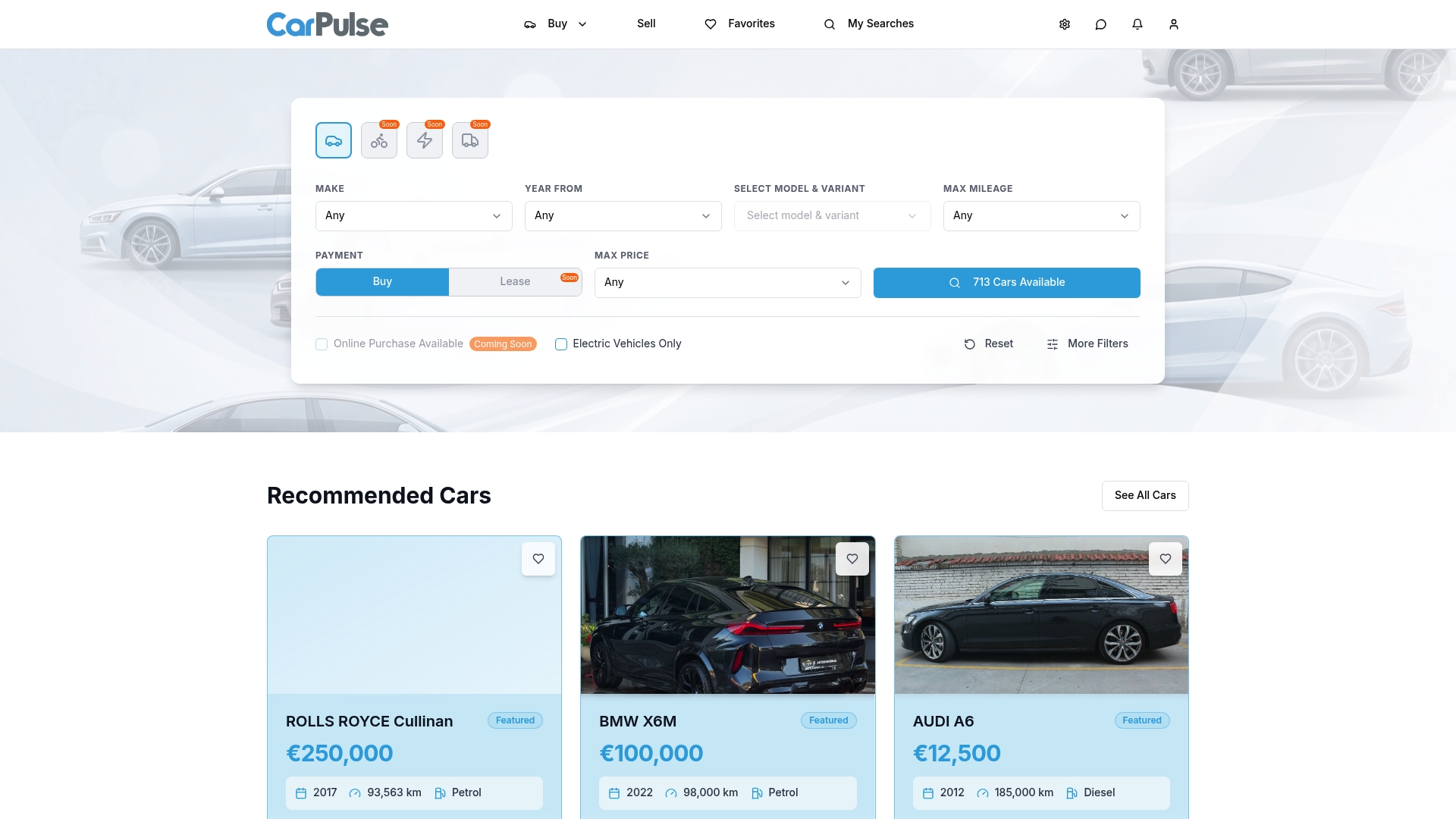
Carpulse is Albania’s largest online car marketplace, built for buyers who want transparent, verified listings without the guesswork. Whether you are comparing new models or browsing used vehicles by price, mileage, and fuel type, Carpulse gives you the data you need before you ever walk into a dealership. Every listing on the platform includes detailed vehicle specs, and verified dealerships are clearly labeled so you know exactly who you are dealing with. Use Carpulse to research fair market prices, compare financing options, and approach any lease or purchase negotiation from a position of knowledge.
FAQ
What is the biggest car leasing mistake to avoid?
Focusing only on the monthly payment is the most costly error. Negotiate the capitalized cost and money factor first, since those two variables determine your total lease expense.
How much are typical mileage penalties on a car lease?
Standard overage penalties run $0.15 to $0.30 per mile. Driving 5,000 miles over your annual limit across a 36-month lease can cost $750 to $1,500 at turn-in.
Is GAP insurance required on a leased car?
GAP insurance is not always legally required, but it is strongly recommended. If your leased car is totaled or stolen, standard insurance pays market value and GAP covers the remaining balance you owe.
Should you put money down on a car lease?
Minimizing or eliminating the down payment on a lease is the safer financial move. If the car is totaled or stolen, any cash you put down at signing is not refunded by insurance or GAP coverage.
What is a disposition fee on a car lease?
A disposition fee is a charge of $300 to $500 collected by the leasing company when you return the vehicle without leasing or buying another car from the same brand. It is often waivable if you stay with the same manufacturer.
Recommended
- Financimi i automjeteve në Shqipëri: Kredi & Leasing |… | CarPulse Albania
- Financimi i Automjeteve në Shqipëri: Kredi & Leasing |… | CarPulse Albania
- Blej Makina në Shqipëri: Udhëzuesi i Plotë | CarPulse.al | CarPulse Albania
- Provë me Makinë të Përdorur: Udhëzues i Plotë për Shqipërinë | CarPulse Albania