Guides
Car financing in Albania: A complete buyer's guide

Car financing in Albania: A complete buyer’s guide

TL;DR:
- Car financing in Albania is a secure, versatile alternative to cash purchases, enabling access to newer vehicles.
- Loans involve borrowing, interest, and collateral, with shorter terms reducing total interest paid.
- Buyers should focus on total loan cost, documentation, and short-term loans for better financial outcomes.
Many Albanian car buyers assume that owning a car means saving up the full amount and handing it over in cash. That assumption leaves a lot of people driving older, less reliable vehicles when they could qualify for a loan and drive something newer today. Car financing is a well-established path to vehicle ownership, and it’s available in Albania through banks, dealerships, and leasing companies. This guide walks you through what car financing actually means, how payments are structured, what local lenders offer, and what to watch out for before you sign anything.
Table of Contents
- Understanding car financing: The basics
- How car financing works in practice
- Car financing options available in Albania
- Factors to consider before financing your car
- Our perspective: What most Albanian buyers overlook about car financing
- Find your next car—and the right financing—on CarPulse
- Frequently asked questions
Key Takeaways
| Point | Details |
|---|---|
| Car financing explained | Car financing lets you buy a vehicle with a loan, paying back over time instead of all at once. |
| Options in Albania | Albanian buyers can use bank loans, dealership financing, or leasing—each with different criteria. |
| Smart decision factors | Comparing rates, loan terms, and checking documentation helps avoid costly mistakes. |
| Monthly vs. total cost | Longer loans lower monthly payments but raise total interest and risk of negative equity. |
Understanding car financing: The basics
Most people understand a mortgage, where you borrow money to buy a house and pay it back monthly. Car financing works on the same principle. You borrow a set amount to buy a vehicle, then repay the lender in monthly installments that include both the original loan amount and the cost of borrowing that money.
Car financing is a method where buyers borrow money from a lender, typically a bank or financial institution, to purchase a vehicle and repay it over time through monthly installments including principal and interest. The lender holds the title until full repayment, with the car itself serving as collateral. This is important to understand from the start: you don’t fully own the car until the final payment clears.
To make sense of how your money moves, you need to know a few terms:
- Principal: The original amount you borrow, not including interest.
- Interest: The fee the lender charges for lending you money, expressed as an annual percentage.
- Amortization: The process of spreading your loan repayment over time, with each payment covering both interest and principal.
- Loan term: The length of time you have to repay the loan, usually measured in months.
- Collateral: The asset, in this case the car, that the lender can seize if you stop making payments.
You can explore vehicle financing basics in more detail to get a deeper sense of how these terms connect in real Albanian loan agreements.
“The lender holds the legal title to the vehicle until you make the final payment. Defaulting on payments gives the lender the right to repossess the car, sell it, and apply the proceeds to your remaining balance.”
This last point matters more than buyers often realize. If you miss several payments, the bank can legally take the vehicle. That’s not meant to scare you off financing, but it does mean you should only borrow what you can realistically afford to repay month after month.
Because the car acts as collateral, car loans are classified as secured loans. Secured loans typically come with lower interest rates than unsecured personal loans because the lender has a guaranteed asset to fall back on. That’s actually a point in favor of car financing rather than, say, borrowing on a credit card to cover a purchase.
Understanding these basics gives you a solid foundation. The terminology stops being intimidating once you see it as a simple agreement: the bank funds your purchase, you repay them over time with interest, and the car is the guarantee that keeps everyone honest.
How car financing works in practice
With the basics in mind, let’s see how these principles play out when you finance a car step-by-step.
The way car loan amortization works is a little counterintuitive at first. In the early months of your loan, most of your payment goes toward interest rather than reducing the principal. As time goes on, the balance shifts and more of each payment goes toward paying off the loan itself. This is why paying off a loan early can save you a meaningful amount of money: you skip months of interest-heavy payments.
Here’s a simple overview of how loan term length affects your monthly cost, using a hypothetical loan of 2,000,000 ALL:
| Loan term | Approximate monthly payment | Total interest paid |
|---|---|---|
| 24 months | ~90,000 ALL | Low |
| 48 months | ~50,000 ALL | Moderate |
| 60 months | ~42,000 ALL | Higher |
| 84 months | ~32,000 ALL | Significantly higher |
The numbers above illustrate a clear tradeoff: longer terms lower your monthly burden but increase the total amount you pay. A 84-month loan might look appealing when you’re budgeting, but you’ll pay considerably more in interest by the time it’s done.
How you structure your down payment also shapes the entire deal. A larger down payment means you borrow less, which reduces your monthly payment and the total interest. A down payment of 10 to 20 percent is standard for most bank loans in Albania. If you’re leasing a luxury vehicle, expect to put down closer to 25 percent.
New car depreciation adds another layer of complexity that many buyers ignore entirely. A new car can lose over 30% of its value within the first five years of ownership. That means if you financed the full purchase price and then needed to sell the car two years in, you might owe the bank more than the car is actually worth. This situation is called negative equity, and it’s a genuine risk when down payments are small and loan terms are long.
Here’s a practical step-by-step breakdown of the financing process:
- Decide your budget. Work out how much you can realistically pay monthly without stress, and work backward to a total loan amount.
- Save your down payment. Aim for at least 20 percent to give yourself equity from day one.
- Compare lender offers. Banks, dealerships, and leasing companies all have different rates and terms.
- Get pre-approval. Some banks will pre-approve you for a loan amount before you even pick a car, which gives you stronger negotiating power.
- Choose your car. With a pre-approved loan and a firm budget, you can shop with confidence.
- Sign and drive. Once the paperwork is complete, the lender pays the seller and you begin monthly repayments.
Pro Tip: Before accepting any financing offer, calculate the total cost of the loan, not just the monthly payment. Multiply your monthly payment by the number of months and compare that figure across different offers. The loan with the lowest monthly payment is rarely the cheapest overall.
Car financing options available in Albania
It’s clear how financing is structured, but what actual options do Albanian buyers have? Here’s what’s available locally.
Albania has a growing landscape of car financing products, mainly offered through commercial banks and select dealerships. The most prominent bank in this space is Intesa Sanpaolo Bank, which offers auto loans of up to 6,000,000 ALL (approximately 40,000 EUR) for new vehicles and up to 2,800,000 ALL (approximately 20,000 EUR) for used cars. Other major banks including OTP, Raiffeisen, and Credins also provide consumer financing products that can cover vehicle purchases.

On the dealership side, options like DasWeltAuto, which operates under the Porsche dealership umbrella, offer structured leasing programs. These programs often target buyers of premium or luxury vehicles and come with specific criteria, including higher down payments of around 25 percent.
Here’s a quick comparison of the main financing types available in Albania:
| Financing type | Typical provider | Down payment | Loan limit | Best for |
|---|---|---|---|---|
| Bank auto loan (new) | Intesa, OTP, Raiffeisen | 10-20% | Up to 40,000 EUR | Standard new car purchases |
| Bank auto loan (used) | Intesa, OTP, Credins | 10-20% | Up to 20,000 EUR | Certified used imports |
| Dealership leasing | DasWeltAuto, luxury dealers | 25% | Varies | Luxury or fleet buyers |
| Consumer personal loan | Most banks | None required | Varies | Flexible but higher rate |
To understand which bank and leasing options suit your situation, it helps to look at them side by side with real rate figures before committing.
The documentation required to apply is straightforward but strict. For most bank loans you will need:
- Valid national ID or passport
- Proof of regular income (salary slips, employment contract, or tax declarations for self-employed buyers)
- Vehicle registration or purchase agreement
- Import documentation for used cars brought in from abroad
- Proof of insurance in some cases
Used cars dominate the Albanian car market, and most of them are imported. This makes import documentation especially important. Missing or incomplete paperwork on an imported vehicle can block your loan application entirely or create legal complications later.
You can also check out dealer offers comparison to see how different sellers structure their financing terms and what dealership-backed options look like in practice.
Factors to consider before financing your car
Now that you know your choices, let’s look at what to weigh carefully before signing.
The biggest mistake Albanian buyers make is focusing exclusively on the monthly payment without questioning everything else attached to it. A low monthly payment spread across a long loan term can cost you far more than a slightly higher payment on a shorter loan. Interest rates at major Albanian banks currently sit around 6.5 to 6.8 percent for consumer auto loans, with comparable rates at Raiffeisen and Credins. That may sound manageable, but compounded over 72 or 84 months, those rates add up to a significant total.
Here are the key factors you should evaluate before committing to any financing deal:
- Total cost of the loan, not just the monthly payment. Always calculate what you’ll pay in full.
- Interest rate type. Is the rate fixed for the full term or variable? Fixed rates offer predictability.
- Loan fees and hidden charges. Administration fees, early repayment penalties, and insurance requirements can add meaningful costs.
- Loan term length. Shorter terms mean higher payments but far less total interest.
- Your debt-to-income ratio. Banks will assess this, and you should too. A good rule is that your total monthly debt payments should not exceed 35 to 40 percent of your net income.
- Depreciation timeline. If you’re buying new, factor in how quickly the car loses value versus how fast you’re paying down the loan.
Negative equity is a particular risk in Albania’s used car market. If you buy a vehicle with minimal documentation, an unclear ownership history, or a higher-than-market price, you may find the car is worth far less than what you owe. The guide to safely buying used cars covers how to verify vehicle history and protect yourself from this kind of loss.
For used imports specifically, the documentation requirements are stricter for good reason. Missing import papers can make it impossible to register the car legally or insure it properly, which voids your collateral arrangement with the bank. Always use the complete car buying checklist before finalizing any purchase.
Pro Tip: If a lender offers you a larger loan than you asked for, don’t treat that as a green light to borrow more. Lenders approve based on their risk models, not on what’s best for your financial situation. Borrow the minimum you need to get the car you actually require.
Our perspective: What most Albanian buyers overlook about car financing
Most of the advice around car financing focuses on rates and monthly payments. That’s useful, but it misses the bigger picture. After observing how buyers behave in the Albanian market, the pattern we see most often is this: people anchor on what they can afford per month and ignore the total financial commitment they’re signing up for.
A buyer who stretches a loan to 84 months to keep monthly payments at 30,000 ALL might feel comfortable, but they’re paying for a depreciating asset long after its best years have passed. The used car price factors that determine what a vehicle is actually worth rarely work in favor of the long-term borrower.
The second thing most buyers overlook is documentation quality on used imports. Albania’s used vehicle market is dominated by imports, and the paperwork chain on these cars is sometimes incomplete. Financing a car with unclear documentation doesn’t just create bank problems; it creates legal exposure that can follow you for years.
Our honest take: short loan terms and solid documentation are worth far more than a few thousand leks in savings on the purchase price. The discipline of choosing a 36-month loan over a 72-month loan often saves the equivalent of several months’ salary in total interest. That’s not a small number. Think in totals, not monthly payments, and you’ll make a substantially better decision than most buyers in this market.
Find your next car—and the right financing—on CarPulse
Ready to put this knowledge into action? Here’s how CarPulse can support your car financing journey.
CarPulse is Albania’s dedicated online car marketplace, built to make the process of finding and comparing vehicles straightforward. You can browse cars on CarPulse and filter by make, model, year, price, mileage, and fuel type, giving you a clear view of what’s available in your budget before you ever approach a bank.
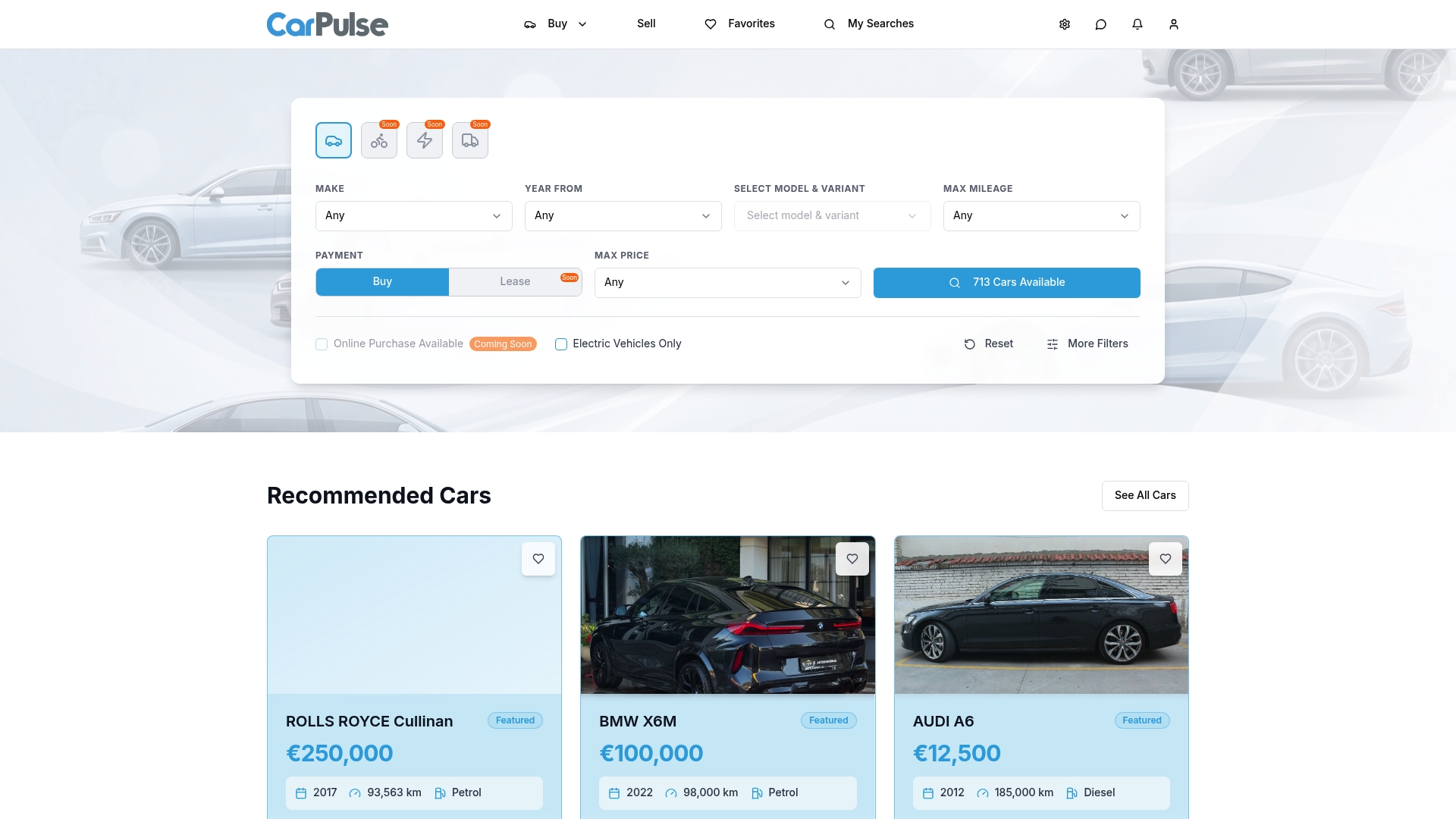
Whether you’re looking for a new vehicle with full dealer financing or a certified used import you can pair with a bank loan, CarPulse connects you directly with verified sellers and dealerships. If you already own a vehicle and want to free up capital toward your next purchase, you can sell your car through the platform quickly using VIN-based listing. Every step of your car buying journey, from research to financing to purchase, is simpler when the marketplace is built for Albanian buyers.
Frequently asked questions
What documents do I need to apply for car financing in Albania?
You’ll need a valid ID, proof of regular income such as salary slips or employment contracts, and for used cars, complete import documentation. Missing paperwork on imported vehicles is one of the most common reasons loan applications are denied.
How much do I need for a car loan down payment in Albania?
Most banks require a down payment of 10 to 25%, with standard auto loans at the lower end and luxury leasing arrangements typically requiring 25 percent upfront.
What is the usual interest rate for car loans in Albania?
Major banks currently offer rates around 6.5 to 6.8% for auto financing, though your specific rate can vary depending on the lender, the loan term, and your income profile.
Can I finance a used car in Albania?
Yes. Banks like Intesa Sanpaolo offer financing up to 20,000 EUR for used vehicles, provided you meet their documentation and vehicle condition requirements. Used car imports are eligible as long as all paperwork is complete and in order.