Guides
Automotive Innovation in 2026: What You Need to Know
Automotive Innovation in 2026: What You Need to Know
TL;DR:
- Automotive innovation involves integrating electrification, autonomous driving, digitalization, and smart manufacturing to transform vehicles into intelligent, software-driven platforms. Companies are adopting the software-defined vehicle model, enabling updates and features to evolve over time through OTA technology, shifting value from hardware to software. This progress is driven by key pillars, lidar and AI advancements, and comprehensive governance frameworks that ensure secure, scalable deployment at an industrial level.
Automotive innovation is defined as the integration of electrification, autonomous driving, digitalization, and smart manufacturing that transforms vehicles from mechanical machines into intelligent, software-driven platforms. According to KPMG’s 2026 Global Tech Report, AI, cloud computing, and big data now drive this transformation, redefining what a vehicle is and what it can do. Companies like Lucid, Ferrari, and lidar suppliers Hesai and Robosense are setting the pace. For enthusiasts and industry professionals alike, understanding what is automotive innovation means understanding a fundamental shift in how vehicles are built, sold, and experienced.
What is automotive innovation and why does it matter?
Automotive innovation is the systematic application of new technologies across vehicle design, manufacturing, and operation to improve performance, safety, and user value. The industry term used by engineers and analysts is “Software-Defined Vehicle” (SDV), and it sits at the center of every major development in 2026. The SDV model treats software as the primary source of vehicle capability, with hardware serving as the platform that software runs on.
This matters because it changes the economics of car ownership. A buyer who purchases a high-end EV today is not just buying a car. They are buying a platform that can gain new features, improve its safety systems, and expand its capabilities over time through software updates. That is a fundamentally different value proposition from anything the industry offered before.
The four pillars driving this shift are electrification, autonomous driving, digitalization, and smart manufacturing. Each one reinforces the others. Electrification creates new vehicle architectures that are easier to update with software. Autonomy requires AI and sensor fusion. Digitalization delivers the software layer that ties everything together. Smart manufacturing makes it possible to bring these technologies to market faster and at lower cost.
What are the four pillars of automotive innovation?
The four core pillars of automotive innovation each address a different dimension of how vehicles are built and used. Together, they represent the full scope of the industry’s transformation.
| Pillar | Core Technology | Primary Impact |
|---|---|---|
| Electrification | Battery systems, EV architecture | Reduces emissions, enables new vehicle layouts |
| Autonomous Driving | AI, lidar, sensor fusion | Improves safety, reshapes mobility models |
| Digitalization (SDV) | OTA updates, cloud, AI | Shifts value from hardware to software capability |
| Smart Manufacturing | Innovation Execution, automation | Accelerates time-to-market, reduces production cost |
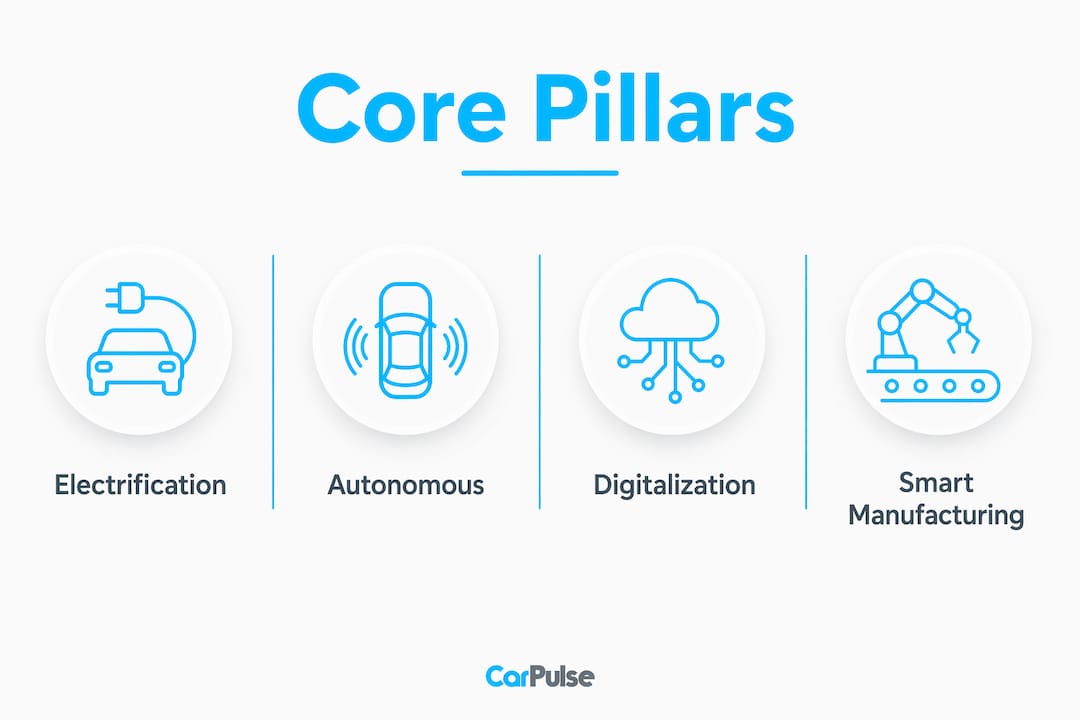
Electrification removes the internal combustion engine and replaces it with a simpler drivetrain. That simplicity creates room for new architectures. Flat battery floors lower the center of gravity. Fewer moving parts reduce maintenance. EV platforms are also more receptive to software control because electric motors respond to digital commands with far greater precision than combustion systems.
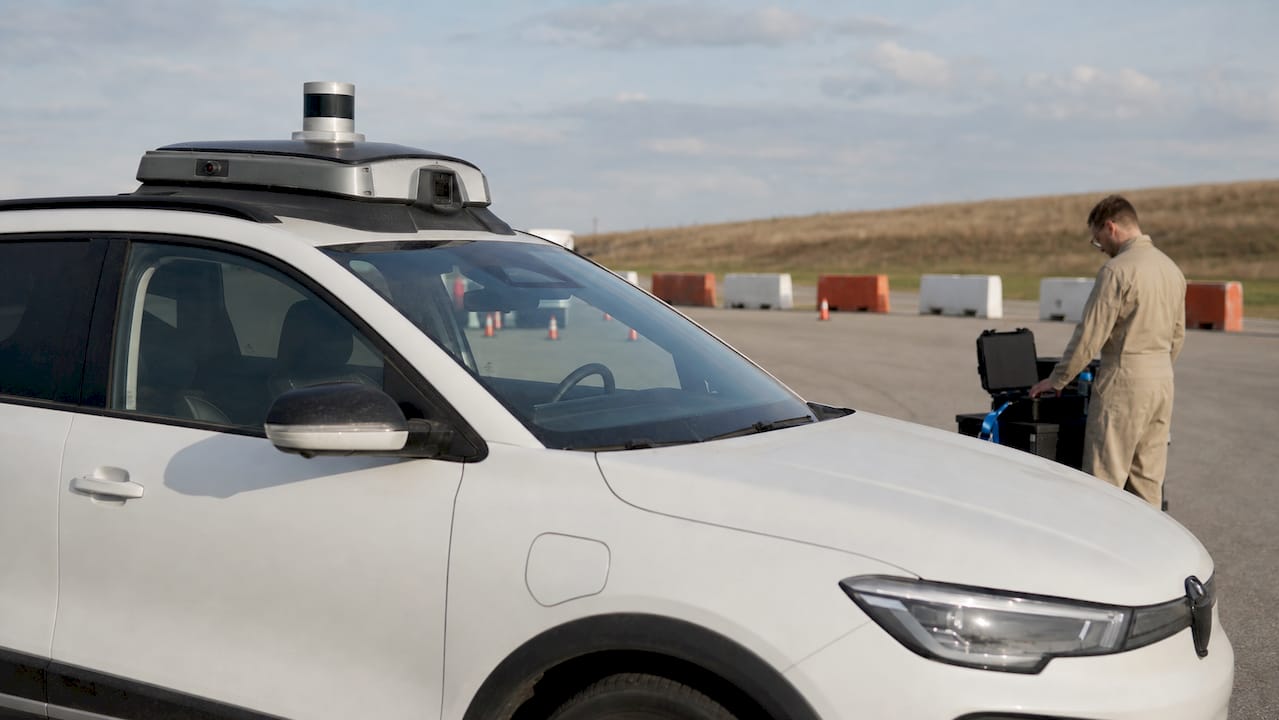
Autonomous driving is the most visible frontier. It depends on AI processing sensor data in real time to make driving decisions. The safety implications are significant. Human error accounts for the majority of traffic accidents, and autonomous systems do not get tired, distracted, or impaired.
Digitalization is where the SDV model lives. Vehicles now receive software updates the same way smartphones do. Features that did not exist at the time of purchase can be added later. This changes the entire lifecycle of a vehicle.
Smart manufacturing is the execution layer. McKinsey describes this as the “Innovation Execution” paradigm, which integrates research, design, product management, and supplier coordination to industrialize new technology faster and at scale. It replaces lean manufacturing with a model built around continuous technological advancement.
How are lidar and AI shaping autonomous driving systems?
Lidar technology is now the standard sensor for Advanced Driver Assistance Systems (ADAS). By april 2026, two suppliers control 75% of the global lidar market: Hesai and Robosense. That concentration reflects how quickly the technology matured from a niche research tool into a mass-market automotive component. The growth is strongest in China but is expanding rapidly into North America and Europe.
Lidar works by firing laser pulses and measuring how long they take to return. The result is a precise 3D map of the vehicle’s surroundings, updated many times per second. AI then interprets that map to identify objects, predict movement, and make driving decisions. Neither technology works as well without the other.
Here is what lidar and AI deliver in modern vehicles:
- Perimeter sensing that detects pedestrians, cyclists, and other vehicles at distances exceeding 200 meters
- Real-time object classification that distinguishes between a parked car and a moving one
- Predictive path planning that anticipates the behavior of other road users
- Automatic emergency braking that reacts faster than any human driver
- Lane-keeping assistance that uses AI to read road markings even in poor weather
The communication architecture supporting these systems is also shifting. V2N (vehicle-to-network) communication is overtaking V2X (vehicle-to-everything) in innovation priority. The reason is practical. V2X requires roadside infrastructure that governments have been slow to mandate. V2N uses existing cellular networks, which are already everywhere. Automotive computing is also moving toward zonal architectures that integrate AI workloads with safety-critical functions, pushing advances in data security and memory systems.
How do OTA updates and software-defined vehicles change ownership?
The Software-Defined Vehicle model, pioneered by Tesla and now adopted across the industry, enables features to be activated after the vehicle leaves the factory. The clearest recent example is Lucid. The Lucid Gravity SUV received hands-free highway driving through an over-the-air update, adding a capability that did not exist at the time of purchase. No dealer visit. No hardware swap. Just a software download.
This model shifts the center of gravity in automotive value from hardware to software. Buyers purchase the hardware platform upfront. The software layer determines what that hardware can actually do. Manufacturers can charge for feature unlocks, push safety improvements to the entire fleet simultaneously, and fix bugs without recalls.
The implications extend beyond convenience. Cybersecurity becomes a critical concern when vehicles are connected to the internet and receiving remote updates. Governance frameworks that standardize digital architectures and secure AI deployments are now treated as enablers of innovation speed, not obstacles to it. Organizations that build strong governance can deploy updates faster because they have defined secure pathways for doing so.
Pro Tip: If you are buying a new EV or connected vehicle, check whether the manufacturer offers a published OTA update history. Brands that document their updates transparently give you a clear picture of how actively they invest in the vehicle after the sale.
The aftermarket industry is also affected. When software governs vehicle behavior, independent repair shops face new barriers. Accessing vehicle systems requires manufacturer authorization in many cases. This is an ongoing tension between consumer rights and manufacturer control that regulators in the U.S. and EU are actively examining.
What are the latest advances in vehicle safety and manufacturing?
Smart manufacturing and vehicle health technology are producing some of the most surprising examples of automotive advancements in 2026. Two stand out for their originality and practical impact.
Ferrari’s actuator-free active aerodynamics
Ferrari patented an active aerodynamic wing mounted directly on suspension arms, requiring no actuators to function. The wing moves in response to suspension travel, generating downforce when the car corners and reducing drag on straights. The result is a system that delivers active aerodynamic performance with fewer components, less weight, and lower production cost. For EVs, where every kilogram affects range, this kind of mechanical simplicity is genuinely valuable.
Hyundai and kia’s in-cabin UV sanitization
Hyundai Motor and Kia unveiled the world’s first in-car Far-UVC plasma sanitization system. The technology cuts airborne viruses by 96.8% within 30 minutes and eliminates 99.9% of E. coli within 40 minutes, tested in a simulated 8m³ cabin environment. Far-UVC light in the 200–230 nanometer range kills microbes without penetrating human skin or eyes, making it safe for use while passengers are onboard. This is a direct response to post-pandemic demand for healthier vehicle interiors.
The manufacturing model behind these innovations follows McKinsey’s Innovation Execution framework. Rather than treating R&D and production as separate functions, leading automakers now run integrated teams that take a technology from concept to production-ready in compressed timelines. The shift from lean manufacturing to this model intensifies competition between traditional OEMs and technology-first disruptors.
Pro Tip: When evaluating a vehicle’s long-term value, look beyond the spec sheet. Ask whether the manufacturer uses a zonal computing architecture and whether the vehicle’s safety systems are updatable. These factors determine how well the car ages.
Key takeaways
Automotive innovation is the shift from mechanical engineering to software-driven platforms, and the manufacturers who master software governance, lidar integration, and OTA delivery will define the next decade of personal mobility.
| Point | Details |
|---|---|
| Four core pillars | Electrification, autonomy, digitalization, and smart manufacturing form the foundation of all automotive innovation. |
| Lidar market concentration | Hesai and Robosense control 75% of the lidar supply market, making them critical to ADAS and autonomous driving globally. |
| OTA updates shift ownership | Lucid’s hands-free driving update proves that software can add major capabilities long after a vehicle is sold. |
| Governance accelerates innovation | Digital governance frameworks enable faster, more secure AI deployments across connected vehicle fleets. |
| Health tech enters the cabin | Hyundai and Kia’s Far-UVC system shows that vehicle innovation now extends to passenger health, not just performance. |
The part of this story most people miss
The conversation about automotive innovation almost always focuses on what is visible: faster EVs, self-driving demos, flashy concept cars. What gets less attention is the governance and software infrastructure that makes any of it work at scale.
I have watched the industry treat cybersecurity and digital architecture as afterthoughts for years. The assumption was that you build the exciting technology first and figure out the security layer later. That approach is now visibly failing. OTA updates are only as trustworthy as the systems that deliver them. A manufacturer that pushes a flawed update to 200,000 vehicles simultaneously has a recall problem that dwarfs anything the mechanical era produced.
The manufacturers getting this right are the ones treating governance as a competitive advantage, not a compliance checkbox. KPMG’s 2026 data makes this explicit. Organizations that standardize their digital architectures and define secure deployment pathways move faster, not slower. That is the counter-intuitive insight the industry is still absorbing.
The other thing worth saying directly: the gap between traditional OEMs and software-first companies is narrowing faster than most analysts predicted. Ferrari’s actuator-free aero patent and Hyundai’s UV sanitization system show that legacy manufacturers are not standing still. The real competition in 2026 is not between EVs and combustion engines. It is between companies that can execute software-driven innovation at manufacturing scale and those that cannot.
— Henri
Explore albania’s most advanced vehicle listings on Carpulse
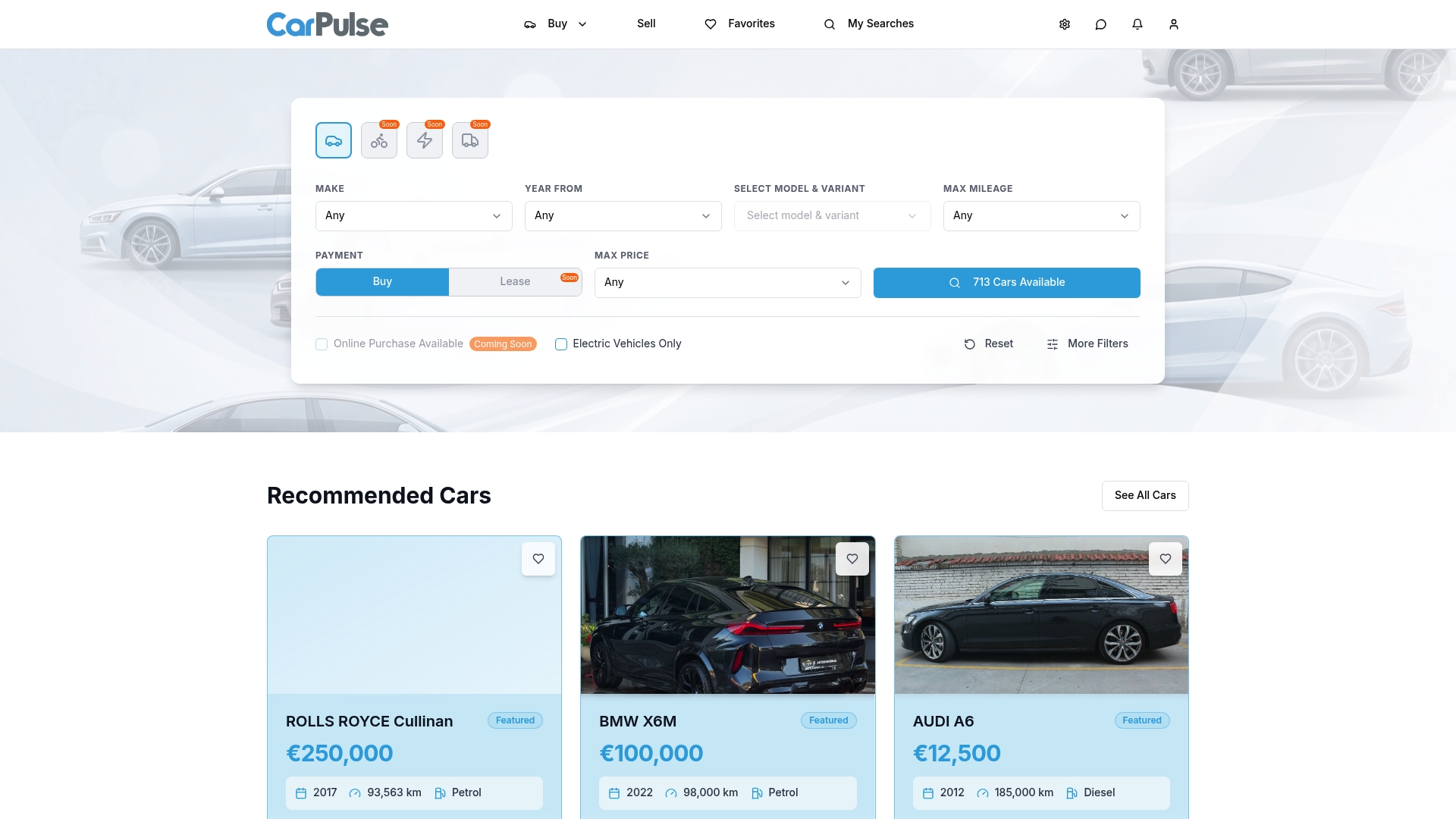
Carpulse is Albania’s largest car marketplace, and the platform reflects exactly the kind of automotive technology trends this article covers. Whether you are searching for the latest EV models, connected vehicles with OTA capability, or simply want to track how EV adoption in Albania is reshaping the local market, Carpulse gives you the tools to do it. Browse listings filtered by fuel type, make, model, and year to find vehicles that represent the latest car innovations available in the region. If you are ready to sell, the Carpulse selling platform uses VIN-based listing to populate vehicle details automatically, making the process fast and accurate. Visit Carpulse to start exploring.
FAQ
What is automotive innovation, exactly?
Automotive innovation is the application of electrification, autonomous driving, digitalization, and smart manufacturing to transform vehicles into software-driven platforms. The industry term for the result is the Software-Defined Vehicle (SDV).
How does OTA update technology work in cars?
Over-the-air (OTA) updates deliver software changes to a vehicle via a cellular or Wi-Fi connection, the same way a smartphone receives updates. Lucid’s Gravity SUV added hands-free highway driving this way, with no dealer visit required.
Which companies lead the lidar market in 2026?
Hesai and Robosense control approximately 75% of the global lidar supply market as of 2026. Both companies are headquartered in China but supply ADAS systems to manufacturers across North America and Europe.
What are the benefits of automotive innovation for buyers?
Buyers gain vehicles that improve over time through software updates, offer advanced safety features powered by AI and lidar, and deliver new capabilities like hands-free driving without requiring a new purchase.
What is a software-defined vehicle?
A Software-Defined Vehicle is a car whose core functions, including safety, performance, and features, are controlled and updated through software rather than fixed hardware. Tesla pioneered this model, and it is now the standard direction for the industry.
Recommended
- Blerja Online e Makinave në Shqipëri: Rritje EV 12% në 2026 | CarPulse Albania
- Blerja e Makinave Online në Shqipëri: Rritja e EV-ve 2026 | CarPulse Albania
- Blerja e makinave online në Shqipëri: Rritje 12% e EV në… | CarPulse Albania
- Blerja online e makinave në Shqipëri: 12% rritje e EV në… | CarPulse Albania