Reviews
Used BMW 3 Series Buying Guide 2026
Used BMW 3 Series Buying Guide 2026: Everything You Need to Know Before You Buy
Summary:
- The F30 320d (2012–2019) offers the best balance of reliability, running costs, and price for most buyers in Italy.
- Always verify the timing chain history on E90 N47 diesels — a failure here can cost more than the car is worth.
- Budget €1,500–2,500 per year in total ownership costs, and use a free price check before negotiating.
The BMW 3 Series is one of the most compelling used cars on the Italian market. It combines executive presence, engaging driving dynamics, and a wide range of body styles and powertrains — all at prices that become genuinely accessible once you step off the new-car forecourt. Whether you are drawn to the affordable E90, the modern F30, or the technology-laden G20, this guide gives you every fact you need to make a confident purchase. Before you start searching classifieds, spend two minutes on CarPulse.it to benchmark what a fair price looks like for the exact spec and mileage you have in mind — it could save you thousands.
BMW 3 Series Generations: E90, F30 and G20 Explained
Three generations dominate the used market in Italy today, each with a distinct character and price band. Understanding the differences will sharpen your shortlist before you even see a car in person.
E90 (2005–2012) — The E90 saloon (plus E91 estate, E92 coupé and E93 convertible) is the classic, widely-available entry point. Build quality is solid and the driving experience remains genuinely enjoyable, but this generation is now old enough that deferred maintenance is a real risk. Petrol engines on high-mileage examples can consume oil noticeably, and certain diesel variants carry a known timing-chain weakness described in detail below. The flip side: purchase prices are low, parts are plentiful, and independent specialists across Italy are very familiar with the platform. If you are on a tight budget and willing to do your homework, the E90 delivers extraordinary value.
F30 (2012–2019) — The F30 represented a substantial quality step up. BMW fitted a fully turbocharged engine line-up for the first time, bringing better fuel economy and stronger mid-range performance across the board. The interior moved upmarket with a sharper design, better materials, and a more modern iDrive system. The 320d and 318d diesels became best-sellers across Europe for good reason — they are frugal, punchy, and well-matched to Italian motorway and suburban driving. The platform is more complex than the E90 (more electronics, more active safety systems), which raises workshop labour costs slightly, but overall the F30 hits a sweet spot of modern feel at a mid-range price. This is the generation most buyers should start from unless budget forces them lower or features push them higher.
G20 (2019–present) — The current generation brought BMW's widescreen iDrive 7 cockpit, standard lane-keeping assist, a suite of driving assistance features, and significantly improved ride refinement. Even used examples are still relatively expensive, but the G20 makes sense if you need modern safety tech, a full digital interior, or simply want to drive something that does not feel dated. Residual values remain strong, which limits the discount you will find on the used market, but the G20 is the clear choice for buyers who want near-new technology without paying a new-car premium.
Which Engine to Choose: Petrol vs Diesel
BMW's engine range for the 3 Series is extensive. Here is what matters in practice for Italian driving conditions.
316d / 318d — Both deliver around 5–6 litres per 100 km in mixed driving, making them the obvious choice for high annual mileages. They are smooth, refined, and broadly reliable. The one caveat is the diesel particulate filter (DPF): if the car has spent most of its life on short urban trips, the DPF may not have regenerated properly, which can lead to expensive cleaning or replacement. Check the service history for any DPF-related work and ask the seller about typical journey lengths.
320d — This is the sweet spot of the range and consistently the best-seller. On F30 and G20 models the engine is BMW's B47 unit, introduced from around 2014, which has an excellent reputation for robustness — typically around 190 hp with strong torque from low revs. On E90 models the older N47 engine is fitted, and this carries a known timing-chain risk (see below). The 320d is the engine most independent mechanics know best, which matters for servicing costs.
330d / 335d — Significantly more powerful and entertaining, but running costs rise accordingly. Higher fuel consumption, more expensive servicing, and heavier wear on the drivetrain make these engines better suited to drivers who cover high motorway mileages where their extra torque pays off. Proceed with a thorough inspection given the higher performance stress.
316i / 318i / 320i (petrol) — Petrol variants are more engaging at the limit and avoid the complexity of a DPF, but fuel consumption rises noticeably over the diesels. The N20 four-cylinder petrol fitted to many F30 320i models has a known tendency to accumulate intake valve deposits (a consequence of direct injection without port washing). Cleaning intervals of every 50,000–80,000 km are widely recommended. Budget for this and it becomes a manageable maintenance item rather than a surprise.
330i / 340i (G20) — On the current generation the 330i and 340i petrol units offer arguably the best all-round driving experience: fast, characterful, and without the emissions complexity of a high-mileage diesel. If budget allows for a G20 and you do not drive very high annual mileages, either of these engines deserves serious consideration.
Used BMW 3 Series Prices in Italy 2026
Market prices vary considerably depending on mileage, service history, trim level, and optional equipment. The figures below represent a realistic range for privately-sold examples in good condition with verifiable history on the Italian market as of mid-2026.
- E90 320d (all years): €5,000–10,000 — Wide range reflects condition variance; sub-€7,000 examples almost always need attention.
- F30 320d (2013–2016): €12,000–18,000 — The volume sweet spot; supply is high and prices are competitive.
- F30 320d (2016–2019): €16,000–22,000 — Post-facelift examples command a premium; look for Sport or Luxury trim.
- G20 320d (2019–2022): €25,000–35,000 — Strong prices but modern tech justifies it for many buyers.
- G20 320d (2022–present): €32,000–42,000 — Near-new residuals; expect negotiation room to be limited.
Prices fluctuate with fuel prices, seasonal demand, and individual seller motivation. Before making any offer, run the car's details through CarPulse's free price valuation tool to get a data-driven market value estimate. A seller asking 15% above market is not unusual — knowing the real number gives you the confidence to negotiate or walk away.
Known Issues and Common Problems to Watch For
No car is perfect, and the 3 Series has several well-documented weaknesses. Being aware of them lets you inspect intelligently and price risk into your offer.
E90 N47 diesel timing chain: This is the single most important issue to understand before buying an E90 diesel. The N47 engine's timing chain is mounted at the rear of the engine — an unusual configuration that makes replacement labour-intensive and therefore expensive (€500–1,200 or more). Early signs include a rattling or clattering noise on cold start. If left unaddressed, the chain can fail catastrophically, destroying the engine. Always ask for documented timing chain replacement or inspection. If no evidence exists and the car has more than 100,000 km, budget for the work or factor it into your price.
F30 N20 petrol intake valve deposits: Direct injection bypasses the intake valves, so they never receive the cleaning effect of fuel washing. Carbon deposits accumulate over time, reducing airflow and causing rough idle, hesitation, or loss of power. A walnut-blasting service every 50,000–80,000 km keeps the engine running cleanly. Ask for evidence of this service on any high-mileage N20-equipped car.
Electric power steering (EPS) on F30: Some early F30 units have shown issues with the electric power steering system, ranging from unexpected weight changes to faults illuminating the warning light. Test the steering at low speed and at motorway speed during your test drive and check for any stored fault codes.
Diesel injectors (E90 / F30): At very high mileages — typically beyond 150,000–180,000 km — injector wear becomes a factor. Symptoms include rough running, increased smoke, or reduced fuel economy. An OBD scan will often reveal injector-related fault codes even before symptoms are obvious.
Oil consumption on petrol engines: BMW officially considers up to 1 litre of oil per 1,000 km acceptable on petrol engines. In practice, many owners find consumption well below that, but do not be alarmed by modest top-ups. Check the dipstick at viewing and ask the seller how often they add oil. Consumption significantly above 1 L/1,000 km should be treated as a red flag requiring further investigation — it can indicate piston ring wear or valve stem seal failure.
What to Inspect Before Buying
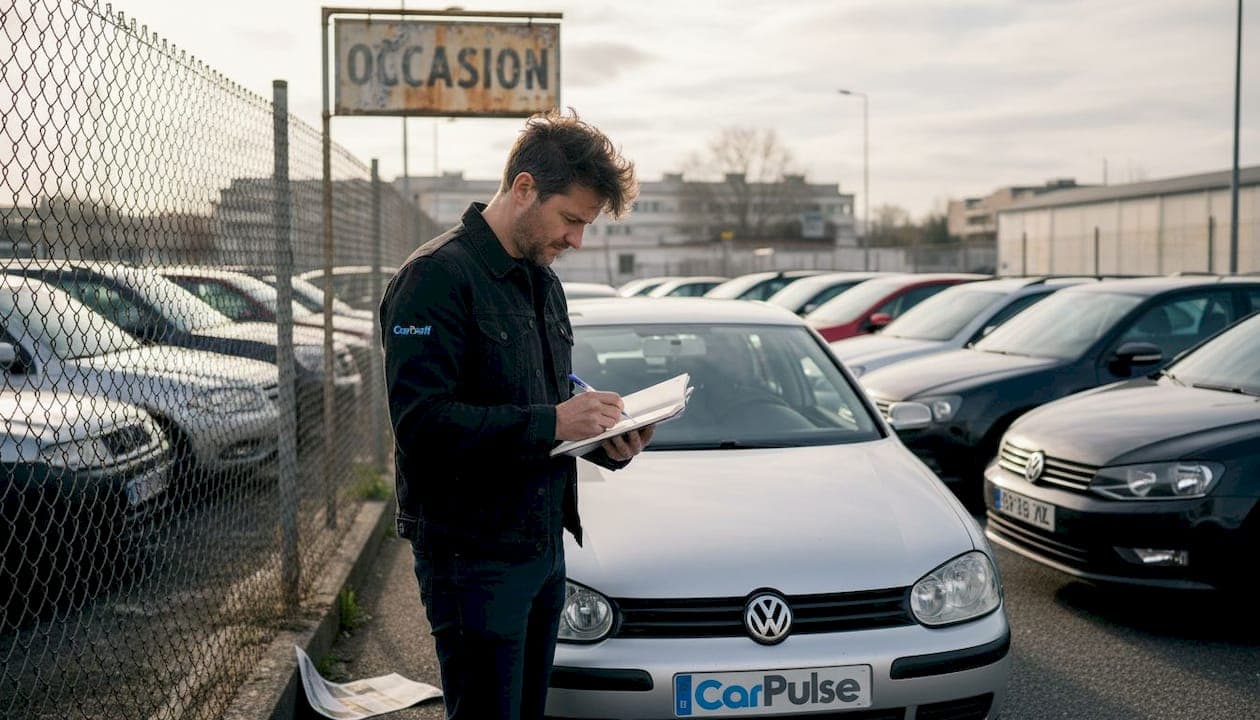
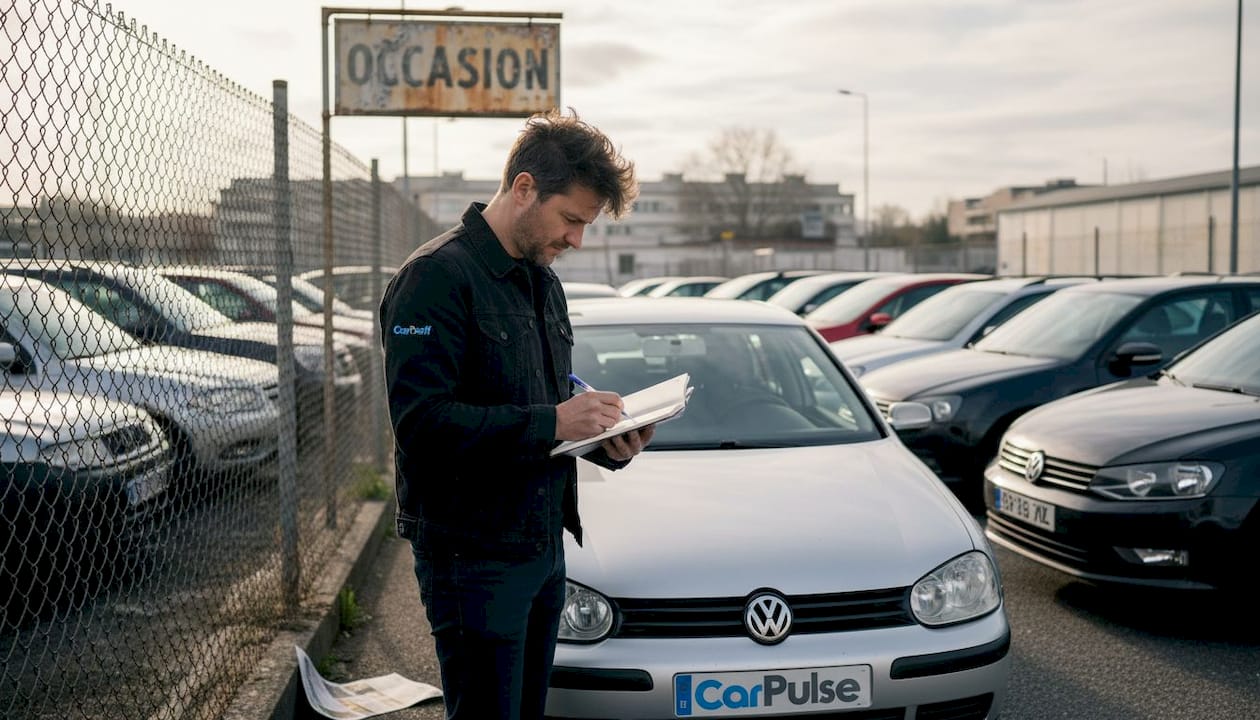
A systematic pre-purchase check separates a confident buyer from one who discovers problems after the handshake. Work through this list before any money changes hands.
- Full service history: Ideally stamped BMW dealer history, but a consistent record of services with receipts at an independent specialist is acceptable. Gaps are a warning sign.
- Timing chain evidence (E90 N47): Ask directly. If the seller cannot produce documentation of inspection or replacement, treat the risk as priced-in.
- OBD diagnostic scan: Plug in a scan tool or ask a mechanic to check for stored and pending fault codes. Many issues surface here before they become visible symptoms.
- Transmission check: On manuals, feel for a biting point that is high or grabby (clutch wear). On automatics — the excellent ZF 8-speed is standard on most versions — check that transmission fluid has been changed at appropriate intervals (every 60,000–80,000 km on a used car is prudent).
- Bodywork and underside: Inspect the wheel arches, sill edges, and underside for rust, particularly on older E90 examples. Surface rust on underbody components is common and mostly cosmetic, but structural rust is a serious concern.
- Roadworthiness test (revisione): Confirm the current revisione is valid and check the expiry date. A car approaching its revisione with known issues may be a bargaining point — or a reason to walk away.
- PRA / ACI registration check: Run the number plate through the Pubblico Registro Automobilistico (PRA) via an ACI office or online service to verify there are no outstanding liens, mortgage-style encumbrances (fermi amministrativi), or theft reports on the vehicle. This step is non-negotiable when buying privately.
- Market comparison: Before visiting, browse used BMW 3 Series on CarPulse.it to understand what comparable examples are asking and which features justify premium pricing.
Running and Maintenance Costs
Owning a BMW costs more than owning a comparable Volkswagen or Toyota — but the gap is smaller than the car's premium badge might suggest, especially on the widely-supported F30 platform. Here is what to budget in Italy.
- Road tax (bollo auto): Calculated on engine power in kW, roughly €100–150 per year for a 320d in northern Italy. Higher-output versions cost proportionally more.
- Compulsory liability insurance (RCA): Highly variable by driver age, location, and claims history. Expect €700–1,200 per year for a driver under 35 in a northern Italian city. Older drivers with a clean bonus-malus class pay significantly less.
- Annual servicing: A standard service with BMW original parts at an authorised dealer typically costs €300–600. An equivalent service at a reputable independent BMW specialist is usually €150–300. The gap in quality has narrowed considerably — independent specialists often use original or genuine-equivalent parts.
- Timing chain replacement (E90 N47, if needed): €500–1,200 depending on workshop and parts used. This is a one-time cost but a significant one — always check if it has been done.
- Tyres: A full set of quality touring tyres in standard 3 Series sizes (e.g. 225/45 R17 or 225/50 R17) costs approximately €400–700 fitted. Performance run-flat tyres at the upper end of the range cost more.
- DPF service or replacement: If the DPF is partially blocked, a forced regeneration service costs €100–200. A full DPF replacement at a dealer can reach €800–1,000. Avoiding short urban trips and using quality fuel dramatically extends DPF life.
Taken together, a realistic annual ownership budget — excluding fuel — for an E90 or F30 in good condition is €1,500–2,500, covering insurance, road tax, servicing, and a contingency reserve for minor unexpected costs.
Frequently Asked Questions
Which BMW 3 Series engine is most reliable?
The 320d F30 equipped with the B47 engine (produced from approximately 2014 onwards) is widely regarded as one of the most robust units in the range. It has a strong track record for longevity when maintained correctly. The engine to approach with caution is the N47 diesel fitted to E90 models — not because it is fundamentally flawed, but because the rear-mounted timing chain has a documented failure risk that makes service history verification critical.
How many miles can a BMW 3 Series diesel do?
With regular oil changes, timely servicing, and quality fuel, a B47-equipped 320d will comfortably exceed 200,000 miles (over 300,000 km) before requiring major mechanical work. High-mileage examples with documented service histories regularly change hands at 250,000–300,000 km and continue running well. The key variable is maintenance discipline, not an inherent mileage ceiling.
How much does it cost to run a used BMW 3 Series?
For an E90 or F30 in good condition, budget €1,500–2,500 per year to cover compulsory insurance (RCA), road tax (bollo), annual servicing, and a sensible contingency allowance. This figure excludes fuel. A G20 in warranty or near-warranty condition may come in at the lower end of that range thanks to reduced risk of unexpected repairs, while a high-mileage E90 approaching multiple service items simultaneously could temporarily exceed it.
Which generation is best value: E90, F30 or G20?
The answer depends on your budget and priorities. The E90 offers the lowest purchase price but carries the highest risk of deferred maintenance and the N47 timing-chain concern — best for mechanically confident buyers or those with a trusted independent specialist. The F30 is the best price-to-quality ratio for most buyers: modern turbocharged engines, a well-equipped interior, and broad parts availability at reasonable prices. The G20 is the right choice for buyers who prioritise current technology — driver assistance systems, digital cockpit, connectivity — and can stretch to a higher purchase price in exchange for lower immediate maintenance risk.
Conclusion
The used BMW 3 Series rewards buyers who invest time in research before they invest money in a car. The E90 is a compelling budget option for those who verify the timing chain and price in the risk; the F30 320d B47 is arguably the safest all-round choice on the Italian used market today; and the G20 justifies its higher price tag for buyers who want near-new technology without a new-car bill. Whichever generation you choose, the fundamentals are the same: verify the service history, run an OBD scan, check the PRA at ACI, and benchmark the asking price against the market before you negotiate.
Already own a BMW 3 Series and thinking about your next move? List your car for free on CarPulse.it and reach thousands of verified buyers across Italy — no commissions, no hidden fees.